



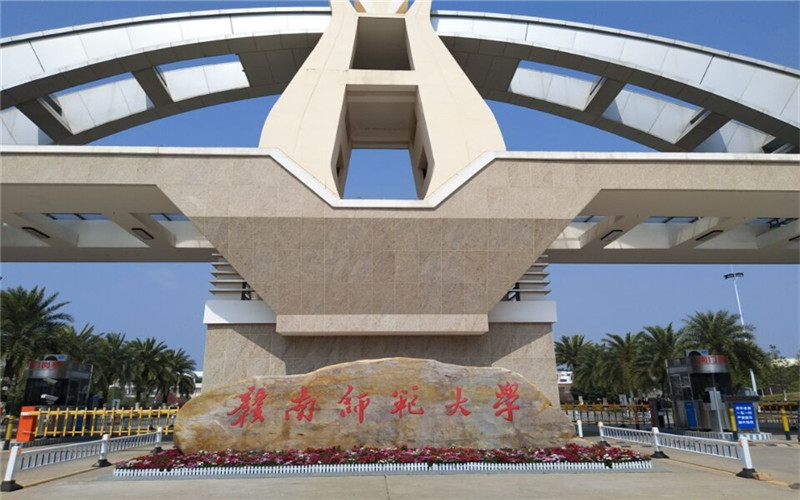
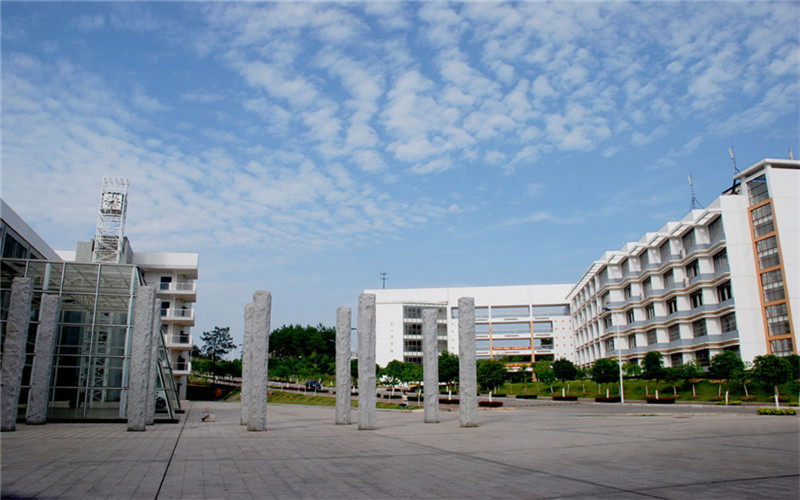
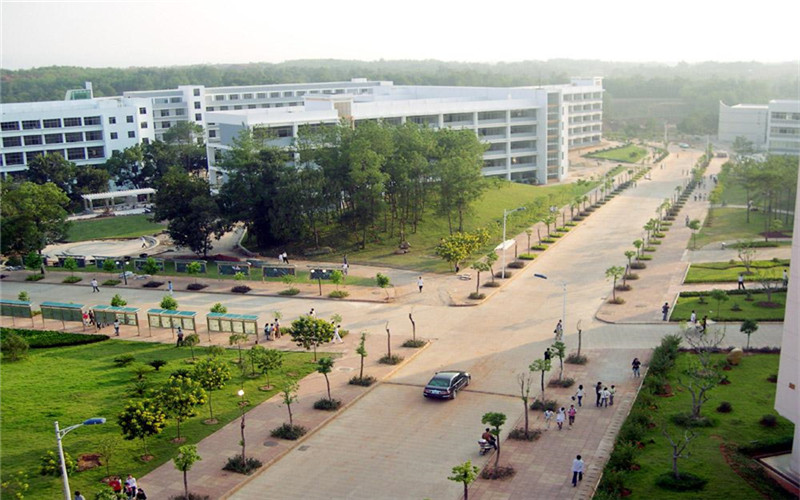
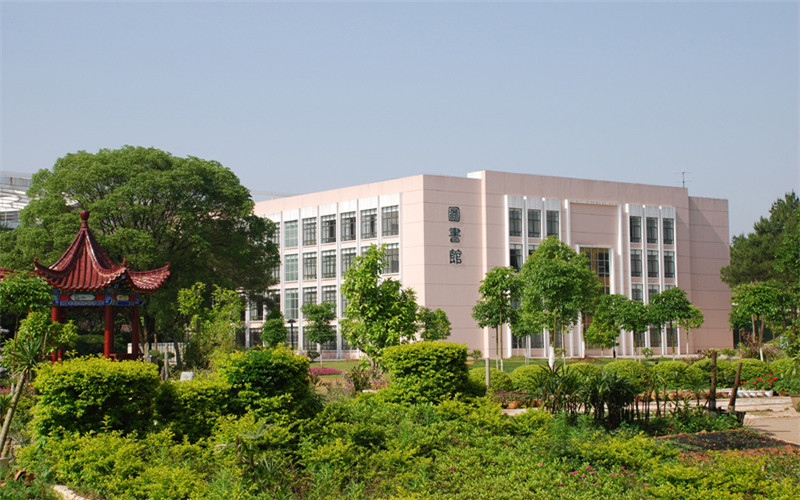

Gannan Normal University is a full-time public higher education institution funded by the People's Government of Jiangxi Province. It is a university included in Jiangxi Province's "Double First Class" initiative, a key institution for training public-funded normal students in the province, and has been designated by the Ministry of Education for collaborative support in improving teacher education quality.
The university was founded in June 1958 as Gannan Normal College. In 1984, it was renamed Gannan Normal University and upgraded to a provincial-level undergraduate institution. In 2003, it became a degree-awarding institution, and in 2016, it officially became Gannan Normal University. In 2024, the university was approved to grant doctoral degrees.
The university is located in Ganzhou, a national historic and cultural city and a sub-central city of Jiangxi Province. The university has three campuses—Rongjiang, Zhanggong, and Baita (University Science Park)—covering an area of over 2,200 acres. The university consists of 18 academic units, 1 independent college, 1 affiliated high school, 2 affiliated primary schools, and 1 affiliated kindergarten. Currently, there are over 23,000 full-time students, including more than 2,700 postgraduate students.
The university employs over 1,600 faculty and staff, with more than 1,300 full-time teachers. Among them, over 610 are senior professional and technical personnel. The faculty includes national-level talents such as winners of the National Outstanding Young Scientist Fund, National Excellent Youth Fund, candidates for national high-level talent programs, as well as experts who have received special allowances from the State Council. The university’s faculty members are dedicated to their teaching and education roles, with several teachers and teams receiving national honors such as the "Advanced Collective in the National Education System," "National Excellent Educators," and "National Model Teachers."
The university has gradually formed an academic structure focusing on teacher education, with strong departments in liberal arts, natural sciences, and multi-disciplinary coordination in the fields of arts, science, management, engineering, and law. It currently offers 59 undergraduate programs across 10 disciplines, including literature, history, education, science, engineering, agriculture, management, economics, law, and arts. These include 11 national-level first-class undergraduate programs, 28 provincial-level first-class programs, and 17 teacher education programs accredited by the Ministry of Education.
The university has a doctoral program in Chemistry, 17 master’s programs, and 19 professional master’s programs. Its Chemistry department ranks in the top 1% of the world in ESI (Essential Science Indicators), and its Horticulture and Marxist Theory programs have been recognized as key disciplines under the province's "14th Five-Year Plan."
The university also hosts national-level teaching platforms, including the National Language and Literature Promotion Base and the National Traditional Chinese Culture Inheritance Base. The university has received numerous prestigious awards, including 8 second-class national teaching achievement awards and 2 first-class awards for educational master's programs.
In research, the university has established key national research platforms, such as the National Navel Orange Engineering Technology Research Center and the Ministry of Education's Key Research Base in Humanities and Social Sciences. It has undertaken over 1,100 national and provincial research projects and has received more than 40 provincial-level scientific and technological awards. The university's research focuses on Central Soviet Area studies, Red Culture, Hakka culture, Yangming philosophy, and other fields, with significant contributions in navel orange engineering and furniture design.
Gannan Normal University has been committed to its mission of "nurturing talent for the party and the country" and has trained over 180,000 qualified professionals who are highly regarded by employers. Students have won numerous prestigious national and international awards, including the "Five One Project" award from the Publicity Department of the CPC, the "Meihua Award" in Chinese drama, gold medals in the "Internet+" competition, and various top awards in academic, artistic, and sports competitions.
The university places great emphasis on open education and social services. It has collaborated with institutions in over 10 countries, including the United States, United Kingdom, Russia, France, and Thailand. It has set up the first Sino-foreign cooperative music program in Jiangxi and hosts the first Confucius Institute in West Africa, at the University of Sierra Leone.
The university adheres to its educational tradition of "rooting in the red land, focusing on education," and fosters a unique "spirit" culture, characterized by traits such as "innovation, self-improvement, perseverance, and striving for excellence." The university actively promotes the inheritance of Red culture, and in 2017, it was the only university in Jiangxi to receive the "National Civilized Campus" award from the Central Committee for Spiritual Civilization Construction.
Currently, the university is guided by Xi Jinping's New Era of Socialism with Chinese Characteristics and aims to implement the major educational reforms outlined in the 20th CPC National Congress. The university focuses on high-quality development and the cultivation of excellent educators and talents. It strives to enhance its impact on regional teacher education, local industry development, and the revitalization of the Red Revolutionary Base. With the recent approval to grant doctoral degrees, the university will continue to promote its academic excellence, social service, and global influence, aspiring to become a distinctive, high-level teacher education institution.
(Data as of October 2024)
ابدأ المحادثة
كن أول من يشارك أفكاره!