





Historical Development
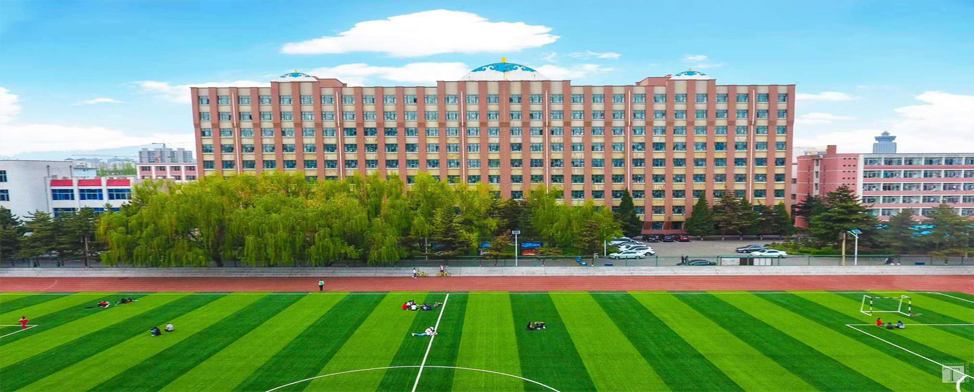
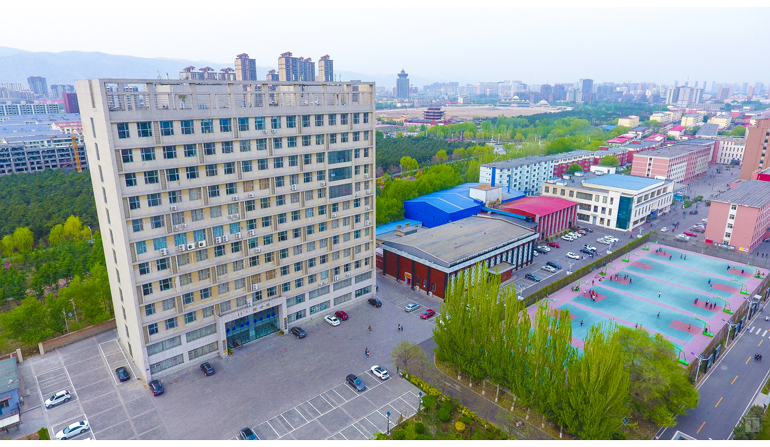
Hohhot Minzu College is located in Hohhot, the capital of Inner Mongolia Autonomous Region. It is a regional university directly administered by the Autonomous Region government, a key institution for the region's development, and a jointly constructed university by the regional government and the State Ethnic Affairs Commission. The school was established in 1953 under the support of Comrade Ulanhu, originally as the Inner Mongolia Mongolian Language College and Inner Mongolia National Teachers College. In 2000, these institutions merged to form the Inner Mongolia National College of Higher Education. In 2009, it upgraded to a university and was renamed Hohhot Minzu College. In 2016, the university passed the Ministry of Education’s undergraduate teaching evaluation. In 2021, it was included in the “14th Five-Year Plan” for master’s degree programs in Inner Mongolia, and in 2023, it became a university for application-based transformation under the region's “14th Five-Year” plan.
As one of the earliest ethnic colleges established in Inner Mongolia, the university has always adhered to its mission of "cultivating people for the Party, and talent for the nation." Focusing on building a sense of community for the Chinese nation, it has emphasized moral education and unity among ethnic groups. Over its 71 years of development, it has trained 50,000 graduates who have rooted themselves in Inner Mongolia and contributed to the region's economic, social, and ethnic unity. The university has received 10 national and regional honors for its efforts in promoting ethnic unity. Currently, the campus covers 265,981 square meters, with a collection of 1.07 million physical books and 1.2 million e-books. The total value of fixed assets is 661 million RMB, with teaching and research equipment valued at 237 million RMB.
Talent Development
The university comprises 17 colleges and offers 43 undergraduate programs and 6 associate degree programs across eight disciplines, including education, mathematics, engineering, law, literature, art, economics, and management. It is home to two key national programs in mathematics and applied mathematics, and two key disciplines in Chinese minority history and languages. The university has 14 district-level first-class courses, 7 district-level fine courses, and 10 online open courses. Additionally, it has 2 district-level experimental teaching demonstration centers and 102 on-campus practical teaching platforms, as well as 310 off-campus teaching bases. The university has earned accolades for its educational achievements, including being named an advanced collective in the region’s teaching quality reform efforts.
Faculty
The faculty consists of 690 staff members, including 517 full-time teachers, of whom 25.15% hold doctorates, and 84.72% have master's or higher degrees. The university boasts a number of distinguished faculty members, including national and provincial-level academic teams, experts who have received government special allowances, doctoral advisors, and master’s supervisors. Among its faculty are award-winning experts in various fields, including natural sciences and higher education teaching achievements.
Scientific Research
The university has an "Academician Expert Workstation for Trustworthy Big Data and Artificial Intelligence" and 16 provincial and ministerial research platforms. In the past five years, it has added 581 new research projects, with total funding amounting to 150 million RMB, including 22 national social science projects and 6 national natural science projects. The university has published 1,592 academic papers, authored 86 books, and obtained 51 national patents. Its research includes establishing national standards for Mongolian language processing and developing a Mongolian-Chinese online translation system, which ranked first in national machine translation evaluations. The university’s journal, Mongolian Studies, is a recognized academic publication in the field.
Social Service
The university supports national and regional initiatives such as rural revitalization, digital ecology, and environmental protection. It has been involved in ecological projects in various regions, including soil testing and planting trees to improve the local environment. The university has also contributed to agricultural waste resource utilization in collaboration with other universities and agricultural enterprises. It has supported national language promotion efforts by sending teaching teams to assist in schools in the region. Additionally, it has completed over 10,000 hours of volunteer work and provided training and teaching assistance to over 1,000 people in Xinjiang and Inner Mongolia.
Campus Culture
Upholding its motto of "Respect justice, value wisdom, focus on the basics, and pass on traditions," the university fosters a strong campus culture with programs aimed at promoting national unity and cultural integration. It organizes various themed activities and has won multiple honors for its contributions to ethnic unity. Campus football and the Nadam Fair are recognized as key cultural projects in Inner Mongolia. The men's football team has won several regional championships, and the university’s Ulan Muqi performance troupe delivers performances promoting the Party's voice. The university has also received various accolades for its contributions to community engagement and national defense work.
Cooperation and Exchange
The university actively engages in international cooperation, particularly with countries along the "Belt and Road" initiative, such as Mongolia, Belarus, and the Philippines. It has established research centers focused on Mongolian studies and cultural exchange, and hosts academic conferences to promote cooperation between nations. The university also partners with Huawei Technology to build a Cloud Academy and has set up new undergraduate programs in emerging fields like big data and digital economy in collaboration with top domestic enterprises. It has signed strategic agreements with local governments to expand its educational resources and promote cooperation in various areas.
Currently, the university is focused on deeply studying and implementing the spirit of the 20th Party Congress and Xi Jinping’s thoughts on socialism with Chinese characteristics for a new era. It continues to focus on high-quality development with the goal of becoming a distinctive regional university that contributes to building a strong education system and advancing the modernization of Inner Mongolia.
ابدأ المحادثة
كن أول من يشارك أفكاره!