




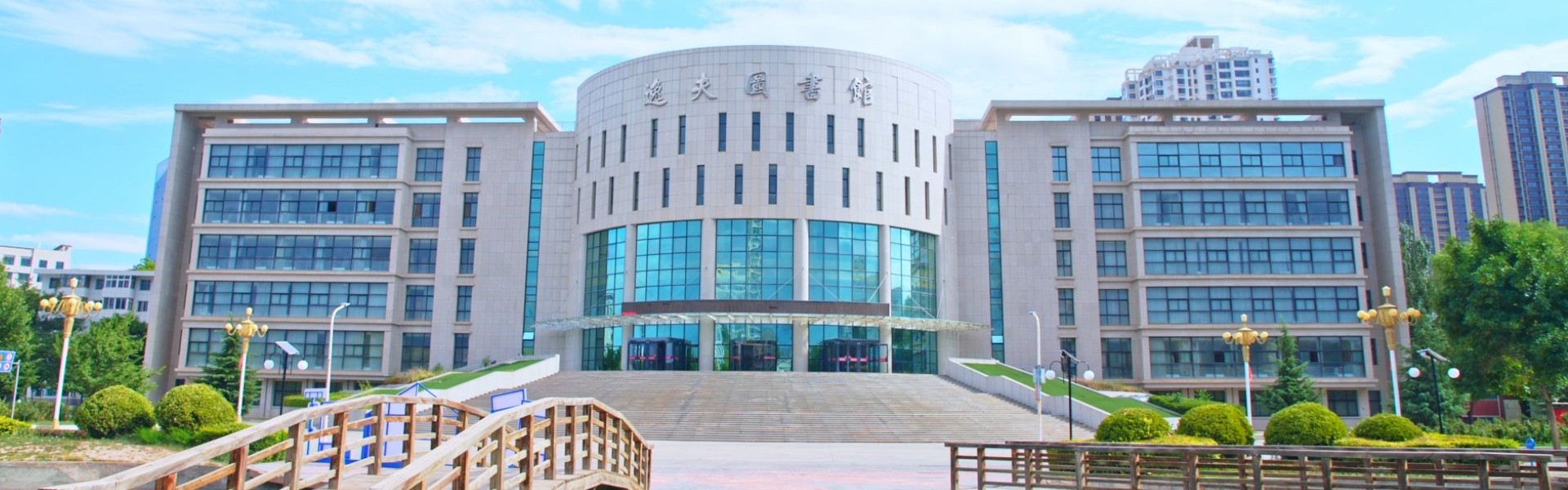
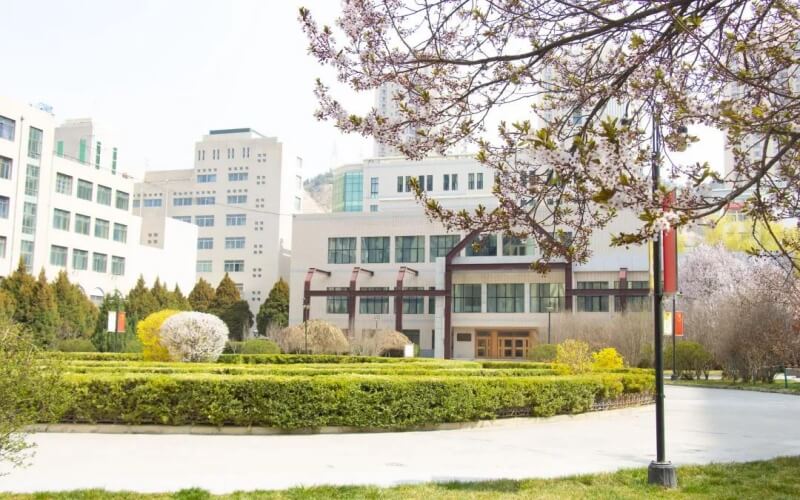

Lanzhou City University, approved by the Ministry of Education in 2006, was formed by the optimization and restructuring of several institutions: the Peili Petroleum School founded in 1942 by Louis Aili, the Lanzhou Normal Higher Vocational School established in 1958, and the Gansu Provincial Preschool Normal School. It is the only application-oriented undergraduate institution in Northwest China focused on serving urban development. In 2010, it was granted the authority to confer bachelor’s degrees, and in 2014, it passed the Ministry of Education’s undergraduate teaching evaluation. In 2017, it was designated for master’s degree development, and in 2024, it was approved to grant master’s degrees.
The university currently has three campuses: the main campus, Peili Campus, and Chengguan Campus, covering an area of 478,900 square meters, with a total building area of 594,000 square meters. The university's total fixed assets are valued at 1.086 billion yuan. It consists of 16 teaching units and has over 17,000 full-time undergraduate students. The university adheres to an urban, application-oriented, and local-focused educational philosophy, contributing to the development of the western region’s urban economy, industrial economy, and local basic education. With a focus on cultivating high-level application-oriented talents with humanistic values, scientific literacy, and craftsmanship, the university aims to establish itself as a high-level application-oriented university with a distinctive urban character.
Building a Strong Foundation: Party Leadership
The university consistently upholds the socialist direction of education and deeply implements the overall requirements for the Party’s construction in the new era, as well as the Party’s organizational path. The political construction is prioritized, and the university strictly follows the leadership of the Party committee under the president’s responsibility system. It has earned several awards for Party organization excellence, including "Advanced Grassroots Party Organizations" and "Standardized Advanced Party Branches." It has also created exemplary Party branches and teams for promoting education.
Cultivating Talent and Building a Strong University
The university prioritizes talent development, focusing on moral education and the fundamental task of nurturing talent. It has reformed the application-oriented talent cultivation model, working towards a "five-dimensional" educational system integrating morality, intelligence, physical fitness, aesthetics, and labor. The university offers 57 undergraduate programs across nine disciplines, including engineering and education, forming three major clusters: urban services, teacher education, and engineering technology. The university is home to one of the national bases for the inheritance of Chinese traditional culture and has been recognized for its excellence in teaching reforms, with 17 provincial-level first-class undergraduate programs, 43 provincial-level first-class courses, and 8 provincial-level specialized programs.
Respect for Teachers and Vitality in Education
The university has a faculty of 1,192 members, including 109 professors, 354 associate professors, 226 doctors, and 711 masters. It also boasts 80+ part-time doctoral and master’s supervisors and trains 31 doctoral and 423 master’s students. The faculty includes national "Ten Thousand Talents Plan" leaders, outstanding teachers, and project chiefs. The university has numerous provincial-level talent honors and teaching awards, such as "Top-tier Talent" and "Outstanding Teachers" in Gansu Province.
Rooted in Gansu: Strengthening Research
Lanzhou City University is home to 37 research institutes, including the Gansu Provincial Urban Development Research Institute and the Gansu Cultural Translation Center. The university hosts several provincial research centers and high-level laboratories, with numerous key research projects funded by the national government. Over the past five years, the university has undertaken 43 national and high-level research projects, including 15 National Natural Science Foundation projects, 20 National Social Science Fund projects, and 8 Ministry of Education humanities and social sciences research projects. The university has published more than 510 high-level papers and received numerous awards, including first prizes in national and provincial academic achievements.
Cooperation and Exchanges: Collaborative Success
The university adheres to an open, cooperative philosophy, actively promoting partnerships with enterprises, local governments, research institutes, and international institutions. It has established 199 internship bases with various organizations and has formed international educational partnerships with universities in New Zealand, the United States, Russia, and Belarus. It is a member of several international cooperative networks, such as the Sino-German Applied Technology University Alliance and the Belt and Road University Alliance. The university has also developed strategic partnerships with universities and institutions across China, including East China Normal University and Tianjin Chengjian University.
Cultural Enrichment and Campus Vitality
The university emphasizes cultural education and has implemented a program for "Cultural Soul Construction in the New Era." It has received numerous honors, including national recognition as a "Civilized Unit" and "Advanced Unit for Social Practice." The university is also a key player in the promotion of Chinese language and culture, with several awards for its contributions to cultural education and community development in Gansu.
Striving for Excellence: Moving Forward
At present, the university’s faculty and students are focused on building a high-level application-oriented university with a distinctive urban character. Following the school motto of "Hand and brain work together, creating and analyzing," the university is committed to enhancing its "urban," "educational," and "engineering" strengths, contributing to the development of western cities, regional industries, and local education. With a focus on high-quality, sustainable development, the university is working to become a leading base for application-oriented talent cultivation, a think tank for urban planning and construction, and a center for engineering technology innovation. The goal is to align with the new stage of development and advance the principles of innovation and quality education.
(Note: The data provided is current as of October 15, 2024.)
ابدأ المحادثة
كن أول من يشارك أفكاره!