


Taiyuan University was formerly known as the new Taiyuan University, which was formed in December 2002 through the merger of the original Taiyuan University, Taiyuan Normal School, and Taiyuan Education College. In April 2013, with the approval of the Ministry of Education, it was upgraded to a full-time comprehensive general undergraduate institution and officially renamed Taiyuan University (太原学院). The university was granted the authority to confer bachelor's degrees in 2017 and became one of the first batches of applied undergraduate university construction units in Shanxi Province in 2022. In September 2023, the university successfully passed the undergraduate teaching work qualification assessment by the Ministry of Education, marking a new leap in its talent cultivation quality and educational level, and signaling its entry into a new stage of accelerating the construction of a first-class applied undergraduate university within the province. The university operates under the leadership of the People's Government of Shanxi Province, the management of the Taiyuan Municipal People's Government, and the operational guidance of the Shanxi Provincial Department of Education.
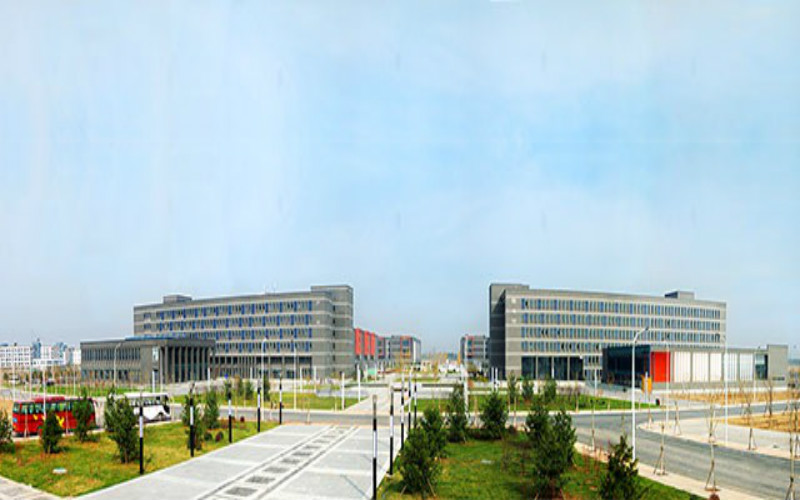
The university is located in Taiyuan, the capital of Shanxi Province—the heartland of the Sanjin cultural lineage and an ancient capital with a city-building history of 2,500 years. It enjoys distinct geographical advantages and is composed of three campuses: Fendong Campus, Binhe Campus, and Fudong Campus. The Fendong Campus is situated at the core of the central Shanxi urban agglomeration, the Taiyuan metropolitan area, and the Shanxi Transformation and Comprehensive Reform Demonstration Zone, benefiting from smooth information flow and convenient transportation.
The university covers an area of 1,681 mu, with a total building area of 477,700 square meters. The total value of teaching and scientific research equipment is 171 million RMB. The library collection includes 1.712 million printed books and 1.222 million electronic books. The university recruits students from 31 provinces (municipalities and autonomous regions) across the country and currently has a full-time enrollment of 16,174 students.
Red Genes Forging the Distinctive Culture of Taiyuan University
The educational history of Taiyuan University can be traced back to the "Shanxi Official Normal School" established in 1905, the "Shanxi Provincial Women's Normal School" established in 1910, and the "Shanxi Provincial National Normal School" established in 1919. These schools boast a long educational history and profound cultural heritage, and were renowned as the "cradle of talents" and the "furnace of revolution." Older generation proletarian revolutionaries such as Xu Xiangqian, Bo Yibo, Cheng Zihua, Li Xuefeng, and Wang Shiying, as well as the modern female writer and revolutionary activist Shi Pingmei, once studied here, received their enlightenment in Marxism-Leninism, and embarked on the revolutionary path. The university inherits and carries forward these fine traditions and revolutionary culture. Through long-term cultural accumulation and sublimation, the university has nurtured the motto of "Erudition, Perseverance, Earnest Practice, and Supreme Goodness" and formed an ethos of "Upright Character, Diligent Study, Pragmatism, and Responsibility." While strengthening its own cultural development, the university also places great emphasis on fulfilling its social responsibility through cultural leadership.
Simultaneous Introduction and Cultivation to Strengthen Faculty Development
The university currently has 1,175 faculty and staff members, including 761 full-time teachers. Among the full-time teachers, 311 hold senior professional titles or above, accounting for 40.9%; 556 hold doctoral or master's degrees, accounting for 73.1%; and 380 are "dual-qualified" (possessing both academic and practical/industry credentials) teachers, accounting for 49.9%. The faculty includes 1 expert enjoying a special government allowance from the State Council, 1 provincial-level teaching master, and 5 provincial-level discipline leaders. A diversified teaching team led by experts and renowned masters, supported by backbone teachers, and collaboratively cultivated by the university and enterprises has been preliminarily established. Over the past three years, the university has secured 273 scientific research projects at or above the provincial and ministerial levels, won 2 provincial teaching achievement awards, and obtained 58 authorized patents. It has also been approved for 51 Ministry of Education collaborative education projects and 1 Ministry of Education New Agricultural Science project.
Engineering-Focused, Concentrating on Applied Talent Cultivation
Adhering to the fundamental task of fostering virtue through education, and upholding the educational philosophy of "Revering Virtue and Valuing Ability, Broad Knowledge and Earnest Practice," the university focuses on cultivating high-level applied professionals who are fully developed morally, intellectually, physically, aesthetically, and in labor. These talents are characterized by a solid foundation, a well-structured knowledge base, outstanding practical capabilities, strong innovative skills, a pragmatic work style, and a proactive attitude. Currently, the university has basically formed a disciplinary and professional system that is primarily engineering-focused, with coordinated development and mutual support across multiple disciplines, including literature, science, economics, agriculture, management, and the arts. The university comprises 18 teaching departments (colleges/divisions): School of Marxism, Department of Chinese Language and Literature, Department of Tourism, Department of Finance and Economics, Department of Management, Department of Education, Department of Mathematics, Department of Foreign Languages, Department of Music, Department of Horticulture and Landscape Architecture, Department of Art and Design, Department of Computer Science and Technology, Department of Mechanical, Electrical and Vehicle Engineering, Department of Architectural and Environmental Engineering, Department of Intelligence and Information Engineering, Department of Materials and Chemical Engineering, Department of Physics and Electronic Engineering (Preparatory), and the Public Physical Education Teaching Department. It also has 2 teaching centers (Public Experiment Center, Engineering Training Center) and a School of Continuing Education, offering a total of 43 undergraduate majors.
The university currently houses 213 experiment and practical training rooms and 2 experiment and practical training buildings, with a usable area of 29,600 square meters. The university places great importance on the cultivation of students' professional abilities, encouraging and supporting them to participate in disciplinary competitions, innovation and entrepreneurship training, and vocational qualification examinations. It continually improves its three-tier "university-provincial-national" disciplinary competition system. The number of students participating in innovation and entrepreneurship activities has increased year by year, surpassing 10,000 in 2024. A three-level competition cultivation system of "training, preparation, and competing" has been gradually perfected, leading to a continuous rise in the quality of participation and an exponential increase in the number of awards won. From 2020 to 2024, the university participated in 45 competitions listed in the Ministry of Education rankings, winning a total of 356 awards at or above the national level and over 1,700 awards at or above the provincial level. Notably, it won the national championship in the "RoboCom Robot Developer Competition Humanoid Robot Task Challenge." In 2024, the university ranked 308th in the National College Student Competition Ranking for Regular Higher Education Institutions, and 6th within Shanxi Province.
Rooted Locally, Promoting the Integration of Industry, Academia, and Research
Based in Taiyuan, serving Shanxi, and reaching out to the entire nation, the university closely aligns itself with "new technologies, new economies, and new management" to deeply serve regional industrial development and local economic transformation. Sticking to the path of diversified integration and the fusion of industry and education, the university has successively collaborated with 184 enterprises to co-build educational bases. It vigorously promotes applied technology research and development as well as the transformation of scientific and technological achievements, while emphasizing the positive impact of scientific research on teaching. In recent years, the university has been approved for the Shanxi Provincial Government's "1331 Project" Advantageous and Characteristic Discipline Construction Project, the Shanxi Provincial Department of Industry and Information Technology's provincial platform "Shanxi Health Big Data AI Joint Laboratory," the Shanxi Provincial Government's "1331 Project" "Big Data Intelligent Diagnosis and Treatment Industry College Quality and Efficiency Enhancement Plan Construction Project," and has been selected as one of the first batches of pilot construction and cultivation units for major industry-education integration platforms and training bases in Shanxi Province. The university is striving to build itself into a talent cultivation base, a technological innovation base, and a teacher training base. It has established the Taiyuan Landscape Architecture Engineering Technology Center, the Jinzhong Characteristic Agricultural Products Development Pilot Base, the Institute of Regional and Country Studies, the Unmanned Aerial Vehicle (UAV) Intelligent Application Institute, and the Institute of Marxist Religious Theory, forming vital support for the development of its applied brand majors and applied technology characteristic disciplines.
Facing the Future, Accelerating the Construction of a Provincial First-Class Applied Undergraduate University
Entering the new era, Taiyuan University will be guided by Xi Jinping Thought on Socialism with Chinese Characteristics for a New Era. Keeping the "fundamental interests of the country" in mind, the university will earnestly implement the spirit of the 20th CPC National Congress and fully carry out the Party's educational policies. It insists on the Party's overall leadership over university affairs, adheres to fostering virtue through education, and follows the "city-university symbiosis" development model. Taking root in the land of Bingzhou (an ancient name for Taiyuan), the university will actively integrate into major provincial and municipal development strategies, such as the "Central Shanxi Urban Agglomeration" and the construction of a "Splendid Taiyuan City." It will continuously elevate its educational standards and comprehensive strength, strive to cultivate high-quality applied talents, accelerate its progress toward becoming a first-class applied undergraduate university in the province, and work tirelessly to write the Taiyuan University chapter of Chinese modernization.
(Data provided by the University Office, as of June 2025)
ابدأ المحادثة
كن أول من يشارك أفكاره!