



Overview & History
Zaozhuang University is a public, full-time undergraduate institution governed by Shandong Province. Its predecessor was the Zaozhuang City Teacher Training School, established in 1971. It was approved by the Shandong Provincial People's Government to become Zaozhuang Teachers College in 1984, upgraded to Zaozhuang University with the approval of the Ministry of Education in 2004, and approved as a master's degree-granting institution in 2024. Professors Wang Zikun and Yao Jianquan, both academicians of the Chinese Academy of Sciences, serve as Honorary Presidents.
Guided by Xi Jinping Thought on Socialism with Chinese Characteristics for a New Era, the university adheres to a socialist direction in education and fully implements the Party's educational policies. It upholds the motto of "Universal Love, Revering the Wise, Broad Learning, and Earnest Practice" and adheres to an educational positioning that is "local, applied, open, and engineering-oriented." Focusing on fostering virtue through education, the university is committed to reform and innovation. Rooted in undergraduate education, it is actively developing graduate and international student education, moderately expanding continuing education, and constantly enhancing its ability to serve regional economic and social development. Both its overall educational quality and social influence continue to rise.
Campus & Facilities
-
Campuses: The university currently operates two campuses: Shizhong and Xuecheng.
-
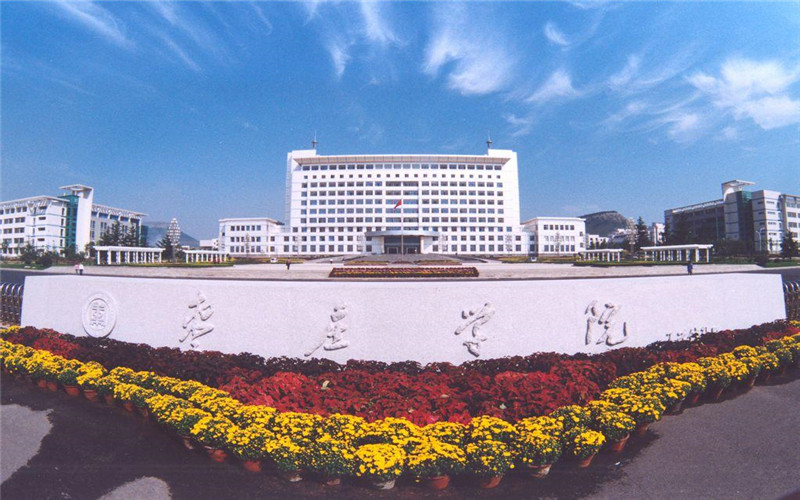
Size: Total area of 2,912 mu (approx. 480 acres), with a building area of nearly 800,000 square meters.
-
Assets: Fixed assets total 1.45 billion RMB.
-
Facilities: There are 22 experimental teaching centers. Notably, the Computer Experimental Teaching Center, Biology Experimental Center, Food and Pharmaceutical Experimental Teaching Center, and Building Industrialization Virtual Simulation Teaching Center are provincial-level experimental teaching demonstration centers in Shandong.
-
Equipment & Resources: The total value of teaching and scientific research equipment exceeds 500 million RMB. The library holds a collection of over 5.04 million volumes.
Faculty & Students
-
Enrollment: The university enrolls students from 26 provinces, autonomous regions, and municipalities nationwide, as well as from Taiwan, Hong Kong, and Macao, with over 32,000 full-time students.
-
Faculty: It currently employs nearly 1,800 faculty and staff. Teachers with doctoral or master's degrees account for 96% of the faculty. There are 617 professionals with senior academic titles and 383 full-time and part-time doctoral and master's supervisors.
-
High-Level Talent: The university boasts 37 high-level talents, including dual-appointed academicians, Changjiang Scholars, National Outstanding Youth, experts receiving special government allowances from the State Council, New Century Excellent Talents of the Ministry of Education, Taishan Scholar Young Experts, Taishan Industry Leading Talents, provincial-level distinguished teachers, and young/middle-aged experts with outstanding contributions to the province.
-
Teams: It hosts 3 provincial-level excellent teaching teams, 3 Huang Danian-style teacher teams in Shandong universities, 25 provincial higher education youth innovation teams, 4 provincial youth talent teams in philosophy and social sciences, and 4 teams under the provincial higher education youth innovation talent introduction and cultivation plan.
Academic Programs
-
Structure: The university features 22 teaching schools (departments). It holds 2 master's professional degree authorization points in Materials & Chemical Engineering and Biology & Medicine.
-
Undergraduate Majors: It offers 68 standard undergraduate majors covering 10 disciplines: literature, science, engineering, management, education, history, economics, law, arts, and agriculture.
-
Disciplinary Achievements: * 1 national-level pilot major for comprehensive undergraduate reform.
-
4 provincial-level key disciplines.
-
Optical Engineering, Education, and Chinese Language and Literature were recognized as 2024 China 3-Star Disciplines and Regional First-Class Disciplines by the CUAA (Alumni Association).
-
4 provincial-level high-level applied project construction major groups, 8 provincial-level characteristic majors, and 11 provincial-level first-class undergraduate majors.
-
8 majors have passed the Level II certification for teacher-training programs, and 4 have completed on-site expert inspections for EU ASIIN certification.
-
-
Courses: The university has 20 provincial-level first-class undergraduate courses, 23 provincial-level excellent courses, and 6 provincial-level ideological and political demonstration courses.
Education & Student Development
-
Ideological Work: Dedicated to fostering virtue through education, the university innovatively implements the "777 Interconnected Education Project" and has built a new "Three-wide Education" framework. It has repeatedly won titles such as "Advanced Collective for Ideological and Political Education in Shandong Province" and "Outstanding Higher Education Institution for Moral Education in Shandong Province."
-
Social Responsibility: Actively responding to the national call, the university has continuously sent 14 batches of 2,870 teachers and students to Kashgar, Xinjiang, for internship and teaching support since 2018, making it the largest assistance group dispatched by universities in the province.
-
Outcomes: Prioritizing student development to deepen educational reform, it has won 1 second prize of the National Teaching Achievement Award, and numerous provincial teaching awards (1 special, 9 first, 22 second, and 4 third prizes). Students have won over 5,400 provincial-level or higher awards in various competitions over the past five years. The graduate progression rate consistently remains above 30%, and the employment rate above 90%.
Industry-Education Integration
Striving to build a "first-class applied university in China," the university has achieved remarkable success in collaborative education:
-
Designations: It is a comprehensive reform pilot school for industry-education integration under the Ministry of Education, an initial pilot unit for professional cooperation by the Ministry of Industry and Information Technology (MIIT), and an initial supported unit for applied undergraduate university construction in Shandong.
-
Industrial Colleges: It has introduced 7 Ministry of Education integration projects and established 17 modern industrial colleges (including 4 provincial-level ones and 1 MIIT "specialized, refined, special, and new" industrial college).
-
Recognition: The university has won awards such as "Shandong Undergraduate Institution with the Most Distinctive Operating Characteristics" and the "China Industry-University-Research Cooperation Promotion Award."
Research & Innovation
-
Platforms: Implementing a "strengthening the university through science and technology" strategy, it was approved to host the Pomegranate Key Laboratory of the National Forestry and Grassland Administration—the only national-level key laboratory dedicated to pomegranate research in China. It also operates over 130 national, provincial, and municipal research platforms.
-
Collaborative Training & Funding: It jointly trains doctoral and master's students with esteemed universities like the University of Chinese Academy of Sciences. Over the past five years, it has undertaken over 220 high-level national/provincial research projects and over 3,000 commissioned projects, with research funding totaling 1.43 billion RMB.
-
Outputs: Published over 2,000 high-level papers, 120 monographs, and secured 180+ national invention patents. A notable scientific achievement includes the discovery of a new species of sisorid catfish in the Himalayas, providing vital data for biodiversity conservation, which was widely reported by national media.
Cultural Initiatives
Rooted in regional and excellent traditional culture, the university researches Ban-Mo (Lu Ban and Mozi) culture, pomegranate culture, canal culture, craftsmanship culture, and red culture.
-
Bases & Brands: It established the Zaozhuang University Research Base of the Nishan World Center for Confucian Studies and has cultivated a cultural brand centered on "Craftsmanship Culture."
-
Esperanto: Partnering with the All-China Esperanto League, it built the world's largest and most functional Esperanto Museum. It compiles and publishes Chinese cultural research series in Esperanto to project China's voice globally, earning the title of "Advanced Unit for Esperanto Teaching and Research."
International Exchange
-
Global Network: The university has established inter-university cooperation with 84 institutions across 20 countries and regions worldwide, facilitating credit recognition, student exchanges, and joint degree programs.
-
Global Footprint: It maintains 4 overseas teaching practice bases and 4 overseas talent workstations, including setting up the "Mozi Culture Center" in Cambodia. It is also a member of the Sino-German Lithium Battery Technology and Industry Alliance.
-
International Students: The university consecutively hosts the Ministry of Education's "Chinese Bridge" project and has enrolled over 600 international students from 25 countries, steadily elevating its level of internationalization.
(Data as of March 2026)
ابدأ المحادثة
كن أول من يشارك أفكاره!