

Let’s look at some essential Chinese vocabulary for a smooth yoga practice.
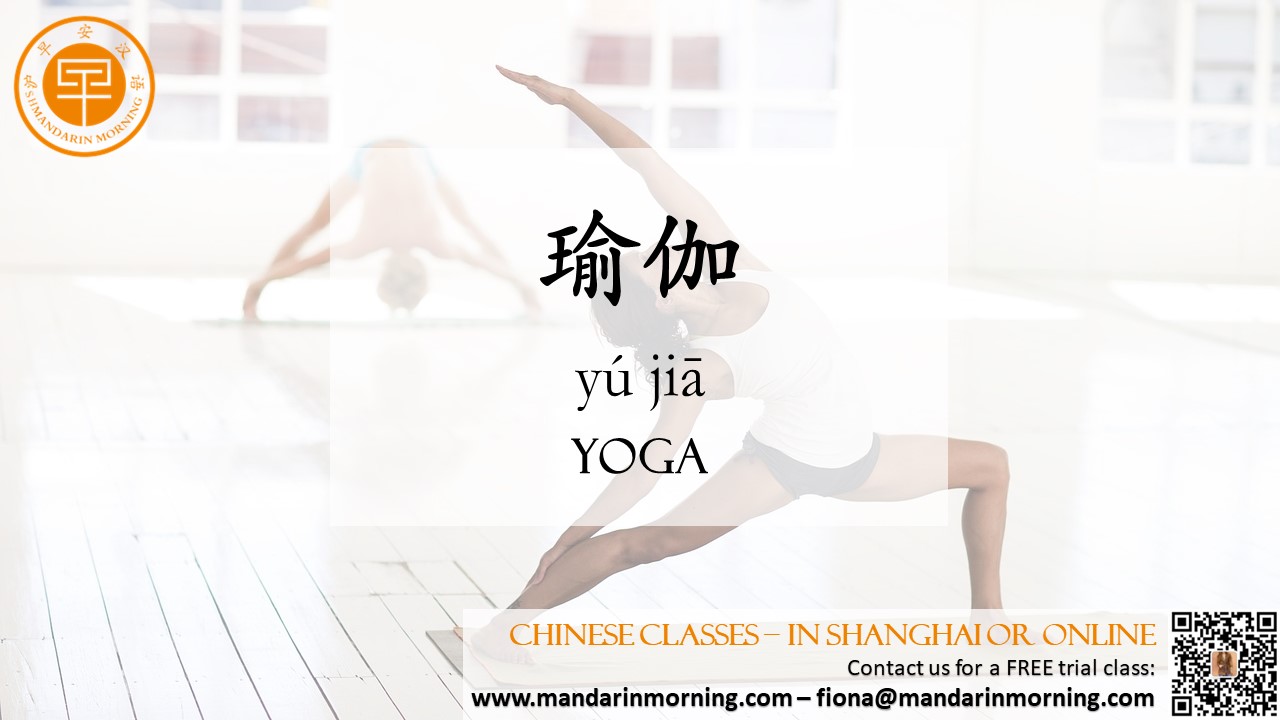
瑜伽 (yújiā) - yoga
练瑜伽 (liàn yújiā) - to practice yoga
哈他瑜伽 (Hātā yújiā) - Hatha yoga
流瑜伽 (liú yújiā) - flow yoga
阿斯汤加 (Āsītāngjiā) - Ashtanga yoga
Vinyasa瑜伽 (Vinyasa yújiā) - Vinyasa-style yoga
空中瑜伽 (kōngzhōng yújiā) - aerial/fly yoga
One of the essential instructions during any yoga practice is coordination of your breath.
呼吸 (hūxī) - breath; to breathe
Your teacher might use such instructions as:
吸 (xī) - to inhale
呼 (hū) - to exhale
深吸 (shēn xī) - to inhale deeply
深呼 (shēn hū) - to exhale deeply
Knowing what different parts of your body are called in Chinese will help you understand your teacher in case she/he gives you some verbal adjustments.
身体 (shēntǐ) - body
Here are the most common body parts that might be mentioned during a yoga class:
腿 (tuǐ) - leg(s)
膝盖 (xīgài) - knee(s)
脚 (jiǎo) - foot/feet
肩膀 (jiānbǎng) - shoulder(s)
胳膊 (gēbo) - elbow(s)
手臂 (shǒubì) - arm(s)
腹部 (fùbù) - abdomen
髋 (kuān) - hip(s)
背 - (bèi) ∙ back
If you are just beginning to practice yoga, these basic instructions might actually be more useful for you than the names of the postures themselves:
弯曲 (wānqū) - to bend
伸直 (shēnzhí) - to extend; to straighten
收紧 (shōujǐn) - to tighten
放松 (fàngsōng) - to relax
Now, let’s look at some popular postures.
姿势 / 体式 (zīshì / tǐshì) - asana; posture
Generally, the Chinese name of a posture is made of its descriptive part + 式 (shì, “posture; asana”):
战士式 (zhànshì shì) - warrior pose
下犬式 (xià quǎn shì) - downward-facing dog
上犬式 (shàng quǎn shì) - upward-facing dog
鸽子式 (gēzi shì) - pigeon pose
莲花式 (liánhuā shì) - lotus pose
死人式 (sǐrén shì) - savasana (“corpse pose”)
轮式 (lúnshì) - wheel pose
桥式 (qiáoshì) - bridge pose
眼镜蛇式 (yǎnjìngshé shì) - cobra pose
骆驼式 (luòtuó shì) - camel pose
你喜欢练瑜伽吗?(Nǐ xǐhuan liàn yújiā ma) - Do you like to practice yoga?
你最喜欢的瑜伽体式是什么?(Nǐ zuì xǐhuan de yújiā tǐshì shì shénme) - What’s your favourite yoga posture?



Start the conversation
Be the first to share your thoughts!