



Founded in 1984, Gansu Normal University for Nationalities is a provincial-level undergraduate institution authorized to grant master's degrees. It is a joint university built by the National Ethnic Affairs Commission of China and the Gansu Provincial People's Government. The university is supported by Tianjin Normal University in its development and is designated by the Ministry of Education. It has been recognized as a model collective for ethnic unity and progress in the province, a demonstration school for the inheritance of red genes in Gansu, a provincial-level language and literacy promotion base, and a civilized campus in Gansu.
The university is located in Hezuo City, the capital of Gannan Tibetan Autonomous Prefecture, situated at the intersection of Gansu, Qinghai, and Sichuan provinces in southwestern Gansu. It is the only ethnic normal university in the province, with a service region based in Gansu, extending to surrounding ethnic areas, and radiating nationwide. The university holds an important strategic position, with unique geographical advantages, rich natural resources, deep cultural heritage, and vast space for educational development.
The school was originally established as Hezuo Nationalities Normal Higher Vocational College in 1984 and was upgraded to an undergraduate institution in March 2009 with approval from the Ministry of Education. In May 2013, it became a jointly constructed institution by the Gansu Provincial People's Government and the National Ethnic Affairs Commission. In 2020, it was designated as a university for the establishment of master's degree programs. Over the past 40 years, the university has trained nearly 50,000 professionals of various levels, most of whom work in grassroots governance and basic education in Gansu's ethnic regions. Some graduates have become school principals, teaching experts, and administrators in local ethnic regions, contributing to regional ethnic unity, social stability, economic development, cultural progress, and the inheritance of excellent Chinese culture.
Key Statistics:
- Campus Area: Nearly 1,000 acres
- Faculty and Staff: 886 employees
- Students: 12,177 enrolled students
- Library Collection: 2.55 million books
The university firmly adheres to the educational philosophy of “Creating a Sunshine University with Sunshine Quality,” upholding the spirit of “Not lacking ambition in an oxygen-deficient environment, and not fearing hardship,” and the motto of “Harmony and Beauty, Self-improvement.” The school emphasizes cultivating socialist builders and successors with comprehensive development in politics, academics, quality, and innovation, while aiming to become a base for cultivating high-quality talents, a center for scientific and technological innovation to serve regional development, and a platform for cultural inheritance.
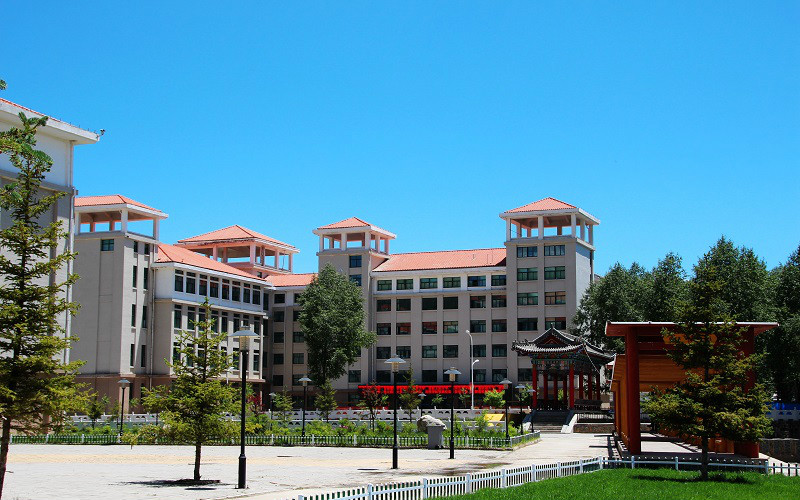
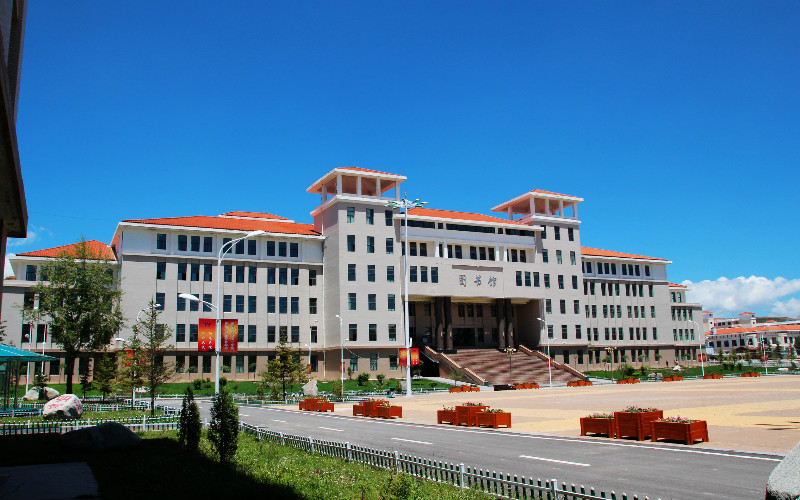
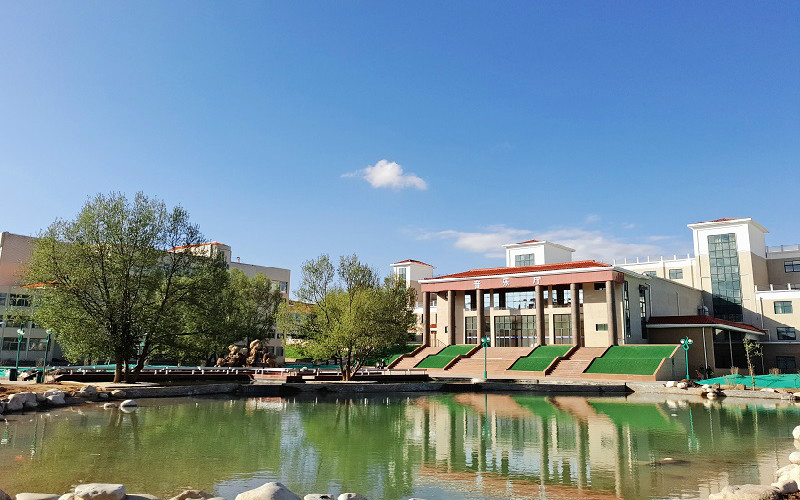
The university covers nearly 1,000 acres, with a total building area of 314,200 square meters, including 157,000 square meters for teaching and administration, and 32,000 square meters for laboratories. The total value of fixed assets is around 1 billion RMB, and the total value of teaching and research equipment reaches 140 million RMB. The library houses over 2.55 million volumes of books, including both printed and digital resources, and there are 175 on-campus laboratories and training rooms, as well as 165 off-campus practical teaching and internship bases.
The university gradually developed professional groups centered around "teacher education, regional culture, and plateau industries," covering 10 disciplines, including literature, science, engineering, agriculture, law, education, management, history, economics, and the arts. It offers 42 undergraduate programs and has two key national disciplines, one national-level distinctive program, and five provincial-level key disciplines. The university collaborates with institutions like Tibet University to offer master's degree programs.
The university's enrollment primarily focuses on Gansu and extends to 23 other provinces, including Qinghai, Sichuan, Yunnan, Tibet, Inner Mongolia, Fujian, and Hainan. Among the 12,177 students, 58% are from minority ethnic groups, including Tibetan, Hui, and other ethnic minorities. The university is committed to improving educational quality, aligning talent development with the needs of national and regional economic and social development, and fostering strong employment outcomes for graduates.
Currently, the university employs 886 faculty members, including 698 full-time teachers, with 59% holding senior titles. The faculty includes 227 doctoral degree holders and 308 master's degree holders, with nearly 81 faculty members recognized for their achievements at the national and provincial levels.
The university has established 14 research institutes, with a focus on humanities, social sciences, and plateau studies. It has won multiple awards for academic excellence and has published over 4,000 papers, authored over 200 monographs and textbooks, and holds 186 patents.
In terms of campus culture, the university promotes a vibrant, dynamic environment centered around the core socialist values, organizing a variety of cultural and sporting events. The football team has won the provincial championship three times, and the university's students have earned top awards in national and provincial competitions.
The university is also advancing international cooperation, having signed agreements with 14 universities in 9 countries, including the United States, Cyprus, Malaysia, and Thailand, and is actively involved in the "Belt and Road" initiative.
The university will continue to adhere to the guiding principles of Xi Jinping's thoughts on socialism with Chinese characteristics for a new era, strengthen its party leadership, improve talent training quality, and aim to build a modern, high-level nationalities normal university with distinctive characteristics in teacher education, regional culture, and plateau industries.
(Data as of May 2024)
Iniciar la conversación
¡Sé el primero en compartir tus pensamientos!