

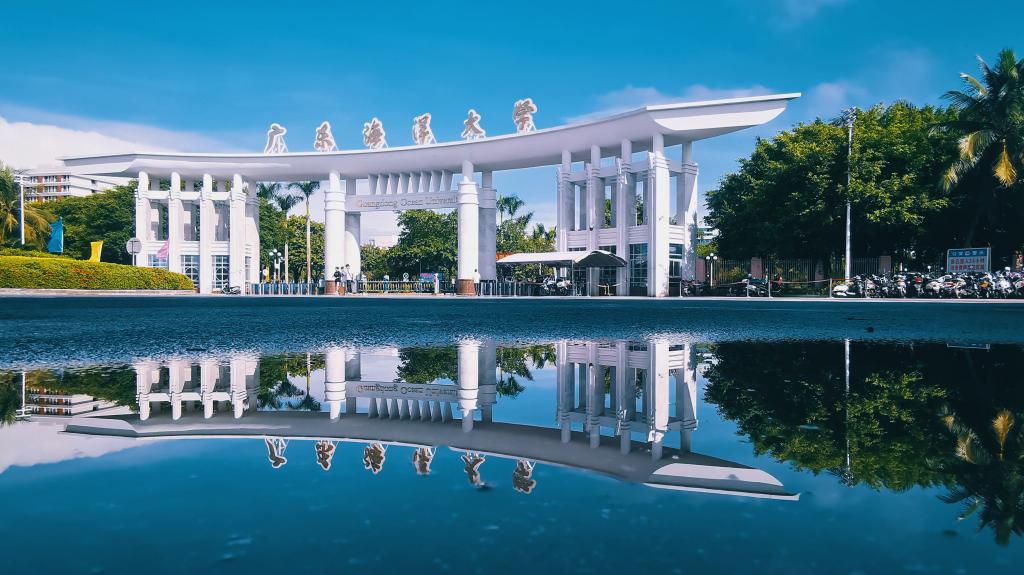
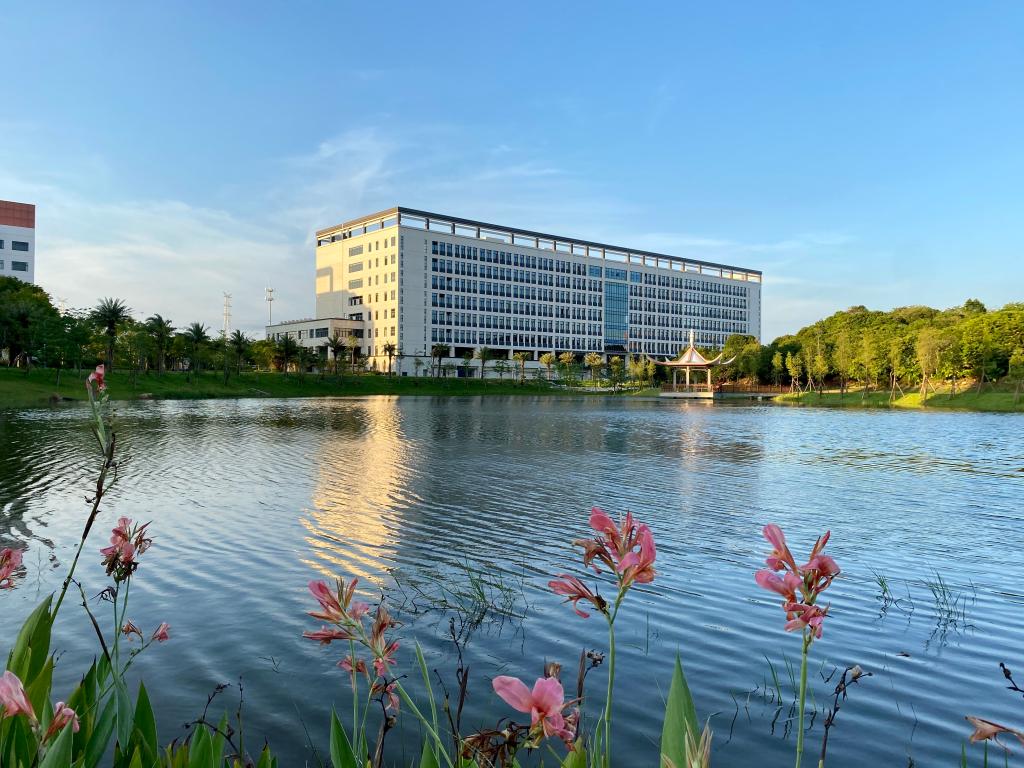

Guangdong Ocean University is a university jointly established by the People's Government of Guangdong Province and the Ministry of Natural Resources of China. It is a comprehensive ocean university with a focus on marine and aquatic disciplines and a coordinated development of multiple disciplines. The university is a key institution in the construction of high-level university disciplines in Guangdong Province.
The university's predecessor was the Guangdong Provincial Advanced Fisheries Vocational School, founded in 1935. It marks the beginning of modern marine and aquatic education in Guangdong. The Fisheries Department of Jinan University and the Zhanjiang branch of the former South China Institute of Technology (now South China University of Technology) were incorporated into the institution, which was upgraded to the Zhanjiang Fisheries College under the Ministry of Agriculture in 1979. With the approval of the Ministry of Education, Zhanjiang Fisheries College (established for 62 years) and the Zhanjiang branch of the former South China Agricultural University (now South China Agricultural University) (with 39 years of history) merged in 1997 to form Zhanjiang Ocean University. In December 2001, the Zhanjiang Meteorological School, which was directly under the National Meteorological Administration and a key national secondary school, was incorporated into Zhanjiang Ocean University. In June 2005, Zhanjiang Ocean University was renamed Guangdong Ocean University. In January 2021, the provincial party committee and provincial government designated the university as the host institution to co-build the Guangdong Ocean University Yangjiang campus with the Yangjiang Municipal Government, the Provincial Department of Education, and South China University of Technology.
The university operates across two beautiful coastal cities at the southern tip of Mainland China—Zhanjiang and Yangjiang. The campuses are situated in scenic locations surrounded by mountains and water, with lush greenery, a harmonious environment, and ideal conditions for students to achieve success. The university enrolls students from 29 provinces, autonomous regions, and municipalities across the country. Currently, there are more than 40,000 full-time undergraduates, graduate students, and international students, and over 20,000 adult education students.
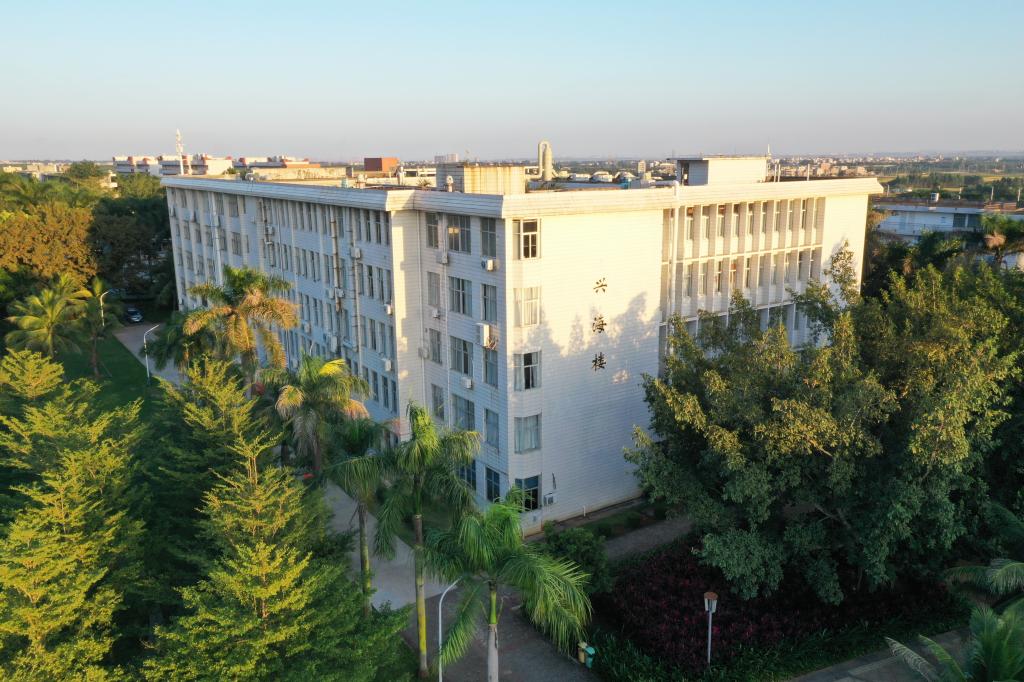
The Zhanjiang campus consists of three campuses: the Lakeview campus (the main campus, located at No. 1 Haida Road, Mazhang District), the Xiashan campus (No. 40 Jiefang East Road, Xiashan District), and the Seaside campus (No. 5 Haibin Avenue, Xiashan District). The total campus area is 4,892 acres, with the Lakeview campus located to the east of the national AAAA-rated Lakeview Rock World Geological Park. The three campuses host 20 colleges, including the College of Fisheries, College of Marine and Meteorological Sciences, College of Food Science and Technology, College of Coastal Agriculture, College of Mechanical Engineering, College of Marine Engineering and Energy, College of Marxism, College of Economics, College of Management, College of Mathematics and Computer Science (Software College), College of Electronic and Information Engineering, College of Chemistry and Environmental Sciences, College of Shipping and Marine Transport, College of Literature and Journalism, College of Law and Political Science, College of Foreign Languages, College of Music and Art, College of Sports and Leisure, St. Petersburg College of Shipbuilding and Marine Technology, and the Continuing Education College.
The Yangjiang campus (No. 1 Luoqin Road, Jiangcheng District) is located west of one of Yangjiang's Eight Scenic Spots, Luoqin Mountain, and south of the picturesque Luoqin Lake. The total planned area is 2,223 acres, with the first phase covering 512 acres, completed in June 2021. This campus hosts 6 colleges, including the College of Mechanical and Energy Engineering, College of Materials Science and Engineering, College of Computer Science and Engineering, College of Food Science and Engineering, Business School, and the College of Humanities and Education, offering 15 undergraduate programs.
The university adheres to the educational philosophy of "Quality builds the school, talent strengthens the school, academics enrich the school, and characteristics enhance the school" and aims to become a leading institution in marine talent training in southern China, a center for marine scientific innovation, and a platform for the inheritance and innovation of marine culture. The university is committed to cultivating applied, innovative talents with international vision, national spirit, social responsibility, scientific spirit, and humanistic literacy, focusing on discipline construction, talent development, faculty building, and education quality improvement.
As a cradle for marine talent development in South China, the university has received strong support from party and national leaders. In January 1997, former President Yang Shangkun unveiled the university's plaque, saying that China greatly needed such a university. In May 2018, the then-Secretary of the Guangdong Provincial Party Committee, Li Xi, pointed out the advantages of the university in marine resource development during a visit to Zhanjiang.
The university offers a comprehensive range of disciplines. It has five key disciplines under Guangdong Province's high-level university construction, including Fisheries, Marine Science, Food Science and Engineering, Shipbuilding and Marine Engineering, and Agronomy. The disciplines of Biology, Engineering, Agricultural Science, and Environmental/Ecological Science are ranked in the top 1% globally according to the ESI ranking. It also boasts a strong faculty, with 2,581 staff members, including 1,735 full-time teachers, 681 senior-level professionals, and 857 Ph.D. holders.
The university has numerous research platforms and labs, such as the National Technology Innovation Center for Salt-Resistant Rice and several other provincial and national key laboratories in marine science, aquatic health, and environmental research. With its research strengths and numerous scientific achievements, the university has made significant contributions to marine science and technology innovation.
The university also emphasizes international exchange and has established partnerships with over 50 institutions worldwide, including in the U.S., Russia, Japan, Korea, the U.K., and Australia, to promote academic and research collaborations.
With robust infrastructure, the university provides excellent teaching and research facilities, including state-of-the-art labs, libraries, sports facilities, and student accommodations. It has a strong focus on practical education and innovation, with a history of cultivating high-level talents and fostering industry-academia cooperation.
In recent years, the university has made significant strides in marine research, including breakthroughs in seawater rice cultivation and marine energy technologies. It has also contributed to the development of marine ecological restoration techniques and has played a vital role in marine industry innovation, supporting sustainable economic growth.
Looking ahead, the university will continue to embrace Xi Jinping's thoughts on socialism with Chinese characteristics for the new era and strive for further growth and international recognition as a leading marine university.
Iniciar la conversación
¡Sé el primero en compartir tus pensamientos!