


Click here to get a hard copy of this book
1.
中国朋友:最近你身体好吗?
Chinese friend: How have you been feeling recently?
Amigo chino: ¿Cómo has estado de salud recientemente?
西蒙:我身体很好。
Simon: I am in very good health.
Simón: Estoy en muy buena salud.
中国朋友:你学习忙吗?
Chinese friend: Are you busy with your studies?
Amigo chino: ¿Estás ocupado con tus estudios?
西蒙:我学习比较忙。
Simon: I am quite busy with my studies.
Simón: Estoy bastante ocupado con mis estudios.
中国朋友:你成绩好吗?
Chinese friend: Are your grades good?
Amigo chino: ¿Tienes buenas calificaciones?
西蒙:马马虎虎。
Simon: So-so.
Simón: Más o menos.
中国朋友:你们班同学学习努力吗?
Chinese friend: Do your classmates study hard?
Amigo chino: ¿Tus compañeros de clase estudian duro?
西蒙:他们学习非常努力。
Simon: They study very hard.
Simón: Ellos estudian muy duro.
2.
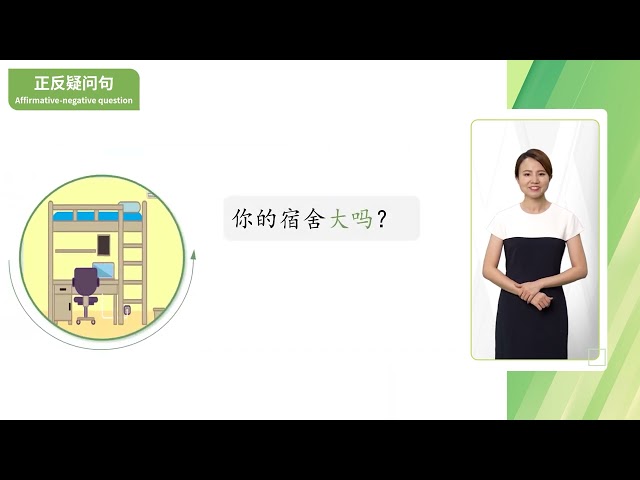
中国朋友:你的宿舍大不大?
Chinese friend: Is your dormitory big?
Amigo chino: ¿Es grande tu dormitorio?
西蒙:我的宿舍不太大。
Simon: My dormitory is not too big.
Simón: Mi dormitorio no es demasiado grande.
中国朋友:宿舍里有没有空调?
Chinese friend: Is there air conditioning in the dormitory?
Amigo chino: ¿Hay aire acondicionado en el dormitorio?
西蒙:宿舍里有空调。
Simon: There is air conditioning in the dormitory.
Simón: Hay aire acondicionado en el dormitorio.
中国朋友: 你有没有同屋?
Chinese friend: Do you have a roommate?
Amigo chino: ¿Tienes compañero de cuarto?
西蒙:我没有同屋。
Simon: I do not have a roommate.
Simón: No tengo compañero de cuarto.
中国朋友: 你的宿舍离教室远不远?
Chinese friend: Is your dormitory far from the classroom?
Amigo chino: ¿Está lejos tu dormitorio del aula?
西蒙:我的宿舍离教室很近。
Simon: My dormitory is very close to the classroom.
Simón: Mi dormitorio está muy cerca del aula.
3.
中国朋友:你们学校留学生多不多?
Chinese friend: Are there many international students at your school?
Amigo chino: ¿Hay muchos estudiantes internacionales en tu escuela?
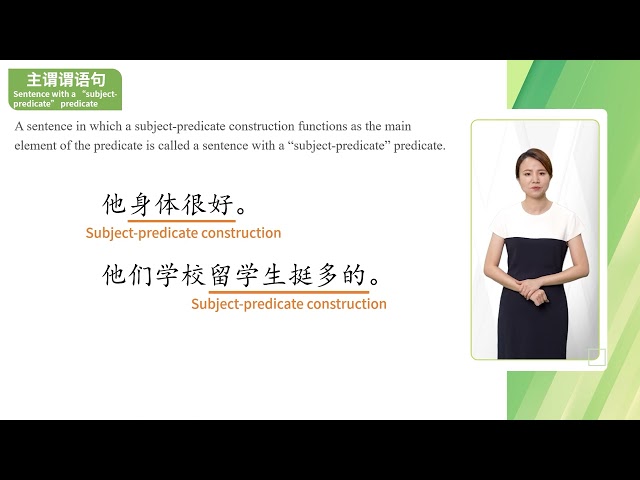
西蒙:我们学校留学生挺多的。
Simon: There are quite a few international students at our school.
Simón: Hay bastantes estudiantes internacionales en nuestra escuela.
中国朋友:你们学校食堂怎么样?
Chinese friend: How is the cafeteria at your school?
Amigo chino: ¿Cómo es la cafetería en tu escuela?
西蒙:我们学校食堂不错。
Simon: The cafeteria at our school is pretty good.
Simón: La cafetería en nuestra escuela está bastante bien.
[1] 我们学校留学生挺多的。
“挺⋯⋯的”或“挺⋯⋯”,意思相当于“很⋯⋯”。
“挺…的”or “挺…”means “很…”.
[2] 你们学校食堂怎么样?
“怎么样”是疑问代词,可以用来询问状况或征求别人的意见、看法。
"怎么样" is an interrogative pronoun. It can be used to ask about situations or inquire about other people's opinion.
Click here to get a hard copy of this book



Commencez la conversation
Soyez le premier à partager vos réflexions !