


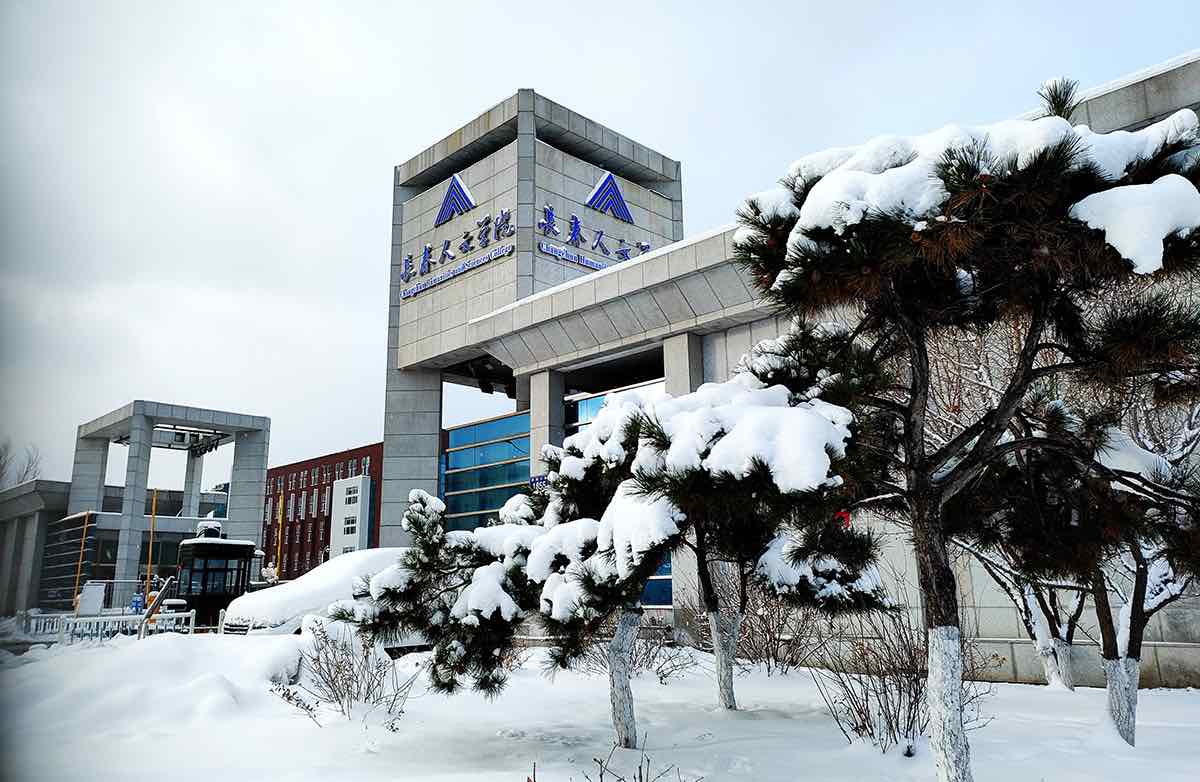
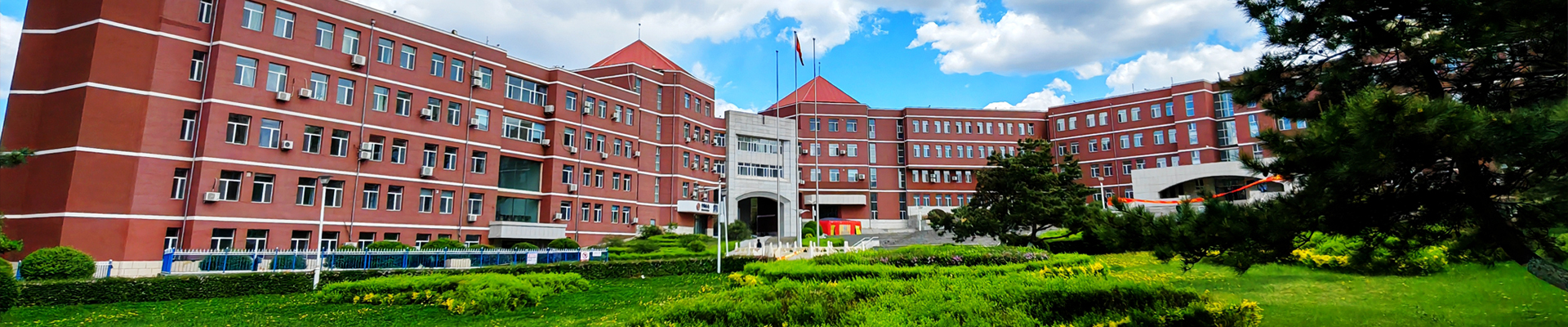

Changchun Humanities and Sciences College is located in the scenic Changchun Jingyue National High-tech Industrial Development Zone. It was established in 1988, having gone through two stages of development as Jilin International Language and Culture College and Northeast Normal University College of Humanities. In December 2020, it was officially restructured and renamed Changchun University of Humanities, with a history spanning 36 years. Professor Mu Shuyuan, a national outstanding educator, serves as the chairman, Professor Zhang Xinghai, a doctoral supervisor, is the president, and Liu Yi is the Party Secretary (supervisory commissioner).
The university has two campuses—East and West—and a campus in Shuangyang, covering an area of 576,000 square meters with a building area of 260,000 square meters. It has 12 basic colleges and offers 36 undergraduate programs, covering eight fields: economics, management, literature, law, education, arts, science, and engineering. Since 2009, it has collaborated with seven other universities, including Northeast Normal University, to jointly cultivate master's degree students. The university currently has over 13,200 undergraduates.
The university aims to become a leading domestic application-oriented private institution and adheres to the "Success Education" philosophy, which centers on cultivating virtuous individuals who are healthy, independent, and innovative. The goal is to train talents with strong humanities literacy, social responsibility, practical abilities, and innovation, embodying the spirit of the school motto: "Diligence, Exploration, Self-reliance, and Talent Cultivation."
The university emphasizes expert-led governance and faculty-driven academic excellence, forming a core team with a broad vision, forward-looking strategic thinking, and a deep commitment to education management. The teaching staff consists of more than 730 teachers, with over 690 full-time faculty members, and 53% holding the titles of professor or associate professor. The university boasts a high proportion of teachers with master's and doctoral degrees (81%). Among its faculty are winners of national government subsidies, members of the Ministry of Education’s Teaching Guidance Committee, national first-class directors, first-class actors, provincial teaching masters, and innovators, as well as members of various elite educational and research platforms. The university has also developed a robust team of doctoral supervisors and joint supervisors for graduate students.
Since 2017, the university has been recognized as a master’s degree granting institution in Jilin Province, with four professional master's degree programs approved. It has six leading and distinctive disciplines. In December 2018, its welfare studies discipline was recognized as a high-level, emerging interdisciplinary field. The university continuously adjusts its academic offerings and has developed seven academic groups. The number of national and provincial educational achievements, first-class professional construction points, and research platforms has been steadily increasing. In 2022, the university’s music program was selected as a national first-class program.
The university has also made significant progress in innovation and entrepreneurship education, with more than 120 national-level and 340 provincial-level innovation and entrepreneurship projects in the past five years. It has earned numerous awards in the "Internet+" innovation and entrepreneurship competition and other contests. The university’s research capabilities have significantly improved, with notable achievements in the arts, including projects funded by the National Art Fund.
The university has taken a proactive role in responding to national strategies addressing population aging, pioneering welfare education in China, especially elderly welfare education. It established the Northeast China Socialized Elderly Care Education Base in 2008 and founded the Welfare College in 2010, marking a milestone in social work and elderly care education. In recent years, the university has become a key player in the welfare and elderly care education field in Jilin Province and beyond, contributing to the integration of healthcare and elderly care services and the development of a talent pool for the industry.
Internationally, the university has built cooperative relationships with over 120 higher education institutions in more than 20 countries, including Japan, the United States, Russia, and South Korea. It offers joint degree programs and has sent numerous delegations abroad for academic exchanges. The university also hosts a significant number of international students and is recognized as one of the few private universities in Jilin Province with study abroad qualifications.
With a steadfast commitment to the leadership of the Communist Party, the university has been recognized for its outstanding achievements in moral education and applied talent training. Its graduates have made significant contributions in various fields, including academia, public service, and the private sector. The university has been widely recognized with numerous awards, including national and provincial honors for its contributions to education and social development.
Over the past 36 years, the university has made impressive strides in education and research, expanding its influence across China and internationally. It remains dedicated to high-quality development, promoting the cultivation of application-oriented talents, and contributing to building a first-class private university in China.
(Updated by the Publicity Department in October 2024)
p.s. formerly College of Humanities & Sciences of Northeast Normal University
Commencez la conversation
Soyez le premier à partager vos réflexions !