
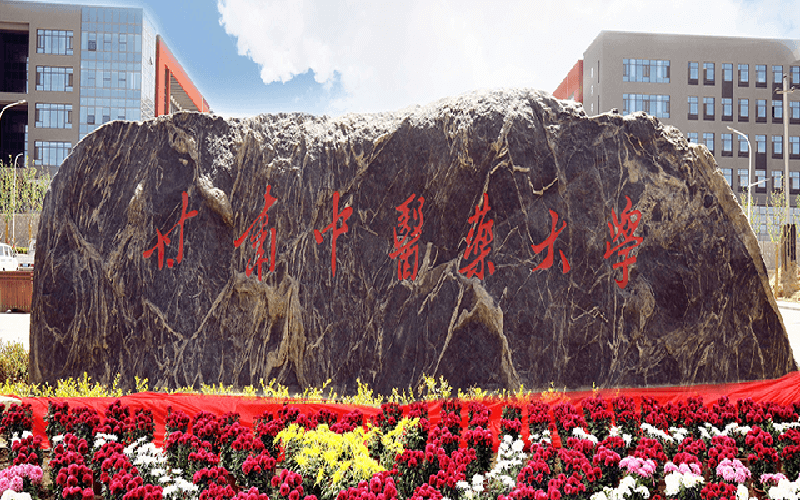
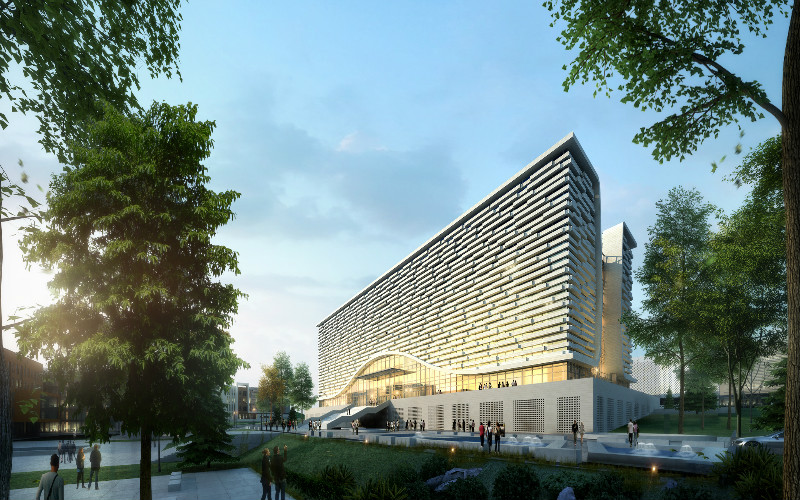

Gansu University of Traditional Chinese Medicine is a joint university established by the Gansu Provincial People's Government and the National Administration of Traditional Chinese Medicine. It is a university approved by the Ministry of Education and the National Administration of Traditional Chinese Medicine for the "Excellence in Doctor (Traditional Chinese Medicine) Education and Training Program Reform Pilot." The university is the technical support unit for the Fourth National Survey of Chinese Medicinal Plants in Gansu Province, the leading unit for the construction of a breeding base for medicinal plant seeds and seedlings required for essential drugs, and the lead unit for the formulation of local standards for medicinal plants in Gansu Province. It is also a “Technology Cooperation Base for Chronic Disease Prevention and Treatment with Traditional Chinese Medicine” under the Ministry of Science and Technology and is home to several key research organizations. The university is one of the few in the Northwestern region to have the authority to award doctoral degrees in traditional Chinese medicine. The current Party Secretary is Wang Xuejun, and the President is Zhao Jirong.
The university’s predecessor was Gansu College of Traditional Chinese Medicine, founded in 1978. In 1989, the university established the Tibetan Medicine Department based on the Tibetan Medicine program of the Gannan Health School, which later developed into a Tibetan Medicine College with a master’s degree-granting status. In 2014, the entire Dinxing Normal College was merged into the institution. In 2015, the university was officially renamed Gansu University of Traditional Chinese Medicine. In 2017, the first phase of the Heping Campus project was completed and put into use, and in 2018, the teaching and administration moved to the main campus, which passed the Ministry of Education’s undergraduate teaching audit.
The university adheres to the socialist direction of education, insists on the fundamental task of moral education, and embraces the school motto “Diligence, Rigor, Inheritance, Innovation.” It emphasizes the educational philosophy of "Rooted in the West, seeking development through distinctive features, inheriting benevolent arts, and focusing on open education." The university aims to cultivate students with a comprehensive understanding of traditional and modern medicine, striving to become a leading institution in the field of traditional Chinese medicine and modern medicine education in Gansu and the Northwestern region.
The main campus is located on a 1,050-acre area in Heping Development Zone in Lanzhou, Gansu Province. The Five-Lipu campus spans 105 acres and is located near key hospitals and academic institutions, serving as the university’s base for high-level talent and continuing education. The Dingxi campus, located in the “Chinese Medicine Capital,” is focused on applied undergraduate education, and the Gannan campus, situated in the “Window to Qinghai-Tibet” region, is dedicated to the cultivation and development of Tibetan medicine.
The university currently employs 1,118 faculty members, with 926 full-time teachers. Among them, there are two National TCM Masters, six National Famous TCM Doctors, four dual-appointed academicians, and over 100 doctoral and master's supervisors. It also has numerous recognized experts, including 18 who enjoy special government allowances and 63 who have been named “Famous TCM Doctors” in Gansu Province. The faculty is distinguished by high levels of academic and clinical expertise, contributing to a high standard of education and research.
The university has 16 teaching institutions, 4 affiliated hospitals, and 150 practical teaching bases, including hospitals and clinics. It offers 34 undergraduate programs and has achieved recognition for several first-class programs at the national and provincial levels. The institution has also developed strong research capabilities, including over 1,000 scientific research projects in the past five years, with substantial achievements in TCM-related innovations and patents.
The university actively promotes international academic cooperation, establishing partnerships with institutions in Russia, the U.S., South Korea, Australia, and many other countries. The school has joined international platforms and built nine "Qi Huang Chinese Medicine Institutes" abroad. In 2022, the university was selected for a government-supported initiative to aid universities in the western region, with Shanghai University of Traditional Chinese Medicine providing support.
Looking ahead, the university is committed to the high-quality development outlined in its strategic goals. It aims to build a leading, internationally recognized institution for TCM and modern medical education, with strong contributions to public health and the economy. It continues to uphold the balance of traditional and modern medicine, integrating cross-disciplinary studies, and nurturing high-caliber talents to serve society’s needs.
(Data updated in March 2024)
Commencez la conversation
Soyez le premier à partager vos réflexions !