




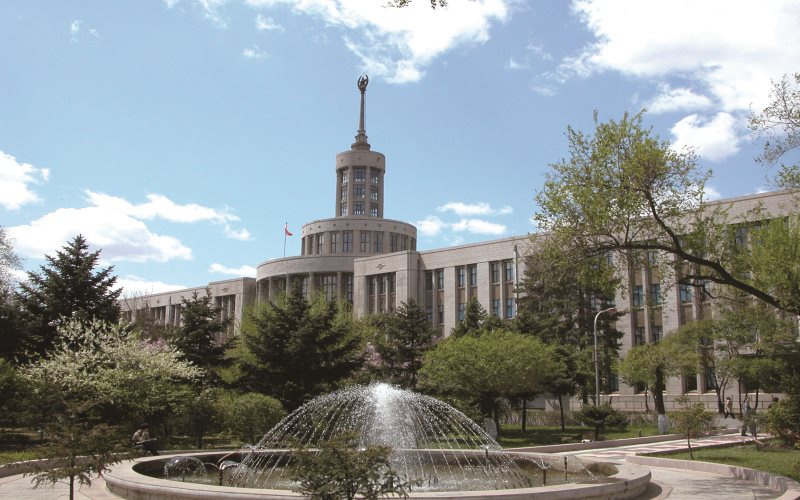
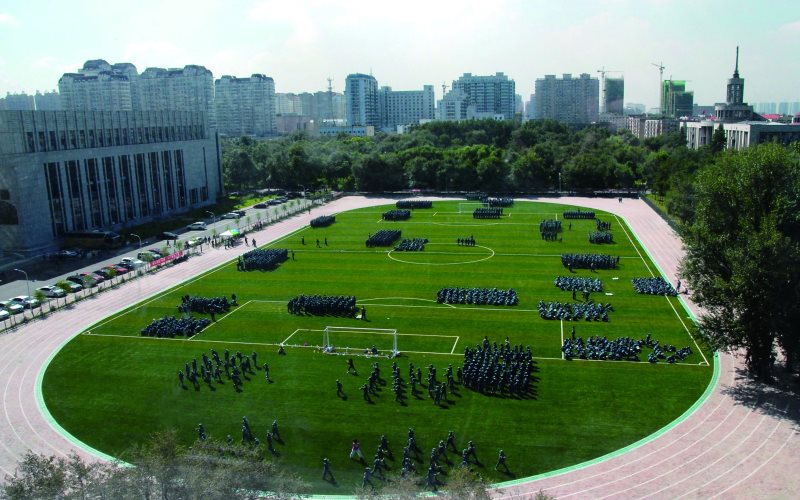

Heilongjiang University of Chinese Medicine, established in 1954, has grown into a prestigious institution for Chinese medicine with high levels of teaching, research, and medical practice, both domestically and internationally. After seventy years of development, the university has become an influential higher education institution in the field of Chinese medicine. In 2004, it was among the first in the country to receive an excellent evaluation for its undergraduate teaching by the Ministry of Education. In 2007, it became the first university in China to pass the Ministry of Education's undergraduate Chinese Medicine program accreditation. The university has won the title of National Civilized Unit three times and, in 2018 and 2022, was approved as a "High-Level University with Distinctive and Advantageous Disciplines" in Heilongjiang Province. In 2021, it was recognized as a university jointly built by the Heilongjiang Provincial Government and the National Administration of Traditional Chinese Medicine, and in 2023, it was approved as a key national laboratory for the integration of classical prescriptions and modern Chinese medicine.
The university is composed of 16 colleges, 12 affiliated hospitals (4 directly under the university), 1 Chinese medicine research institute, 1 higher education research institute for Chinese medicine, 31 teaching hospitals, and 78 internship bases. It offers 27 undergraduate programs across 4 major disciplines: medicine, science, engineering, and management. It has 4 doctoral programs in primary disciplines, 1 doctoral professional degree program, 6 master's programs in primary disciplines, and 7 professional master's degree programs. The current enrollment is 21,728 full-time students, including 828 doctoral students, 4,131 master's students, 16,641 undergraduates, and 128 international students.
The university operates 4 postdoctoral research stations in Chinese Medicine, Chinese Pharmacy, Integrative Medicine, and Pharmacology. It is a key institution for the development of national first-class specialties, including Chinese Pharmacy, Pharmaceutical Formulation, and Acupuncture and Massage, as well as the first batch of second-class specialties in Chinese Medicine. The university is also recognized for its innovative training models in Chinese medicine, with several programs approved as national and provincial "first-class undergraduate programs." In total, it has 4 national key disciplines, 21 key disciplines recognized by the National Administration of Traditional Chinese Medicine, and 9 high-level disciplines in Chinese medicine construction.
The university has made significant contributions in the fields of academic research and teaching. It boasts 3 national-level teaching teams, 1 national curriculum ideological and political teaching team, and numerous national and provincial awards for teaching and research. Its teaching and research facilities are top-notch, with an annual total of over 4,300 research projects, including 8 major national key research programs. The university has received 1880 awards for its scientific and technological achievements, including the National Technology Invention Award and the National Science and Technology Progress Award.
The university’s teaching hospitals include the First Hospital, a key national clinical research base for Chinese Medicine, and the Second Hospital, which is the first to be recognized as a national clinical trial center for Chinese Medicine in Heilongjiang. The university is actively involved in clinical research, including important areas such as integrative medicine for major diseases and acupuncture therapy. The university’s affiliated hospitals collectively have over 5,300 beds and serve 1.5 million outpatient visits annually.
The faculty includes 1,397 full-time teachers, 136 doctoral advisors, 651 master's advisors, and numerous other recognized experts and scholars. Among them, 31 faculty members are recipients of special government allowances, and many are recognized nationally for their contributions to education, science, and medicine.
The university is also a recognized center for international collaboration, receiving students from over 30 countries and regions. It is a pioneer in offering traditional Chinese medicine programs abroad, having established joint institutions with universities such as the University of Adelaide in Australia and the University of London in the UK.
In line with its mission of promoting the essence of traditional Chinese medicine for the health of humanity, the university continues to build itself into a world-class institution, striving for excellence and innovation in Chinese medicine education and research.
(Data as of September 30, 2024)
Commencez la conversation
Soyez le premier à partager vos réflexions !