



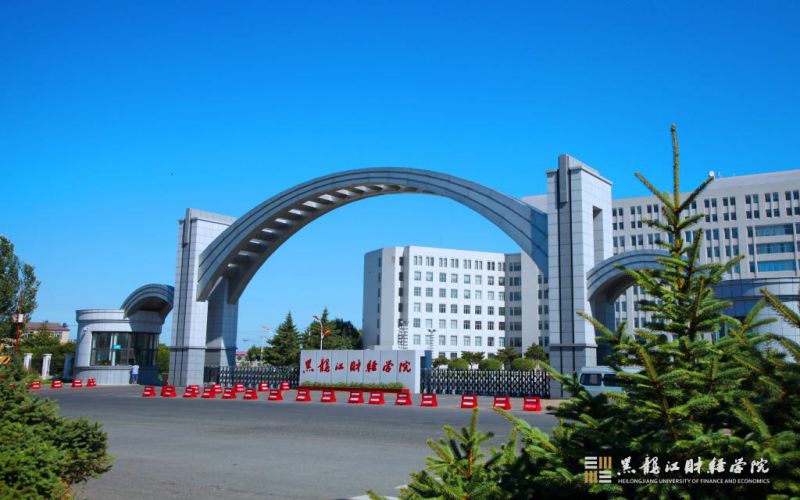
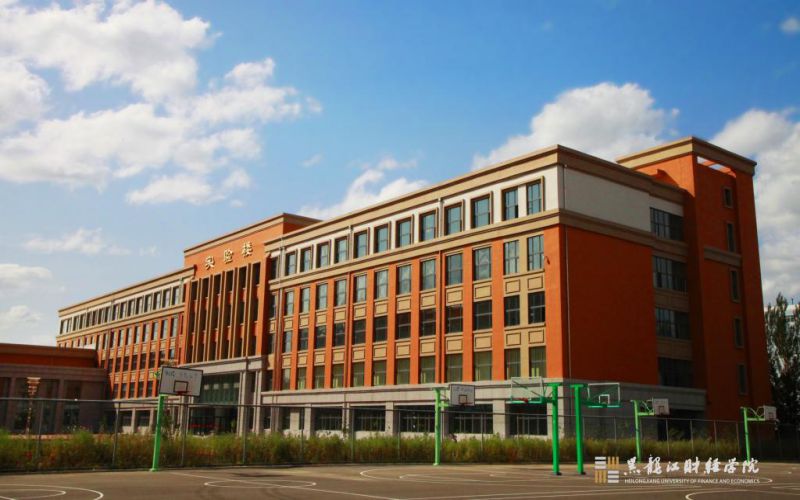

Heilongjiang University of Finance and Economics is located in the New District of Harbin, Heilongjiang Province, within the University Town. Established in April 1999, it was initially funded by Heilongjiang Deqiang Industrial Group and was originally named Harbin Deqiang Vocational College. In September 2008, the school was approved by the Ministry of Education to become one of the first private undergraduate institutions in China, and it was renamed Harbin Deqiang Business College. In April 2013, the name was changed to Heilongjiang University of Finance and Economics.
The university adheres to the Party's educational policies, upholds the socialist direction of education, and focuses on the fundamental task of cultivating virtues and talents. With the guiding principles of "local, application-oriented, and open" education, the university aims to foster innovation, enhance its educational quality, and create distinct features in its academic programs. It is committed to serving regional economic and social development, offering applied talents and technical expertise, and contributing to the development of the region and the nation. The university strives to become a first-class application-oriented university with distinctive features in finance and economics.
The university is primarily focused on economics and management, while also promoting interdisciplinary development in the fields of economics, management, engineering, literature, law, and arts. The university is dedicated to serving the Heilongjiang Province and the broader national community. It offers 33 undergraduate programs across six disciplines, including economics, management, engineering, literature, law, and arts. As of August 2024, the university has 640.5 full-time teachers and 12,720 full-time undergraduate students, with a student-to-teacher ratio of 19.86:1. Among the faculty, 487 are full-time, accounting for 76.03% of the teaching staff. The university began independently managing its Party committee in February 2009, under the leadership of the Provincial Education Work Committee, and currently has 8 Party branches, 3 directly managed Party branches, and 38 grassroots Party branches, with 765 Party members.
The campus covers an area of 695,000 square meters, with a building area of 279,000 square meters. The total value of fixed assets is 931 million yuan, including teaching equipment worth 73.52 million yuan. The library holds 1.4168 million paper books and 3.46 million e-books. The university has 68 laboratories and research centers, and 160 off-campus internship bases. The campus network includes a 10-gigabit backbone and gigabit connections to desktops, with full wireless coverage. The campus features standard athletic fields, tennis courts, basketball and volleyball courts, and a uniquely designed sports hall that includes a swimming pool, basketball and volleyball courts, badminton courts, table tennis rooms, a billiards room, a gymnastics room, a darts room, a fencing room, and a fitness center. Additionally, the campus has a concert hall, academic lecture hall, student activity center, and a psychological counseling center.
The university has 1 provincial-level key discipline (Business Administration), 4 provincial-level first-class undergraduate programs (Accounting, Finance, Financial Management, International Economics and Trade), 2 provincial-level Teaching Achievement Awards (First Class) for projects on "Talent Development for Cross-Border E-Commerce in the Context of Digital Economy" and "Reform and Practice of Talent Development Model in Accounting," and 1 provincial-level Virtual Teaching and Research Office (Finance). Other academic achievements include 5 provincial-level first-class courses, 5 provincial-level ideological and political demonstration courses, and 1 provincial-level key specialty (Accounting). The university has also developed 6 distinctive school-level programs and received 1 national art fund project ("Ancient Road Vehicles"), 16 collaborative industry-education projects, and several provincial and national recognitions.
In addition, the university has built 8 industry colleges, including those focusing on e-commerce and finance, and has established research centers in areas such as coin research and regional economic development. The university has developed a "Three Museums, One Center" cultural education system, consisting of the University History Museum, Coin Culture Museum (the first of its kind among private universities in the province), Red Financial Road Museum, and the Coin Economic Research Center, integrating red culture into the talent development process.
The university is a key institution in the "1115 Project" under the "Higher Education Strong Province Construction Plan" of Heilongjiang, a pilot university for the modern university system in the province, and holds significant leadership roles in various national and provincial educational organizations.
Commencez la conversation
Soyez le premier à partager vos réflexions !