




Hunan University of Medicine was founded in 1912 and originally established as the Changsha Red Cross Nursing Training School by the renowned medical educator Yan Fuqing. In 1924, it officially became the Ren Shu Nursing School. In 1961, the institution relocated to Anjiang and established the Hunan Qianyang Health School, later renamed Hunan Huaihua District Health School in 1981. The school moved to Huaihua in 1984, upgraded to Huaihua Medical College in 2000, and was renamed Hunan University of Medicine in 2014.
Campus and Facilities
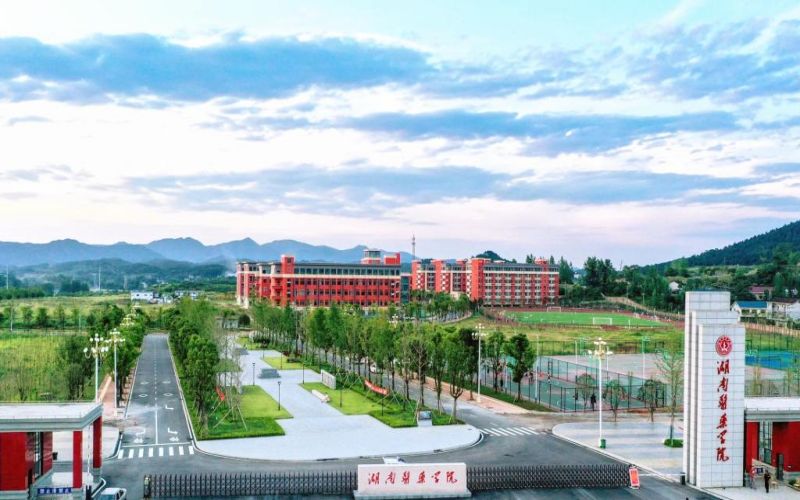
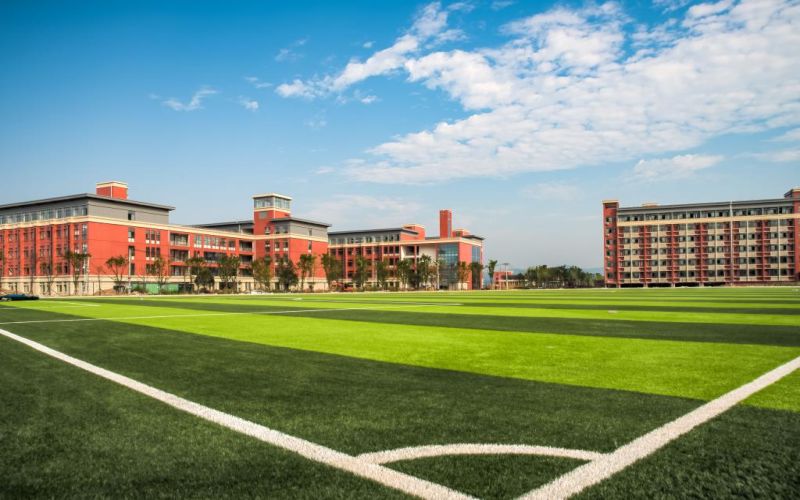
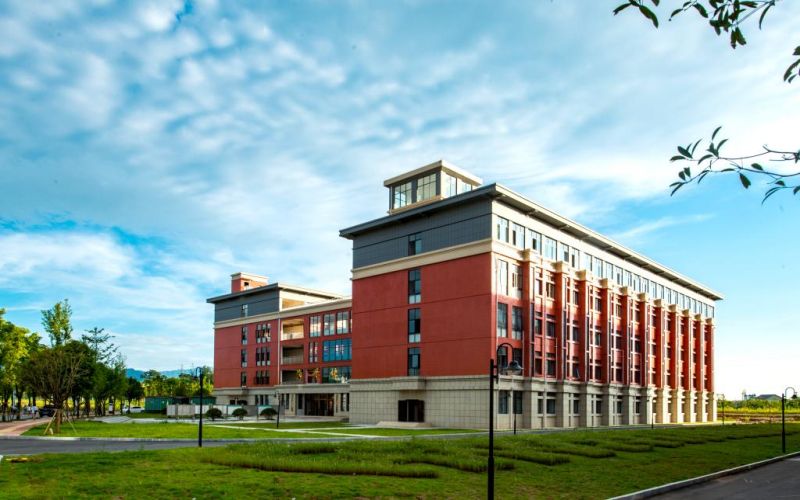
The university currently operates two campuses: Jinxi and Jinhai, covering a total area of 945,300 square meters. The total area of buildings is 264,200 square meters, and the total value of teaching and research equipment is approximately 200 million RMB. Over the past three years, the university has been approved for 530 national and provincial research projects, with a total funding of 25.63 million RMB. The university has received 14 provincial or higher-level research achievement awards, published 39 books, obtained 433 national patents, and published 587 high-level research papers. The university's library holds 1.0977 million physical books and 1.0984 million e-books.
Faculty and Staff
The university employs a total of 4,642 staff members, including medical and healthcare professionals (with its affiliated hospitals). Among the staff, there are 995 with senior professional titles, 1,003 teachers holding doctoral or master’s degrees, 2 experts receiving government special allowances, 2 doctoral supervisors, and 98 master's degree supervisors. The university has trained 3,837 clinical teachers. The university recruits students from 27 provinces (autonomous regions and municipalities), with 14,425 full-time students enrolled, including 14,319 undergraduates.
Academic Structure and Research Institutes
The university has 16 academic departments, including the School of Marxism, School of Basic Medicine, School of Nursing, School of Pharmacy, School of Medical Laboratory Science, School of Public Health and Emergency, School of Rehabilitation and Health, School of Traditional Chinese Medicine, School of Stomatology, School of Medical Humanities and Management, School of Medical Information and Engineering, School of Sports and Arts, School of International Education, School of Continuing Education, the General Hospital (Clinical College), and the First Affiliated Hospital (First Clinical College). It also has a Biomedical Research Institute.
The university operates 2 international cooperation platforms: the China-Pakistan Traditional Chinese Medicine Center and the Hunan-Pakistan Ethnic Medicine Development International Scientific and Technological Innovation Cooperation Base. It also houses 2 national-level drug clinical trial institutions and 28 provincial and ministerial-level research platforms, including key laboratories and research centers in areas such as Dong medicine, new antibody drugs, and traditional Chinese medicine synthesis. The university also has 48 city- and provincial-level research platforms.
Academic Programs
The university offers programs in three academic categories: medicine, education, and management, with 20 undergraduate programs, including Clinical Medicine, Traditional Chinese Medicine, Dentistry, Medical Imaging, Acupuncture and Moxibustion, Preventive Medicine, Pharmacy, Traditional Chinese Pharmacy, Nursing, Midwifery, Medical Laboratory Technology, Medical Imaging Technology, Health Inspection and Quarantine, Food Hygiene and Nutrition, Rehabilitation Therapy, Health Services and Management, Sports Rehabilitation, Marketing, Leisure Sports, and Supply Chain Management. Among these, Pharmacy is a national-level first-class program, and Clinical Medicine, Nursing, Medical Laboratory Technology, Traditional Chinese Pharmacy, Medical Imaging Technology, and Health Services and Management are provincial-level first-class programs. Clinical Medicine, Pharmacy, and Nursing are recognized as provincial-level applied specialty disciplines. The university offers 1 national-level first-class course, 31 provincial-level first-class courses, and 3 provincial-level ideological and political demonstration courses.
Research and Innovation
The university operates 13 experimental teaching centers, 8 innovation training laboratories, 2 directly affiliated hospitals, 13 non-directly affiliated hospitals, 39 teaching hospitals, and 172 practical teaching bases. The university also boasts 3 provincial-level experimental teaching demonstration centers, 2 provincial-level virtual simulation experimental teaching centers, and several other platforms for student innovation and entrepreneurship.
Core Values and Achievements
The university adheres to the motto "Virtue and Medicine, Heavenward Strength," and is committed to serving the grassroots by training healthcare professionals with warmth and compassion. The university has been recognized with numerous accolades, including being named a National Advanced Unit in Health Systems, a National Advanced Unit in Academic Records Management, a National Five-Four Red Flag Youth League, and an Outstanding Unit for Promoting Voluntary Blood Donation. The university also leads the construction of the China-Pakistan Traditional Chinese Medicine Center and the Greater Xiangxi Regional Medical and Health Center.
Hunan University of Medicine remains dedicated to cultivating medical professionals with high ethical standards, comprehensive knowledge, and practical skills, with a focus on addressing the healthcare needs of rural and underserved areas.
Commencez la conversation
Soyez le premier à partager vos réflexions !