





Founded in 1956, Inner Mongolia Medical University is one of the earliest higher medical institutions established in ethnic minority regions of New China. Originally known as Inner Mongolia Medical College, it was affiliated with the Ministry of Health. In 1958, the university was transferred to the jurisdiction of Inner Mongolia Autonomous Region. In 2012, it was renamed Inner Mongolia Medical University. In 2017, it became a jointly built institution by the People's Government of Inner Mongolia Autonomous Region, the National Health and Family Planning Commission, and the Ministry of Education. Over the past 67 years, the university has trained over 100,000 professionals for various levels of positions, making significant contributions to the economic development, social progress, technological innovation, cultural heritage, ethnic unity, and border stability of the region. It has become a multi-disciplinary medical university with regional characteristics.
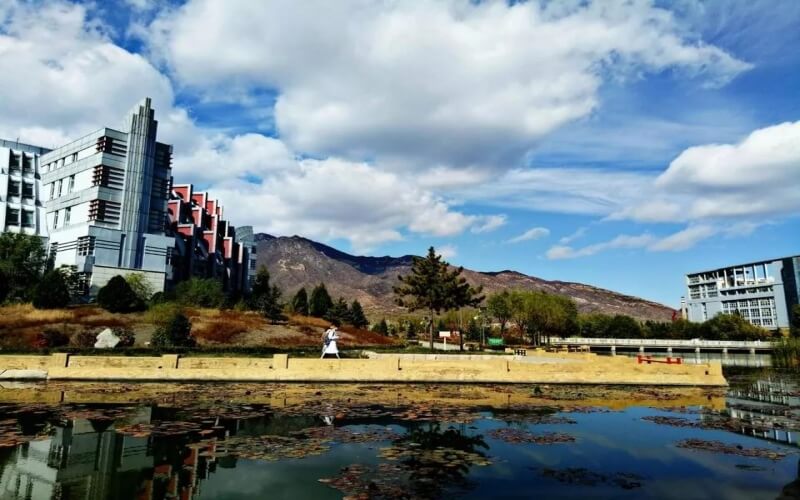
The university is located in Hohhot, the capital of Inner Mongolia Autonomous Region, with campuses including Jinshan Campus (main campus), Xinhua Campus, Xilin Campus, and Hongshankou Teaching Base. It covers a total area of 1.23 million square meters, with a building area of 526,900 square meters. The total value of teaching and research equipment is 861 million yuan. The university's library holds 1.27 million physical books, with 67 domestic and international databases, 332,700 e-books, and 257,700 e-journals. The university has 17 colleges, 12 clinical medical colleges, and 3 directly affiliated hospitals, with 99 practical teaching bases inside and outside the region. The university currently has 16,603 full-time students, including 12,496 undergraduates, 3,369 master's students, 45 doctoral students, 81 preparatory students from ethnic minorities, and 612 international students. The undergraduate programs recruit students from 29 provinces, cities, and autonomous regions in China.
Since 1956, the university has been admitting undergraduate students, starting to admit graduate students in 1978, obtaining authorization for master’s degrees in 1981, and gaining approval as a doctoral degree-granting institution in 2018. The university now offers one doctoral degree program, nine master’s degree programs, and seven professional master’s degree programs, with 49 doctoral advisors and 823 master's advisors.
The university offers 36 undergraduate programs across six disciplines: medicine, science, management, engineering, literature, and law. Among these, there are four national-level first-class undergraduate programs, three Ministry of Education characteristic programs, one program included in the first batch of undergraduate comprehensive reform pilot programs by the Ministry of Education, and nine provincial-level first-class programs. The university offers five national-level first-class courses, 14 provincial-level online open courses, and 35 provincial-level first-class courses. It also has one national clinical teaching training demonstration center, one national virtual simulation experimental teaching center, one national experimental teaching demonstration center, and six provincial-level experimental teaching demonstration centers. In 2022, the university won four first-place, four second-place, and three third-place awards at the regional level for higher education teaching achievements.
The university is home to a national-level key discipline in traditional Chinese medicine, one provincial-level "first-class development discipline," five provincial-quality cultivation disciplines, one provincial-advantageous discipline, five provincial key disciplines, and two provincial key cultivation disciplines. It also has eight national clinical key specialties, one national Chinese medicine specialty, eleven provincial clinical medicine leading disciplines, and 23 provincial clinical medicine key disciplines. Its clinical medicine discipline is ranked in the top 1% globally according to the Essential Science Indicators (ESI). The university is home to a provincial collaborative innovation center, a collaborative innovation cultivation center, eight provincial key laboratories, four provincial engineering research centers, five provincial engineering research centers, four provincial key laboratories in higher education institutions, four provincial key medical and health laboratories, one social science innovation platform, and one provincial humanities and social sciences research base. The Inner Mongolia Museum of Mongolian Medicine and the Inner Mongolia Health Policy Research Institute, Cardiovascular Research Institute, and Orthopedic Research Institute are all located at the university.
The university currently has 1,627 staff members, including 977 full-time teachers. Among the faculty, there are 306 professors, 287 associate professors, and 44.52% of the full-time faculty hold doctoral degrees. The faculty includes 68 experts receiving special government allowances from the State Council, 46 young and middle-aged experts with outstanding contributions to the nation and the region, 1 national-level teaching master in traditional Chinese medicine, 2 national excellent teachers, 9 outstanding talents from the region, 66 innovation talent teams under the “Grassland Talent” program, 124 individuals under the program, and 117 individuals selected for the “New Century 321 Talent Project.” The university also has 15 provincial-level teaching masters, 11 provincial-level excellent teachers, and 12 provincial-level new teaching talents. It has received approval for one national-level teaching team and 12 provincial-level teaching teams, 4 provincial-level scientific innovation teams, and 12 provincial-level higher education scientific innovation teams.
Since the 14th Five-Year Plan, the university has undertaken 1,189 research projects at various levels, including 46 National Natural Science Foundation projects. It has won 37 regional science and technology awards (10 first-place, 23 second-place, and 2 third-place), 2 provincial-level awards for outstanding achievements in philosophy and social sciences (1 first-place, 1 second-place), and 25 professional society science and technology awards (2 first-place, 7 second-place, and 16 third-place). The university has also received 369 national patents, including 28 invention patents, 325 utility model patents, and 16 design patents. It has been granted 44 software copyrights. The university’s journal Journal of Inner Mongolia Medical University has been recognized as a "Distinctive Scientific Journal of Chinese Universities" by the Ministry of Education and is indexed by the China National Knowledge Infrastructure (CNKI). Its publication Disease Surveillance and Control is part of the Chinese Preventive Medicine Association's series.
The university has always adhered to an open educational model and values collaboration with universities and research institutions both domestically and internationally. It is a member of several international academic and medical networks, including the “Belt and Road” International Medical Education Alliance, the Sino-Mongolian Medical Alliance, and the Sino-Russian Medical Universities Union. The university has established cooperative relationships with numerous medical institutions and research organizations from countries such as Mongolia, Russia, Canada, Japan, South Korea, Thailand, Singapore, Belarus, Uzbekistan, and Azerbaijan, and has conducted multi-level and multi-disciplinary exchanges and collaborations. The university has also forged long-term relationships with top Chinese medical institutions, such as Shanxi Medical University, Peking University Health Science Center, Capital Medical University, Xi'an Jiaotong University Health Science Center, Beijing University of Chinese Medicine, and Tianjin University of Traditional Chinese Medicine.
Guided by Xi Jinping’s Thought on Socialism with Chinese Characteristics for a New Era, the university adheres to the socialist direction of education, fully implements the Party’s educational policies, and fulfills its fundamental task of fostering moral character. It follows the development laws of higher medical education and upholds the motto “Broad Learning, Practical Action, Precision, and Excellence” and the values of “Hard Work, Unity, Innovation, and Dedication.” The university is committed to developing both modern and traditional medicine, with a focus on Mongolian medicine, and aims to build a top-tier medical university with regional characteristics. It strives to cultivate well-rounded, healthy, and ethically strong professionals with solid foundational knowledge and skills who are well-prepared to meet the needs of the national healthcare system and the regional economy and society, contributing to the advancement of the healthcare industry in Inner Mongolia and across China.
(Updated in October 2023)
Commencez la conversation
Soyez le premier à partager vos réflexions !