


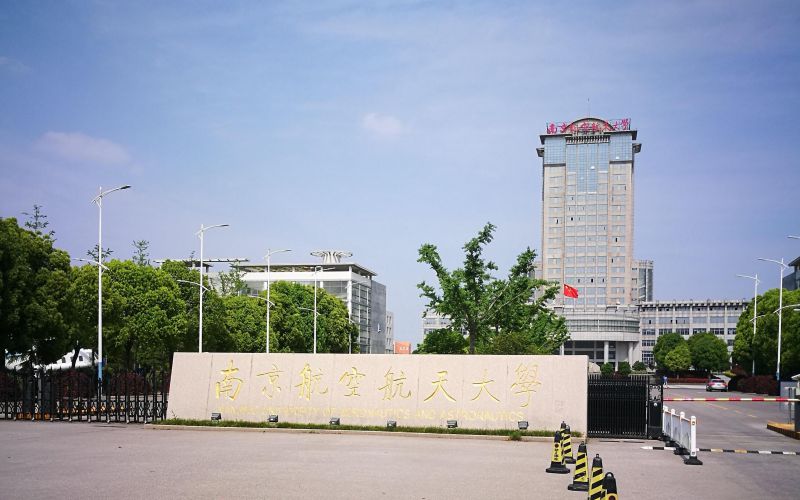

Nanjing University of Aeronautics and Astronautics (NUAA) was founded in October 1952 and is one of the first aerospace higher education institutions established by the People's Republic of China. In 1978, it was designated as a national key university by the State Council; in 1981, it was approved to become one of the first universities in China to grant doctoral degrees; in 1996, it became part of the national "211 Project" for university development; in 2000, it established a graduate school with approval from the Ministry of Education; in 2011, it became a key university in the "985 Project Advantage Discipline Innovation Platform"; in 2017, it was included in the "Double First Class" initiative for building world-class institutions and disciplines. Currently, the university has three disciplines—Aerospace Science and Technology, Mechanics, and Control Science and Engineering—that are part of the second round of "First Class Disciplines" construction. The university is now administered by the Ministry of Industry and Information Technology (MIIT). In December 2012 and April 2021, agreements were signed between the MIIT, the Civil Aviation Administration of China, and NUAA to jointly build the university. In 2018 and 2023, further agreements were signed between MIIT, the Ministry of Education, and Jiangsu Province to jointly support NUAA's development.
Over its more than 70 years of history, NUAA has adhered to the founding tradition of "Aviation for the Nation," followed the principles of "Unity, Simplicity, Practicality, and Innovation," and practiced the motto "Wisdom Circles All Things, Virtue Benefits the World." The university has weathered challenges and strived forward, continuously promoting its leapfrog development. Today, the university has evolved into a high-level research university with a primary focus on engineering, integrating multiple disciplines, including engineering, science, economics, management, and humanities, with a distinctive emphasis on aerospace and civil aviation. The university currently has 23 colleges and 231 research institutions, including 12 national key laboratories and national research platforms, such as the National Key Laboratory of Aerospace Structural Mechanics and Control and the National Key Laboratory of Helicopter Dynamics. There are 67 undergraduate programs, 32 master's-level disciplines, 20 doctoral-level disciplines, 4 doctoral professional degree programs, 16 master's professional degree programs, and 17 postdoctoral research stations. The university has 2 national key disciplines at the first-level, 9 at the second-level, 2 national key (nurturing) disciplines, and 10 national defense-related disciplines.
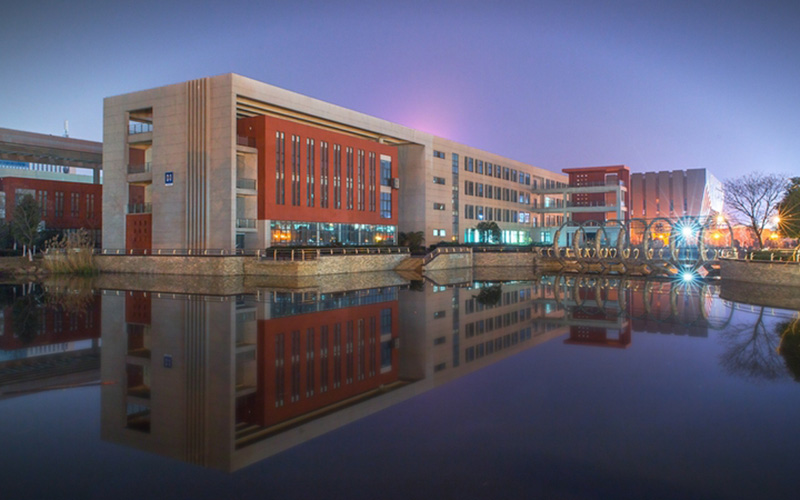
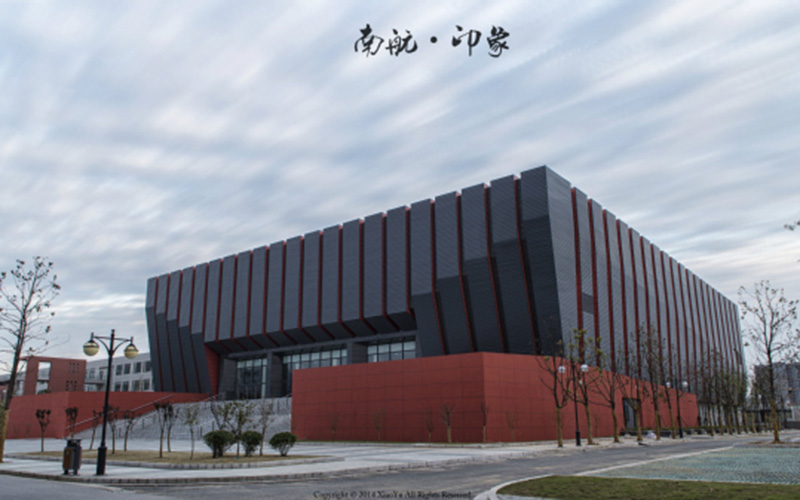
The university operates three campuses—Minggugong, Jiangjunlu, and Tianmuhu—and an international innovation park. Construction of the Yangtze River campus is ongoing. The total area is 3,404 acres, with a building area of 2.247 million square meters. The university's library holds over 3.229 million printed documents, 177 Chinese and foreign databases, and over 14.11 million digital resources. There are 3,810 faculty members, including 2,410 full-time teachers, 1,662 senior-ranked faculty, 741 doctoral advisors, 4 academicians of the Chinese Academy of Sciences and the Chinese Academy of Engineering, 28 flexible-recruitment academicians, 113 national-level high-level talents, 153 national-level young talents, and over 1,000 provincial and ministerial-level talents.
The university has become an important base for cultivating high-level talents. Since its establishment, it has trained over 200,000 high-level specialists for the nation, with alumni including 25 academicians, dozens of provincial and ministerial leaders and generals, as well as numerous well-known scientists and experts in management. The university is dedicated to cultivating responsible, innovative, internationally-minded, and culturally aware talents, continuously advancing educational reforms, and gradually establishing an innovation-driven talent cultivation system with NUAA characteristics. The university has achieved a number of high-level teaching results, including 26 national-level teaching achievement awards, 48 national first-class undergraduate courses, 11 national精品资源共享课 (exquisite shared resource courses), and 6 national excellent teaching teams.
NUAA students have achieved impressive results in various competitions: 38 gold medals and 37 silver medals in the China International University Students Innovation Contest ("Internet+"), 15 special prizes, 25 first prizes, and 16 second prizes in the "Challenge Cup" National College Student Extracurricular Academic Science and Technology Works Competition, and 26 gold medals and 10 silver medals in the "Challenge Cup" China University Students Entrepreneurship Plan Competition. The university's students have also excelled in other competitions, including the "Zhou Peiyuan Cup" National College Students Mechanics Competition and the "China Software Cup" National College Students Software Design Competition.
The university's scientific research capabilities have continually strengthened. Since its founding, it has won 1,849 provincial and national-level scientific and technological achievement awards, including 84 national awards. It has contributed numerous pioneering projects, such as China's first unmanned large target aircraft, the first unmanned aircraft for nuclear test sample collection, and the successful launch of the "Tianxun-1" microsatellite. The university has made significant contributions to defense science and technology, including participating in the research and development of almost all major Chinese aerospace models. It has also facilitated the successful application of numerous technologies in key space programs, including the Chang'e lunar exploration missions. Additionally, the university has advanced cooperation between industry, academia, and research, promoting the transformation of scientific achievements and building an innovative model for technology transfer.
NUAA actively promotes open education and international collaboration, with stable partnerships with over 300 renowned universities and research institutions worldwide. It has formed a new pattern of open education serving the aerospace and civil aviation industries, Jiangsu Province, the entire country, and the world.
As it enters a new era, NUAA will fully implement the spirit of the 20th National Congress of the Communist Party of China and the third plenary session of the 20th Central Committee, guided by Xi Jinping's thought on socialism with Chinese characteristics for the new era. Under the leadership of the MIIT Party Group and the Jiangsu Provincial Party Committee and government, NUAA will continue to cultivate top talents for the Party and country, strengthen its distinctive features, foster innovation, deepen openness, and lead with culture, advancing steadily toward the goal of becoming a world-class university with a clear focus on aerospace and civil aviation. The university is committed to contributing to the great rejuvenation of the Chinese nation and realizing the Chinese Dream.
(Data as of November 2024)
Commencez la conversation
Soyez le premier à partager vos réflexions !