





Fujian Agriculture and Forestry University (FAFU) is located in Fuzhou, the capital of Fujian Province. It is a key provincial university with advantages and characteristics in agricultural and forestry sciences, life sciences, as well as coordinated development in disciplines like science, engineering, economics, management, literature, law, and the arts. The university is jointly built by the Ministry of Agriculture and Rural Affairs and the Fujian Provincial People's Government, as well as by the National Forestry and Grassland Administration and the Fujian Provincial People's Government. It is a high-level university under Fujian's "Double First Class" initiative, a leading institution in the province's first-class university development, and an A-class university in the "Double First Class" construction of Fujian.
The university has a long history. Its predecessor, the Agricultural Department of Fujian Xiehe University, was founded in 1936, and the Fujian Provincial Agricultural College was established in 1940. The Agricultural Department of Fujian Xiehe University marked the beginning of higher agricultural education in Fujian, and the Fujian Provincial Agricultural College was one of the earliest independent agricultural and forestry higher education institutions in southern China. In 1952, the two merged to form Fujian Agricultural College. In the fall of 1958, based on the forestry department of Fujian Agricultural College, the Fujian Forestry College was established. In 1994, Fujian Agricultural College was renamed Fujian Agricultural University. In October 2000, under the leadership of then-Fujian Provincial Governor Xi Jinping, Fujian Agricultural University and Fujian Forestry College merged to form the new Fujian Agriculture and Forestry University. Xi Jinping attended the university's founding ceremony, presented the university's plaque, and gave an important speech, expressing hopes for the university to innovate, deepen reforms, and rise to the forefront of similar institutions in China in terms of scale, quality, academic level, overall strength, and effectiveness. Over the past 20 years, the university has adhered to its tradition of "researching advanced agricultural science and cultivating specialized talents," upholding its school motto of "Virtue, Wisdom, Knowledge, and Innovation." It has achieved significant results in cultivating high-quality agricultural and forestry talents, conducting high-level scientific research, and providing effective social services. It has transformed from a specialized institution into a multidisciplinary university and made a historical leap from a regional provincial institution to one of the leading universities in its field nationwide.
The university has distinct academic features. It currently has 12 doctoral programs and 4 doctoral professional degree programs, as well as 28 master's programs and 22 master's professional degree programs. It adheres to a "Five-in-One" development strategy, focusing on disciplines, talent, platforms, internationalization, and digitization. Its academic layout features agricultural and forestry biological sciences as the main discipline, with engineering and humanities/social sciences as two supporting wings. This has led to the formation of a unique combination of agricultural, forestry, and life sciences. In Fujian's new round of "Double First Class" construction, three disciplines—plant protection, forestry, and ecology—have been designated as key areas for development. The university's core disciplines in agriculture and forestry, along with its basic sciences, are gaining greater international influence. Ten of its disciplines rank in the top 1% globally according to the ESI ranking, with plant science, zoology, and agricultural science ranking in the top 0.1%. The university has also strengthened interdisciplinary development, focusing on emerging fields such as biological breeding, smart agriculture, biotechnology, green food, and agricultural AI.
The university has notable achievements in talent cultivation. It adheres to the educational philosophy of "people-oriented, morality first, emphasizing abilities, and promoting all-round development." It combines teaching, research, production, labor, and social practice to cultivate high-quality talents who are well-rounded, possess solid professional knowledge and practical skills, have innovative abilities, and a deep attachment to agriculture and rural development. The university offers 23 colleges, with over 25,000 undergraduates and 10,000 graduate students. It has 84 undergraduate programs, 46 of which are recognized as first-class national or provincial programs. The university has established new institutes such as the Future Technology Institute, Rural Revitalization Institute, Marine Institute, Digital Economy Institute, and others, while deepening educational reforms.
The university has strong faculty resources. It has implemented a "Talent-Strong University" strategy, attracting and developing top talents in the field of agriculture and forestry. It currently has 546 high-level talents at the provincial level or above, including national-level experts such as two academicians of the Chinese Academy of Sciences, one member of the Canadian Academy of Engineering, and numerous other distinguished experts in various fields. The university has also established multiple national and provincial innovation teams and is involved in various cutting-edge research projects.
The university has made significant contributions to scientific research. It focuses on the major needs of modern agriculture and ecological development, with distinctive advantages in areas such as biological research on mushrooms, bees, orchids, rice, and the ecological control of harmful pests. It has built top-level innovation platforms and national research bases and has received multiple national science and technology awards. The university has also published high-impact papers in leading journals such as Science, Nature, and Cell, ranking first among Fujian's provincial universities.
The university is deeply involved in agricultural and rural development. It has developed technologies such as mushroom grass, which is now promoted in over 100 countries and regions. It has made contributions to global poverty alleviation and rural development. The university has also been active in the internationalization of education, with numerous programs and partnerships abroad, including its Confucius Institute in South Africa, which has trained over 10,000 students.
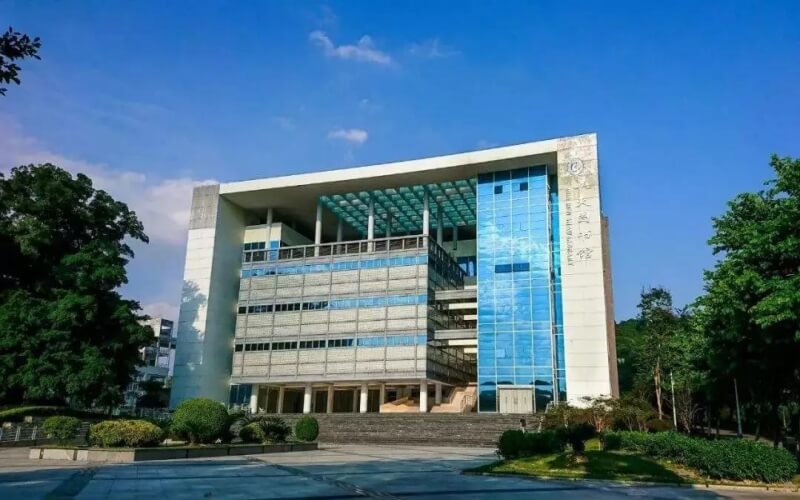
The campus spans over 4,900 acres, with additional research and teaching areas. The university's library holds over 3.3 million paper books and over 3.5 million electronic books. It has been recognized as a national civilized unit for three consecutive terms and was named a National Civilized Campus in 2020.
Looking ahead, Fujian Agriculture and Forestry University will continue to focus on moral education, agricultural development, and quality growth. It aims to further build itself into a leading university in agricultural sciences, contributing to national and global agricultural modernization and the realization of China's agricultural strength.
(Data as of October 2024)
Start the conversation
Be the first to share your thoughts!