






Hebei Sport University is the only independent undergraduate sports university in Hebei Province. Established in April 1984 with approval from the Hebei Provincial Government, the university was founded based on the Physical Education Department of Hebei Normal University. In August 1985, it was officially approved by the National Education Commission to be built on the site of the Hebei Provincial Sports School. In June 2005, Hebei Provincial Sports School was effectively merged into Hebei Sport University. The administrative body overseeing the university is the Hebei Provincial Sports Bureau.
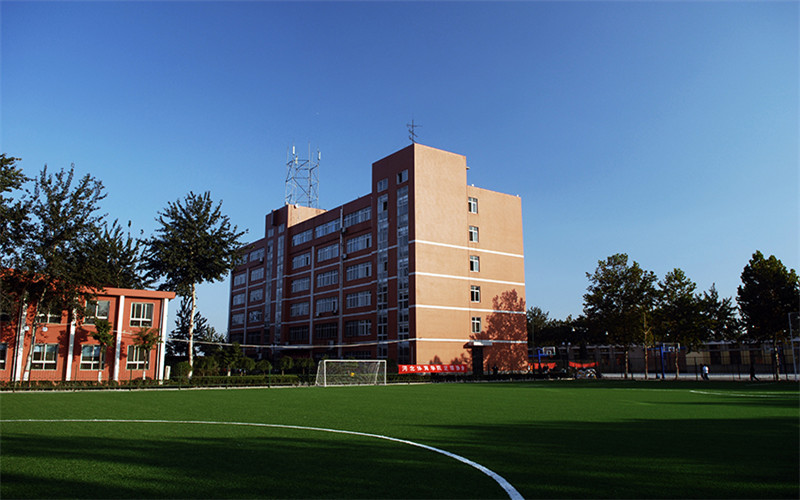
The university currently has two campuses. The main campus on Xuefu Road, covering more than 500 acres, is located beside the picturesque Hutuo River in Shijiazhuang, the capital of Hebei Province, surrounded by the Taiping River Ecological Park, which is famous for its fragrant pear orchards. The Zhengding New District campus, covering more than 200 acres, is adjacent to the Hebei Olympic Sports Center.
Hebei Sport University has 13 teaching units, including the Hebei Sport University Shooting College, jointly established with the Shooting and Archery Sports Center of the Hebei Provincial Sports Bureau, 11 departments, and 1 affiliated sports school. Focusing primarily on undergraduate education, the university offers 16 undergraduate programs, including Sports Education, Sports Training, Social Sports Guidance and Management, Martial Arts and Ethnic Traditional Sports, Sports Science, Leisure Sports, Sports Rehabilitation, Sports Economics and Management, Property Management, English, Dance, Dance Performance, Broadcasting and Hosting Arts, Preschool Education, Ice and Snow Sports, and Physical Training. Among these, Sports Training and Martial Arts and Ethnic Traditional Sports are national-level featured programs, while Social Sports Guidance and Management is a national pilot for comprehensive professional reform. The university’s sports programs are recognized as a provincial-level innovative base for undergraduate education. The university currently has one national-level first-class undergraduate program: Martial Arts and Ethnic Traditional Sports. There are five provincial-level first-class undergraduate programs: Sports Education, Sports Training, Social Sports Guidance and Management, Sports Science, and Dance Performance. The university also has two provincial-level high-quality online courses: "Sports Injury and Massage" and "Aerobics," as well as three courses on the national higher education smart education platform: "Ice and Snow Sports Culture," "Sports Injury and Massage," and "Aerobics."
In addition, the university offers five provincial-level first-class courses, including "General Sports English" (offline), "Exercise Physiology" (offline), "Physical Training" (offline), "Basic Computer Culture" (blended), and "Fashion Fitness Dance" (social practice). Three courses have been designated as provincial-level course ideology demonstration courses: "Aerobics," "Sports Injuries," and "Hebei Folk Martial Arts." The university also boasts several provincial-level outstanding teaching teams, including teams for Athletics, Martial Arts, Aerobics, and Ice and Snow Sports. The university's sports science experimental teaching center and the foreign language intelligent teaching training center are recognized as provincial-level experimental teaching demonstration centers. The "Hebei Sport University – Tianjin Songjiang Tuanbo Lake Golf Club Practical Education Base" is a provincial-level off-campus practical education base for students.
The university’s four sub-disciplines in sports science are all key or key development disciplines at the provincial level: "Sports Education and Training" is a key discipline in Hebei Province, while "Sports Humanities and Sociology," "Ethnic Traditional Sports," and "Sports Science" are key development disciplines. In 2020, the "Hebei Provincial Sports Technology Research and Application Key Laboratory" cooperated with the Hebei Institute of Physical Culture to establish the "Hebei Provincial Digital Physical Monitoring and Health Promotion Key Laboratory," which was approved for provincial-level laboratory construction. The university has built interdisciplinary, cross-professional, and composite professional degree mentor teams in four directions: sports teaching, sports training, social sports guidance and management, and competition organization.
Currently, the university has 7,452 full-time students and 485 full-time teachers. It is home to experts who have received special government allowances from the State Council and provincial government, including one national model teacher, four provincial-level teaching experts, and 22 provincial-level "Three-Three-Three Talent Project" candidates. There are also over 70 international and national-level referees and athletes.
For many years, the university has adhered to a model combining "teaching, scientific research, competition training, and mass fitness" and has embraced a "big sports" vision. The university upholds the motto of "Cultivate Virtue, Strengthen Ability, Seek Knowledge, Innovate," aiming to train application-oriented talents who are well-rounded, skilled, innovative, and practical. By focusing on "basic knowledge, professional distribution, and specialized cultivation," the university has trained a large number of excellent talents for competitive sports, public fitness, sports industry, sports education, and ethnic sports. The university has gradually established itself as a backbone in sports teaching, training, and research in Hebei Province. It was designated by the General Administration of Sport of China as one of the first "National High-level Sports Reserve Talent Bases" and has received various honors, including recognition as a "National Advanced Unit for Folk Sports" and "National Advanced Unit for Mass Sports."
Since its founding, Hebei Sport University has trained more than 40,000 undergraduate and vocational graduates specializing in competitive sports, public fitness, sports industry, sports education, and ethnic sports. Many outstanding alumni have become key figures in schools, sports teams, police and military systems, fitness clubs, and other sectors. Over the past five years, the university has maintained a student employment rate of over 90%.
Through its "combination of learning and training, integration of physical education," the university has successfully developed elite athletes in collaboration with various sports centers. Among the distinguished alumni are Olympic champions such as Cai Yalin, Su Huijuan, and Pang Wei, as well as world champions, chess masters, football players, basketball players, and ping-pong champions. More than 90% of the athletes in Hebei’s basketball, volleyball, and football teams are graduates of the university. The university also manages professional rugby and youth football teams.
Through its collaboration with enterprises, the university has also established a strong golf management program, which has produced graduates who work at more than 80% of golf courses nationwide. In 2015, the university founded a department for Ice and Snow Sports and began enrollment in 2016. The university is currently the leading institution in the nation for training ice and snow sports talents and is focused on building a network of ice and snow training bases across China.
During the 2022 Beijing Winter Olympics and Paralympics, the university directly supported 476 staff members, including 408 competition organizers, technical officials, venue operations, and logistics staff, covering all three major competition zones—Beijing, Yanqing, and Zhangjiakou. The university’s volunteer team was also involved, and both the competition and volunteer teams received recognition for their contributions.
Today, guided by Xi Jinping's thoughts on socialism with Chinese characteristics for a new era and the spirit of the 20th National Congress, the university continues to focus on education, sports, and health. It aims to build a distinctive, influential application-oriented sports university, aligning with national strategies such as strengthening education, sports, and public health.
(Note: Data is current as of December 2022.)
Start the conversation
Be the first to share your thoughts!