




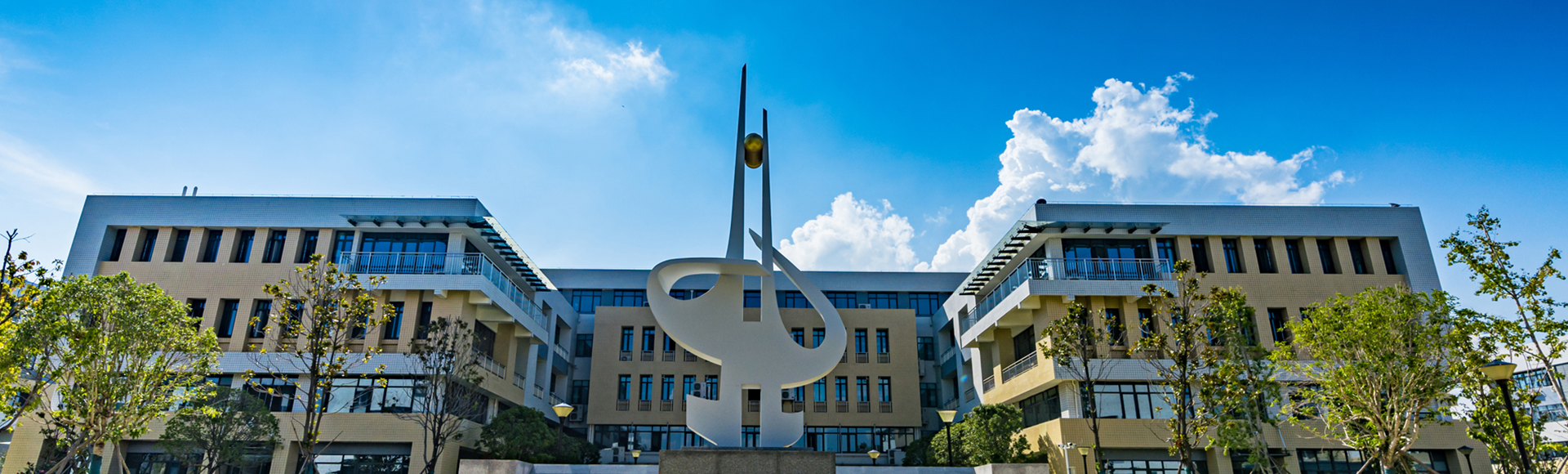

Hubei Engineering University is a full-time general undergraduate institution established by the People's Government of Hubei Province. The history of the university dates back to 1943, when the Hubei Provincial Third Normal School was founded. The institution has undergone several developmental stages, including its evolution into Xiaogan Normal School, Xiaogan University, Wuhan Normal College Xiaogan Branch, Xiaogan Normal College, and Xiaogan Normal Higher Vocational College. In 1986, it merged with Hubei Vocational and Technical Normal College (formerly the Xiaogan Branch of Huazhong Agricultural University). In 1999, the Southern Urban and Rural Construction School (also known as Xiaogan City Construction Engineering School) was incorporated. In March 2000, the institution was renamed Xiaogan University, and in December 2011, it became Hubei Engineering University.
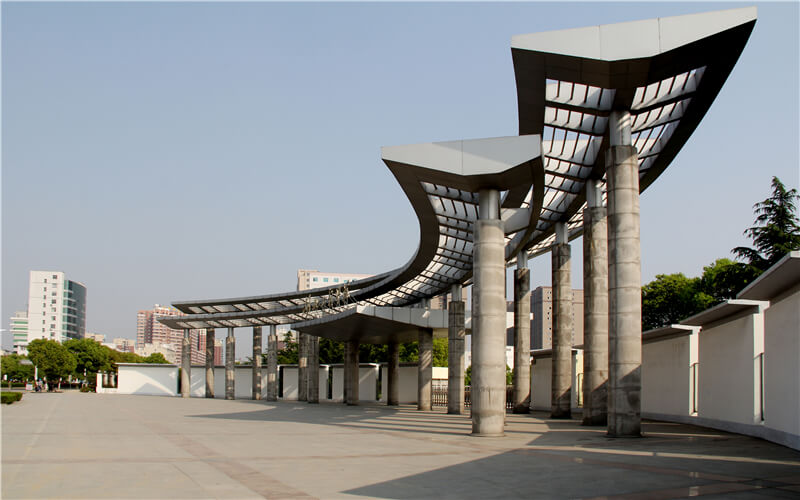
The university is located in Xiaogan City, a key city in the Wuhan metropolitan area and a renowned center for Chinese filial culture. The campus is situated at 272 Jiaotong Avenue, Xiaogan City, 50 kilometers from downtown Wuhan. It takes 18 minutes by the Xiaohan Urban Rail to Wuhan Tianhe International Airport and 28 minutes to Hankou Railway Station, offering convenient transportation and a favorable geographic location. The university currently operates a single campus, covering 1,748 acres with a building area of 675,000 square meters. It has fixed assets of 1.424 billion yuan, teaching and research equipment worth 347 million yuan, and a library with a total area of 39,000 square meters, housing 1.917 million paper books and 2.077 million e-books. The university also has nearly 40 electronic databases and shared platforms for academic resources. The university enrolls over 25,000 full-time students, including 52 graduate students in joint training programs. There are more than 1,300 faculty and staff, of whom 984 are full-time teachers. Among them, 443 have senior professional titles, 306 hold doctoral degrees, and 458 are “dual-qualified” teachers.
The university has continuously improved its discipline and professional system, focusing on developing engineering, agricultural education, medical disciplines, and multi-disciplinary collaboration. It has formed a discipline structure that integrates and coordinates ten fields: Engineering, Agriculture, Education, Economics, Law, Literature, Science, Medicine, Management, and Arts. It has five provincial key disciplines, including Agricultural Resources and Environment, Materials Science and Engineering, Optical Engineering, Education, and Botany. Additionally, the university has been granted the “14th Five-Year” provincial-level feature advantage discipline groups in “Biomass-based Functional Materials” and “Specialized Agricultural Resource Development and Efficient Utilization.” Its journal, Hubei Engineering University Journal, includes a specialized section on “Chinese Filial Culture Research,” which is recognized by the Ministry of Education.
The university currently has 17 teaching colleges and 65 undergraduate programs, including one national comprehensive reform pilot program, three nationally recognized feature programs, two “National Excellent Talent Training Plan” programs, and six provincial-level emerging strategic industry talent programs. It offers 23 provincial-level first-class programs, 7 national-level first-class undergraduate courses, and 57 provincial-level first-class undergraduate courses. The university has won four first prizes for teaching achievements in Hubei Province. It has also established several provincial-level experimental teaching demonstration centers and virtual simulation centers to improve teaching facilities. The university promotes industry-education integration and school-enterprise cooperation, having set up 299 internships and training bases with a wide range of well-known enterprises, including Alibaba, Hunan TV, and JD.com.
The university has made significant strides in scientific research and social service, with 30 provincial-level research platforms, including the Hubei Provincial Key Laboratories, Humanities and Social Sciences Research Bases, and Engineering Research Centers. Over the past five years, the university has received 22 national-level scientific research projects and more than 300 provincial-level projects, with over 1,700 patents and software copyrights granted. The university also plays a vital role in local economic development, collaborating with local governments and industries to promote industrial transformation and upgrade.
International cooperation is a priority for the university, and it has established partnerships with over 20 universities in the UK, the US, and countries along the Belt and Road Initiative. The university has international undergraduate programs in collaboration with the University of Wolverhampton and Anglia Ruskin University in the UK, both approved by the Ministry of Education. The university has been increasing its international exchange activities for both faculty and students.
Hubei Engineering University has received several prestigious titles, including "National Civilized Unit," "Best Civilized Unit in Hubei Province," and "Hubei Provincial Ecological Garden-style School." It is also recognized as a pilot institution for the “Internet+ China Manufacturing 2025” Industry-Education Integration Initiative.
As the university moves forward into a new era, it is guided by Xi Jinping’s thoughts on socialism with Chinese characteristics for the new era, aiming to build a first-class application-oriented university with distinct educational characteristics. The university will continue striving for excellence in engineering education and contribute significantly to the development of Hubei’s regional economy and industry.
Updated: October 2024
Start the conversation
Be the first to share your thoughts!