


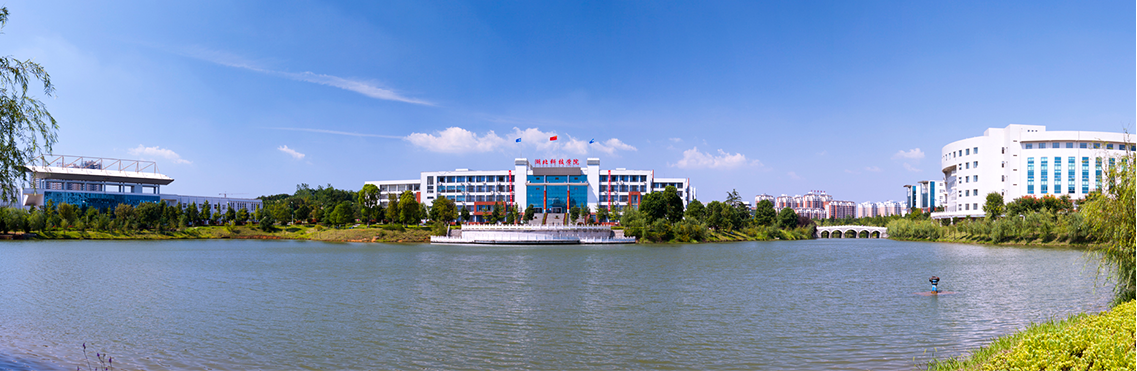

Hubei University of Science and Technology is a public undergraduate institution affiliated with Hubei Province. It has been rated as an “Excellent” university by the Ministry of Education in its undergraduate teaching evaluation. It is also a national model university for industry-education integration, one of the first batch of pilot universities for the Excellent Doctor Education and Training Program, a provincial pilot university for transformation and development, and a master’s degree-granting institution.
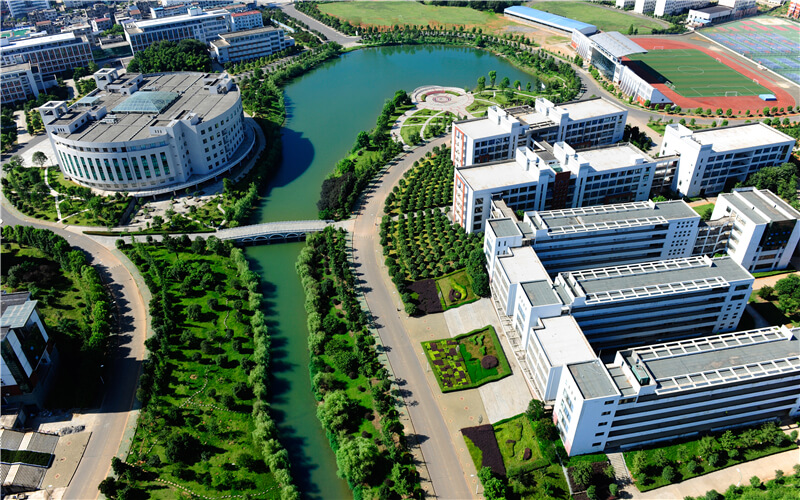
The university is located in Xianning, Hubei Province, with two campuses—Wenquan and Xian'an. The campus covers an area of 1,861 acres, with a building area of 709,700 square meters. The university currently has more than 20,000 students, including over 300 graduate students and over 140 international students. The faculty and staff number more than 1,800, with more than 170 senior professors, over 370 doctoral holders, and more than 120 graduate supervisors. The university also boasts distinguished personnel such as one specially appointed academician, one Ministry of Education New Century Excellent Talent, four experts receiving State Council special allowances, 15 experts receiving provincial government special allowances, four candidates for Hubei Province’s New Century High-Level Talent Program, two national outstanding teachers, and four directors of Hubei Teacher Studio. The total value of the university’s teaching equipment is 320 million yuan. The library holds 2.38 million volumes, with 140,000 periodicals in Chinese and foreign languages, and 33 electronic databases. The campus is beautiful and the conditions for running the school are excellent, earning it the title of "Ecological Garden-style School."
The university has a long history and rich cultural heritage. Its origins trace back to the Puqi Simplified Normal School founded in 1937 and the Xianning Branch of Hubei Medical College established in 1965. After a series of developments and mergers, the university was officially established as Xianning University in 2002 and renamed Hubei University of Science and Technology in 2012. The university has offered higher education since 1965, began undergraduate programs in 1977, initiated joint graduate education in 1995, and became an approved institution for the “Special Talent Training Program” for national needs in 2011. In 2024, the university was granted the authority to confer master’s degrees. Since its founding, faculty and staff have united in their efforts to cultivate a strong academic atmosphere, resulting in a school culture that emphasizes truth-seeking, pragmatism, and perseverance. The university adheres to the motto “Promote Virtue, Learn Broadly, Act Quickly, Be Bold” and the educational philosophy of “Students First, Scholars Prioritized, Govern by Law, and Cultivate Morality.”
The university offers a comprehensive array of disciplines with a clear focus on medical sciences, complemented by disciplines in natural sciences, engineering, economics, education, literature, history, agriculture, management, and the arts. It offers multiple levels of education, including master’s and undergraduate degrees, as well as continuing education. The university has 23 academic colleges and teaching units, offering 55 undergraduate programs. In 2012, it began independently offering master’s programs in pharmacy. The university currently has three provincial advantage and characteristic academic clusters under the “14th Five-Year Plan” (Medicine and Health, Digitalization and Smart Manufacturing, Teacher Education and Cultural Communication), two provincial key disciplines (Pharmacy, Nuclear Science and Technology), and other notable academic achievements.
The university has implemented in-depth teaching reforms, achieving significant results in talent development. It currently has three national first-class program construction sites (Pharmacy, Biomedical Engineering, Physical Education), one national “Comprehensive Reform Pilot” program (Pharmacy), and several provincial-level programs that foster innovation and practical skills. The university has established numerous teaching bases, including national and provincial-level laboratories, research centers, and innovation platforms, supporting high-quality research and development. The employment rate of graduates is consistently above 93%, and students have received over 1,100 provincial and national awards in competitions since 2020.
The university has strong research capabilities, with numerous research centers and laboratories. Over the past five years, it has led numerous national and provincial-level research projects, with over 180 research awards, including several prestigious awards.
The university is highly open to diverse modes of cooperation and exchange, partnering with universities in 13 countries, including the United States, Germany, the United Kingdom, Spain, New Zealand, South Korea, and Hungary. It also serves as a major contributor to local economic and social development, with 11 affiliated hospitals, 11 teaching hospitals, and over 300 industry partnerships.
After more than 80 years of development, the university has trained over 150,000 specialized talents who have become backbones in grassroots medical health services, basic education, government institutions, and enterprises. Many of its outstanding alumni have become leaders in academia, business, and politics both domestically and internationally.
Guided by Xi Jinping's thought on socialism with Chinese characteristics for the new era, the university continues to focus on high-quality development, reform, and legal governance, striving to build itself into a high-level, application-oriented university with distinctive characteristics. (October 2024)
Start the conversation
Be the first to share your thoughts!