


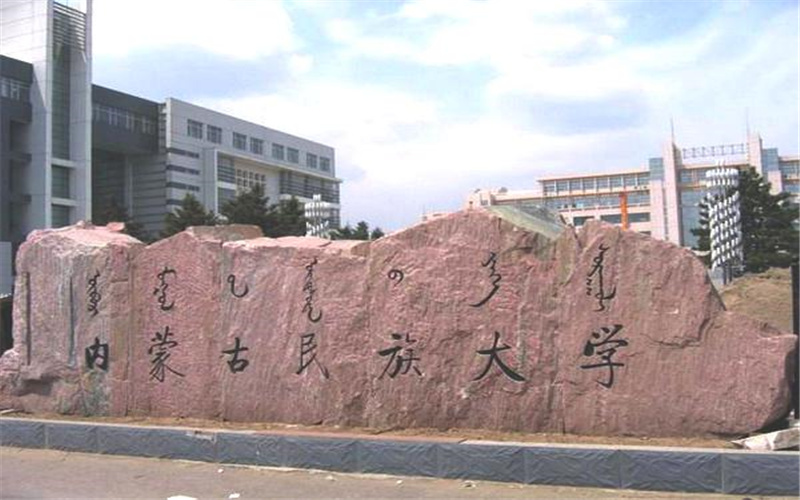
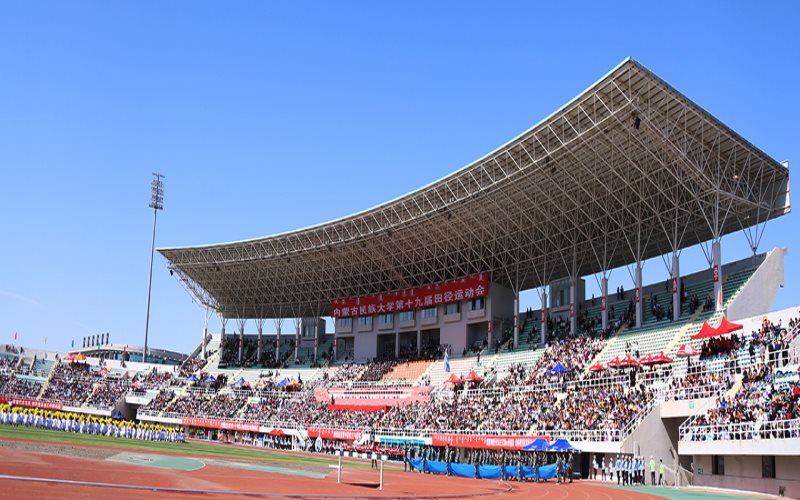

Inner Mongolia University for Nationalities is located in the eastern part of Inner Mongolia Autonomous Region, in Tongliao City, which is situated in the core area of the Western Liao River civilization and known as the "Pearl of the Horqin Grassland." It is a key university in Inner Mongolia, jointly built by the People's Government of Inner Mongolia Autonomous Region and the State Ethnic Affairs Commission.
The university traces its origins to the Tongliao Normal School, the Zhelimu League Health School, and the Zhelimu League Agricultural and Pastoral School, all established in 1958. Over the years, these schools were renamed Inner Mongolia University for Nationalities, Inner Mongolia Mongolian Medicine College, and Zhelimu Animal Husbandry College. In June 2000, with the approval of the People's Government of Inner Mongolia, these three institutions merged to form Inner Mongolia University for Nationalities.
The university began admitting undergraduate students in 1965, was authorized to award master's degrees in 1998, was approved for the doctoral program in Traditional Chinese Medicine (including Mongolian Medicine) in 2012, and became authorized to award doctoral degrees in 2021. Over its 66 years of development, the university has become a comprehensive institution with a full range of disciplines and distinctive educational characteristics. It has trained over 200,000 professionals who have made significant contributions to the national, regional economic, and social development and the stability of northern China.
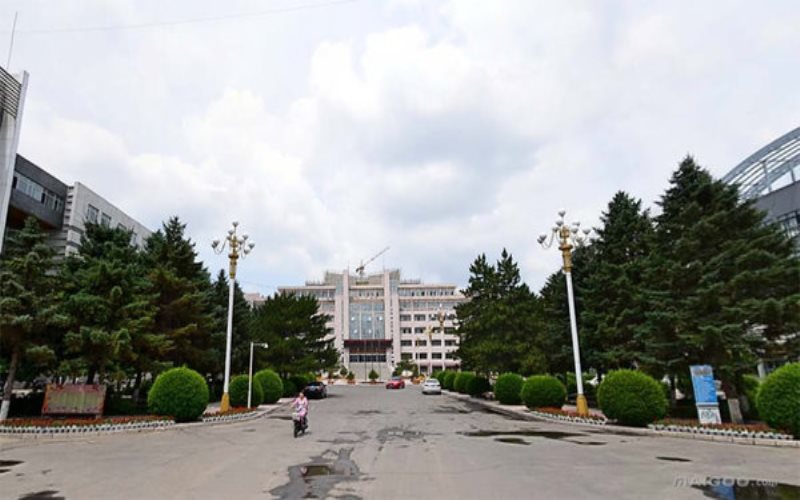
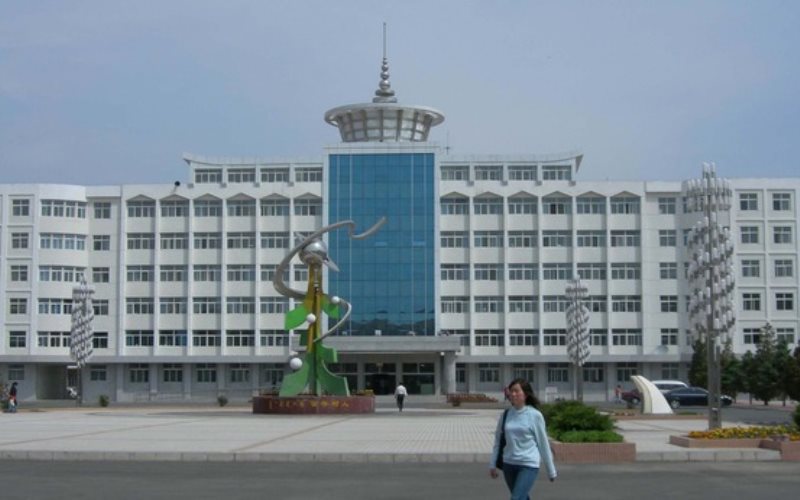
The university has two campuses, Horinger and Xilamulun, covering a total area of 3,598 acres. The total building area is 480,000 square meters, and the total value of fixed assets is 1.761 billion yuan. The university's teaching and research equipment is valued at 527 million yuan, and the library holds 1.818 million printed books.
The university currently has 27 teaching units, 7 auxiliary teaching units, and a Class III Grade A affiliated hospital. It offers 72 undergraduate programs in 11 disciplines, including Economics, Law, Education, Literature, History, Science, Engineering, Agriculture, Medicine, Management, and Arts. It also offers 1 doctoral program in a primary discipline, 18 master's programs in primary disciplines, and 18 master's professional degree programs.
There are 24,982 full-time students, including 22,051 undergraduate and diploma students, 2,896 master's students, and 35 doctoral students. The university employs 1,873 staff members, including 1,182 full-time faculty members, with 577 holding senior academic titles and 533 possessing doctoral degrees. Eight faculty members have received prestigious national awards, including the National Advanced Worker, National May 1st Labor Medal, National "March 8th Red Banner Hand," National Outstanding Teacher, and National Excellent Educator. The university also has 2 members of the National Higher Education Teaching Steering Committee and 22 experts who enjoy special government allowances from the State Council. It has recruited 165 high-level talents, including 5 academicians, 3 members of the Chinese Academy of Social Sciences, 3 "Changjiang Scholars," and 1 recipient of the National Outstanding Young Scientist Award.
The university has 7 national-level first-class undergraduate program construction points, 14 regional-level first-class undergraduate program construction points, and 9 national-level first-class courses. It also has 9 Ministry of Education "Four New" projects, 1 national-level experimental teaching demonstration center, 1 national-level clinical teaching and training demonstration center, 1 national-level language promotion base, and 1 national-level teaching team. The university has won 3 national-level teaching achievement second prizes.
In terms of research, the university has 33 provincial and ministerial-level natural science research platforms, 21 provincial and ministerial-level humanities and social science research platforms, and 15 provincial and ministerial-level innovation teams. Since the 13th Five-Year Plan, the university has been awarded 137 projects, including the National Key R&D Program and the National Natural Science Foundation. It has also received 124 projects funded by the National Social Science Fund and the Ministry of Education Humanities and Social Science Program, including 5 major projects and 3 key projects. The university has earned 26 provincial and ministerial-level natural science awards, including 1 second prize for national scientific and technological progress and 1 first prize for scientific and technological progress in the autonomous region. It has also won 93 humanities and social sciences awards, including 2 first prizes in the autonomous region for philosophy and social sciences.
The university publishes six versions of academic journals, with the Journal of Inner Mongolia University for Nationalities (Social Science Edition) and Research on Ethnic Higher Education being included in the AMI extended journals.
The university is a training institution for international students under the Chinese Government Scholarship and the Inner Mongolia Autonomous Region Government Scholarship.
Mongolian Medicine is one of the university's distinctive and advantageous disciplines. In 2020, the Mongolian Medicine program was approved as a national first-class undergraduate program, and in 2021, the university gained the authority to award doctoral degrees in Mongolian Medicine.
In recent years, the university has received several honors. It was recognized as a "Model Collective for Ethnic Unity and Progress" in 2009, "Advanced Unit for Foreign Cultural Exchange in the Region" in 2012, "Advanced Collective for Ethnic Unity and Progress in the Region" in 2017, "Excellent Unit for the Ministry of Education Informationization Pilot Program" in 2018, and in 2023, it was named a "Demonstration School for Ethnic Unity and Progress in the Region."
Entering the new era, the university adheres to the comprehensive leadership of the Communist Party of China, follows the socialist direction of education, and is guided by Xi Jinping's Thought on Socialism with Chinese Characteristics for a New Era. It fully implements the party's education policy, fulfills the fundamental task of fostering virtue through education, strengthens the awareness of the Chinese national community, focuses on the region's "two major tasks," and upholds the motto "Bo Xue Ming Li, Chong De Zhi Shan." It also strives for interdisciplinary development in fields such as medicine, literature, philosophy, agriculture, and engineering, aiming to build a high-level, application-oriented university with regional influence that better serves national strategies and the economic and social development of the region.
Start the conversation
Be the first to share your thoughts!