






The history of the University of Science and Technology Beijing (USTB) can be traced back to 1895, when the discipline of mining and metallurgy, the first of its kind in modern Chinese history, was established at Peiyang University (Beiyang Western Learning School). In 1952, USTB was founded as the Beijing Institute of Iron and Steel Technology, by merging departments of mining and metallurgy from six renowned universities including Tianjin University (formerly Peiyang University) and Tsinghua University. It was the first higher education institution of iron and steel industry in the People’s Republic of China. In 1960, it was renamed Beijing Institute of Iron and Steel and designated as a national key university. In 1984, it became one of the first universities in China to establish a graduate school. In 1988, it was officially renamed University of Science and Technology Beijing. In May 1997, USTB was included in the first batch of universities under China’s “211 Project.” In 2006, it became one of the first universities selected for the “985 Project” Advantage Discipline Innovation Platform. In 2014, the “Collaborative Innovation Center of Universal Steel Technology,” led by USTB, was selected for the national “2011 Project.” In 2017, USTB was selected as a “Double First-Class” university. In 2018, it was jointly built by the Ministry of Education and the State Administration of Science, Technology and Industry for National Defense. Today, USTB has developed into a national key university directly under the Ministry of Education, with engineering as its core, while science, management, humanities, economics, law, and other disciplines develop in coordination.
Over more than 70 years since its founding, USTB has gradually formed the school motto spirit of “seeking truth and innovation,” a fine tradition of “rigorous scholarship and valuing practice,” and the new spirit of “pursuing excellence and striving to lead” in the new era. The university has trained more than 320,000 talents for society, many of whom have become pillars and backbones in China’s political, economic, scientific, educational, and particularly metallurgical and materials industries. National leaders such as Luo Gan, Liu Qi, Xu Kuangdi, Huang Mengfu, Fan Changlong, Guo Shengkun, and Liu Xiaofeng once studied at USTB. Forty-seven alumni have been elected academicians of the Chinese Academy of Sciences or the Chinese Academy of Engineering. A large number of alumni have taken on key leadership positions in major state-owned enterprises including China Aerospace Science and Technology Corporation, China Aerospace Science and Industry Corporation, China First Heavy Industries, Ansteel, China Baowu, China Minmetals, Aluminum Corporation of China, Sinosteel, General Research Institute for Nonferrous Metals, China National Gold, BAIC Group, HBIS Group, and others. USTB has made significant contributions to the development of China’s iron and steel industry, earning the reputation as the “Cradle of Iron and Steel.”
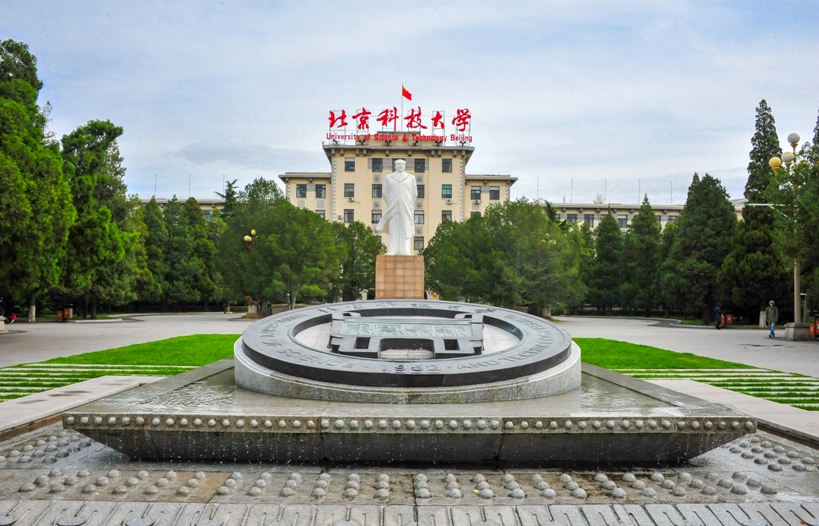
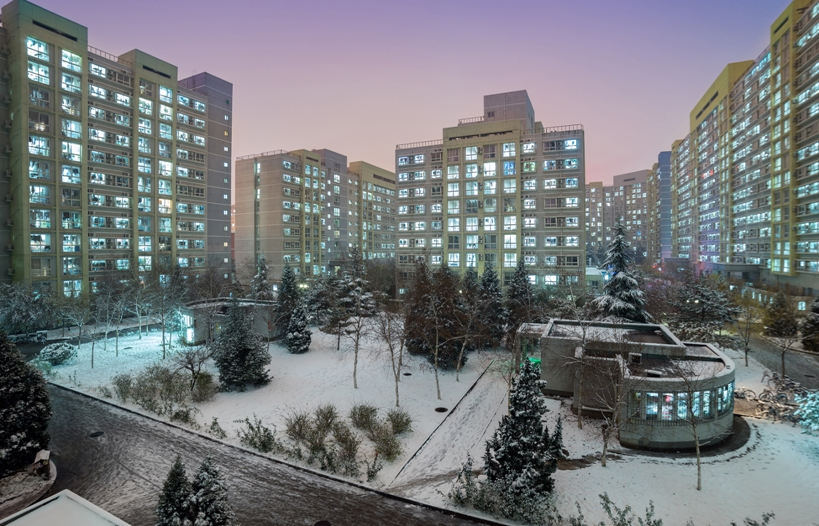
The main campus is located on Xueyuan Road in Haidian District, Beijing, an area known for its concentration of universities. The university covers an area of about 803,900 square meters, with a total building area of 996,800 square meters. USTB hosts 1 National Science Center, 1 “2011 Project” Collaborative Innovation Center, 7 National Key Laboratories (including joint ones), 3 National Engineering (Technology) Research Centers (including joint ones), 3 National Technology Innovation Centers (joint), 2 National Science and Technology Basic Conditions Platforms, 1 National Science and Technology Resource Sharing Service Platform, 2 National-level International S&T Cooperation Bases, 1 National Work Safety Supervision and Monitoring Technology Support Project, 4 National Energy Administration “Competition Platforms” (including joint), 1 National New Materials Big Data Center, and 95 provincial or ministerial key laboratories, engineering research centers, international cooperation bases, and talent innovation bases. Notably, USTB became the first university directly under the Ministry of Education to lead the construction of a major national scientific infrastructure — the “Facility for Materials Service Safety Research and Evaluation” — and established the National Center for Materials Service Safety Science. The library holds more than 2.624 million volumes. The university regularly publishes important academic journals, including International Journal of Minerals, Metallurgy and Materials, Journal of Engineering Science, Journal of University of Science and Technology Beijing (Social Sciences Edition), Metal World, Powder Metallurgy Technology, Ideological Education Research, Materials Genome Engineering Advances, and Green and Smart Mining Engineering.
USTB consists of numerous schools and institutes, including the School of Resources and Safety Engineering, School of Future Cities, School of Metallurgical and Ecological Engineering, School of Materials Science and Engineering, School of Mechanical Engineering, School of Energy and Environmental Engineering, School of Automation, School of Intelligent Science and Technology (AI Research Institute), School of Computer and Communication Engineering, School of Mathematics and Physics, School of Chemistry and Biological Engineering, School of Economics and Management, School of Humanities and Law, School of Marxism, School of Foreign Studies, Advanced Engineering Institute (School of Excellence in Engineering), School of Innovation and Entrepreneurship, Basic Science Experimental Center, Department of Physical Education, Guanzhuang Campus, Tianjin College, Shunde Innovation College, State Key Laboratory for Advanced Metals and Materials, State Key Laboratory of Green and Low-Carbon Metallurgy, National Center for Materials Service Safety Science, Collaborative Innovation Center of Universal Steel Technology, Institute of New Materials Technology, Institute of the History of Science and Cultural Heritage, Institute of Engineering Technology, Institute of Integrated Innovation, Institute of Grand Safety Science, Beijing Advanced Innovation Center for Materials Genome Engineering, Institute of Frontier Interdisciplinary Science and Technology, Institute of Urbanization and Urban Safety, Major Accident Prevention Technology Base for Metal Smelting, Institute of Carbon Neutrality, Institute of Mineral Resources, and Institute of Bio-Agriculture. The university currently has 21 first-level doctoral programs, 32 first-level master’s programs, 5 doctoral professional degree programs, 19 master’s professional degree programs, 19 postdoctoral research stations, and 68 undergraduate majors. Four disciplines — Metallurgical Engineering, Materials Science and Engineering, Mining Engineering, and History of Science and Technology — are recognized as national first-level key disciplines with international reputation (included twice in the national “World-Class Discipline” construction list in 2017 and 2022). Other disciplines such as Safety Science and Engineering, Control Science and Engineering, Computer Science and Technology, Mechanical Engineering, Environmental Science and Engineering, Power Engineering and Engineering Thermophysics, Civil Engineering, Chemistry, Marxist Theory, Management Science and Engineering, Business Administration, and Foreign Languages and Literature are also strong, while interdisciplinary fields such as Design, Nanoscience and Engineering, and Cultural Heritage Studies are flourishing. In 2019, Safety Science and Engineering and Artificial Intelligence Science and Engineering were selected as “High-End, Cutting-Edge Disciplines” in Beijing.
As of December 2024, USTB has over 27,000 full-time students, including 13,934 undergraduates, 13,377 graduate students (9,310 master’s and 4,067 doctoral students), and 1,070 international students. In addition, there are 4,018 continuing education students. The university has developed a multi-level and relatively complete talent training system covering undergraduate, graduate, international, and continuing education.
USTB boasts a high-quality faculty led by academicians of the Chinese Academy of Sciences and the Chinese Academy of Engineering. The university has 3,485 faculty and staff members, including 2,108 full-time teachers, of whom 740 hold senior professional titles and 859 hold associate senior titles, as well as 387 postdoctoral fellows. Currently, there are 5 members of the Academic Degree Committee of the State Council, 1 member of the National Professional Degree Graduate Education Steering Committee, 3 chief scientists of the National 973 Program, 13 national experts with outstanding contributions, 10 provincial or ministerial-level experts with outstanding contributions, 18 recipients of the National Science Fund for Distinguished Young Scholars, 19 “Ten Thousand Talents Program” leading talents and 4 young top talents, 4 national teaching masters, 21 selected into the National Hundred-Thousand-Ten Thousand Talents Project, 18 recipients of the National Science Fund for Excellent Young Scholars, 42 Beijing teaching masters, 14 Beijing young teaching masters, 101 winners of Ministry of Education talent programs, and 109 selected into other major national talent programs.
USTB’s research capacity is exceptionally strong. Since 1978, the university has applied for 17,517 patents, with 10,944 patents granted. More than 2,200 research achievements have won national, provincial, or ministerial awards, including 185 National Science and Technology Awards. In the Fifty Years of Science and Technology in Chinese Universities compiled by the Ministry of Education in 1999, USTB ranked among the top universities with 12 major scientific achievements included. Since the 13th Five-Year Plan, USTB has won 20 National Science and Technology Awards, including significant contributions in basic and applied research such as “Structure and Toughening of Bulk Metallic Glasses,” “Interface Control of One-Dimensional ZnO and Its Application,” and “Microstructural Control and Toughening Mechanisms of High-Entropy Alloys.” Research outcomes such as “Composite Blowing Technology in Electric Arc Furnace Steelmaking,” “Key Technologies for Strategic Metal Recycling and Industrialization,” “Near-Net-Shape Manufacturing of High-Performance Specialty Powder Materials,” “Green and Clean Steelmaking Technology Based on CO₂ Utilization,” and “Precision Blasting Technology for Underground Engineering Safety” have made great contributions to China’s economic development and achieved remarkable economic and social benefits.
The university continues to expand social services and development space, establishing cooperative relations with more than 420 local governments and large enterprises. At the same time, it strengthens international cooperation and cultural exchange, building close partnerships with more than 260 universities and research institutions worldwide, including RWTH Aachen University, Tohoku University, University of Cambridge, and University of Michigan. USTB actively contributes to people-to-people connectivity and the building of a community with a shared future for mankind.
USTB fully implements the Party’s educational policy in the new era, carrying out the fundamental task of fostering virtue through education. The university has pioneered a characteristic “iron-boned” education model, jointly initiating the “Iron-Boned Education Community” with 75 industry universities, enterprises, and research institutes, to cultivate high-quality talents with firm ideals, strong abilities, and dedication to the nation. The university attaches great importance to ideological and political education, while also enhancing students’ overall competence, innovation, and entrepreneurship. USTB students have achieved outstanding results in major national and Beijing competitions, such as the China International College Students’ Innovation Competition, the “Challenge Cup” National Academic Science and Technology Competition, the “Challenge Cup” China College Students’ Entrepreneurship Competition, the National University Students Intelligent Car Competition, the National Robotics Competition, and the National Energy-Saving and Social Practice Competition. Teams such as the MEI Robotics Team and the Intelligent Vehicle Team have been recognized as “Deng Xiaoping Student Innovation Teams.” USTB has repeatedly won honors including “Outstanding Organization” in national student volunteer programs, “Top 10 Universities in Summer Social Practice,” the “Challenge Cup” Capital’s highest collective honor, and the national “Victory Cup.” In 2024, USTB ranked first nationwide in total awards at the “Challenge Cup” Entrepreneurship Competition. The university promotes patriotism, collectivism, and socialist values, spreading positive energy and mainstream culture. It has been awarded numerous honors, including the “National May 1st Labor Award,” “Capital Civilized Campus,” “Outstanding Ideological and Political Work Unit in Beijing,” “Advanced University in Party Building and Ideological-Political Work,” “Capital Model Civilized Unit,” and “Advanced Collective of the Beijing 2022 Winter Olympics and Paralympics.” The campus atmosphere fosters the integration of science and art, and the coexistence of humanities and innovation. The student art troupe has won first prizes at national art festivals, and the original campus drama Bloom received the highest award in campus theater. In 2018, USTB was selected as one of the Ministry of Education’s first pilot universities for “Comprehensive Reform of All-Round Education.”
USTB’s achievements in competitive sports and mass sports activities are also widely recognized in Beijing and nationwide. It has produced many outstanding athletes, coaches, and sports officials, such as Gong Lijiao, Li Minkuan, and Lou Dapeng. The university’s athletics team has repeatedly won championships in national and Beijing competitions, and the women’s basketball team has won 12 consecutive titles in the Beijing University League, twice advancing to the CUBA national top eight. The university currently has about 103,000 square meters of modern sports facilities. Its gymnasium, a venue for the 2008 Beijing Olympic and Paralympic Games, successfully hosted judo, taekwondo, wheelchair basketball, and wheelchair rugby events, and was honored as an “Advanced Collective of the Beijing Olympic and Paralympic Games” by the CPC Central Committee and the State Council.
On May 17, 2020, President Xi Jinping, in his capacity as President of China, wrote a reply letter to all Pakistani students at USTB. On April 21, 2022, he wrote another letter to senior professors at the university. These important letters from President Xi Jinping pointed out the direction and provided fundamental guidance for USTB to follow a new path of building a world-class university with Chinese characteristics. Looking to the future, USTB will adhere to Xi Jinping Thought on Socialism with Chinese Characteristics for a New Era, fully implement the spirit of the 20th CPC National Congress, earnestly carry out the spirit of the important reply letters, uphold its unique strengths, and strive for excellence. It is committed to becoming the “iron backbone” of a strong nation in science, technology, and manufacturing, and to making new and greater contributions to building a modern socialist country and realizing the great rejuvenation of the Chinese nation.
(Data as of May 2025)
Start the conversation
Be the first to share your thoughts!