


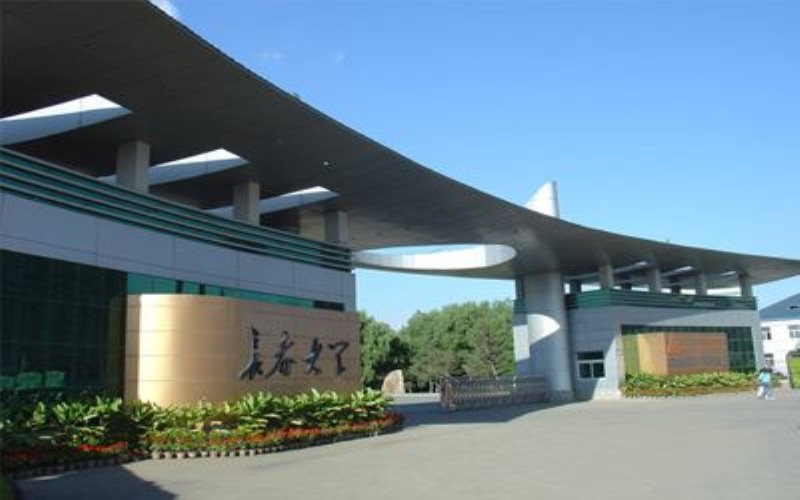
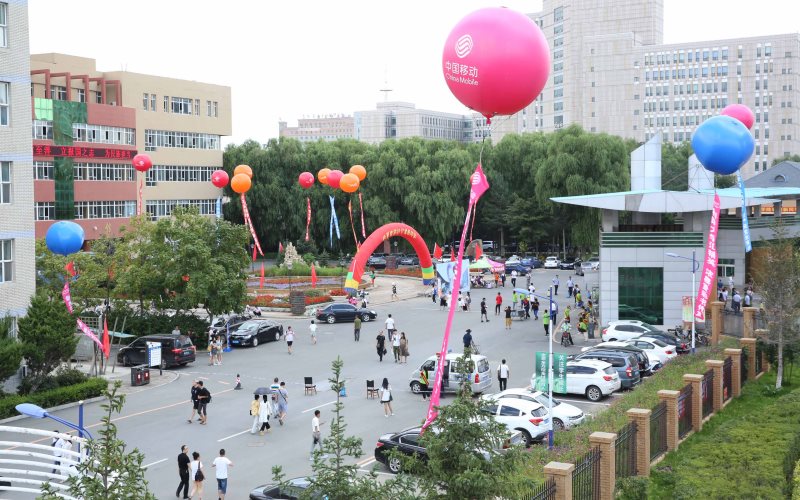

Changchun University, located in Changchun, Jilin Province, a city known as the "Spring City of Northern China," is a provincially-administered comprehensive university with a rich history and distinctive characteristics. The university spans three campuses, covering a total area of 1.02 million square meters.
The university traces its origins to 1949, when the former Northeast People’s Government’s Ministry of Industry established the Changchun Industrial Accounting and Statistics Specialized School, training the first group of industrial accounting and statistics professionals for the new China. The institution underwent several name changes in line with national development and era shifts, becoming Jilin Electromechanical College in 1983. In 1987, the former National Education Commission approved the merger of Jilin University of Technology, Jilin Electromechanical College, Changchun Foreign Language College, and Changchun Vocational College, forming Changchun University. In 2000, Jilin Forestry School was integrated into the university.
Changchun University comprises 20 schools and colleges, offering nine first-level academic master's degree programs and 15 professional master's degree programs. It is designated as a construction university for doctoral degree authorization units in Jilin Province, with Mechanical Engineering, Food Science and Engineering, and Materials and Chemical Engineering as key doctoral-preparation disciplines. Its academic offerings span 10 major disciplines, including Economics, Law, Education, Literature, Science, Engineering, Agriculture, Medicine, Management, and Arts, with 49 undergraduate programs. Among these, two are national-level specialty programs, and eight are provincial-level specialty programs. Additionally, there are five national-level first-class professional construction points and 15 provincial-level first-class professional construction points, alongside a nationally recognized talent cultivation and innovation experimental zone.
The university employs 1,339 staff members, including 150 professors and 378 associate professors. Over 50 high-level experts and scholars, such as senior experts directly associated with the central government, national-level outstanding contributors, recipients of the State Council Special Allowance, and other distinguished talents, are part of the faculty. Leveraging the industrial structure of the Northeast region and Jilin Province, the university has built two national research platforms: the National Soybean Deep Processing Technology Research and Promotion Center and the Jilin Branch of the National Soybean Engineering Technology Research Center. It also houses 24 provincial and ministerial research platforms, including the Ministry of Education's Key Laboratory for Intelligent Rehabilitation and Accessibility for People with Disabilities and the Jilin Provincial Aging Society Innovation and Development Strategy Research Center.
The university currently has 19,629 full-time students, including 1,285 master's students. It adheres to a teaching philosophy that integrates competitions into education to foster innovation and entrepreneurship. Recognized as a national demonstration university for deepening innovation and entrepreneurship education reform in 2017, it has consistently ranked among the "Top 300 Universities in China for Innovation Talent Cultivation and Discipline Competitions" published by the China Association of Higher Education. Its "Tuanfeng Innovation and Entrepreneurship Team" was awarded the title of "Xiaoping Science and Technology Innovation Team" by the Central Committee of the Communist Youth League. The university has won 19 national awards in competitions such as the "Challenge Cup" and "Create Youth." The FCC Racing Team has achieved outstanding results in the China University Formula Racing series since 2017, earning the title of the Most Influential Team. The university is also renowned for cultivating a unique campus culture, winning first prizes in national college student art performances for six consecutive years and receiving recognition as a national key student association. In the "Decade of Youth Talks" national thematic public speaking competition, the university won the first prize.
Changchun University emphasizes internationalization and was among the first universities in China authorized to enroll international students. It has established partnerships with 137 institutions and enterprises in 27 countries and regions, including Russia, the United Kingdom, Australia, South Korea, and Japan. It hosts international students under several scholarship programs, such as the Chinese Government Scholarship, Confucius Institute Scholarship, Jilin Provincial Government Scholarship, and "Silk Road" Scholarship. The university participates in over 10 international study programs and collaborates with foreign institutions to offer joint education programs, including partnerships with seven universities from Russia, South Korea, Ukraine, and Japan. The Esenin Culture and Education Center, the first institution in Asia dedicated to Esenin studies, was established here. Additionally, the university's Confucius Institute, co-founded with Ryazan State University in Russia, has received the honor of being a Global Outstanding Confucius Institute. In 2021, it was approved as an implementation institution for the China-Japan-Korea "Campus Asia" project.
In 1987, the China Disabled Persons’ Federation and the Jilin Provincial Government jointly established China's first and Asia's only higher education institution for students with hearing, visual, and physical disabilities at Changchun University, pioneering higher education for people with disabilities in China. Currently, the university has over 1,000 students with disabilities enrolled in nine undergraduate programs and four master's programs, making it the largest and most comprehensive institution of its kind in China. Over the past 30 years, the university’s special education efforts have garnered numerous domestic and international accolades, earning its designation as a "National Pilot Institution for Inclusive Higher Education for Disabled Students" by the China Disabled Persons’ Federation and the Ministry of Education. In 2002, Deng Pufang, then chairman of the China Disabled Persons' Federation, praised the institution for leading the field of higher education for people with disabilities. In 2017, Zhang Haidi, the federation's chairwoman, commended the university for being a historic milestone in the development of special education in China.
Changchun University is the birthplace of the "Tuanfeng Spirit." In April 1989, a disabled student, Jin Xie, received an anonymous donation from someone named "Tuanfeng." This act of kindness inspired a movement of care, selflessness, and determination among the university community. The "Tuanfeng Spirit," embodying the values of caring for others, selfless dedication, striving for excellence, and contributing to the nation, continues to inspire students and faculty.
As it embarks on a new journey in the new era, Changchun University remains committed to the guidance of Xi Jinping's Thought on Socialism with Chinese Characteristics for a New Era. It fully implements the spirit of the 20th National Congress of the Communist Party of China, adheres to the socialist direction of education, focuses on character building and talent cultivation, highlights its unique strengths, and strives for breakthroughs in high-quality development.
开始对话
成为第一个分享想法的人!