
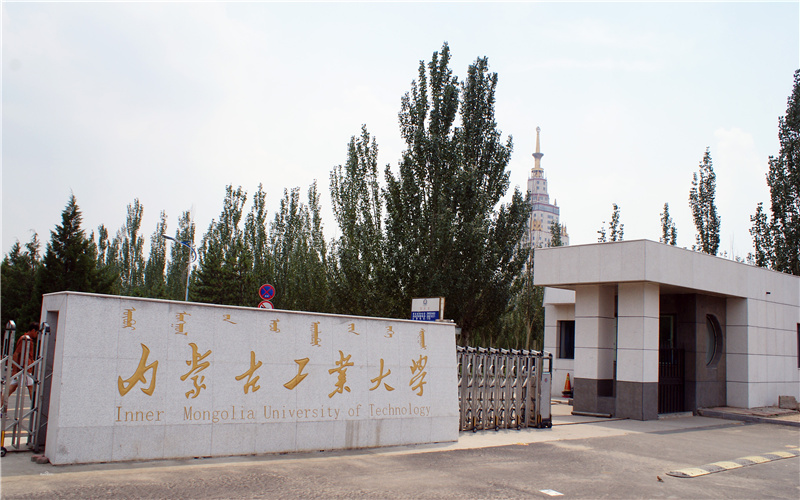
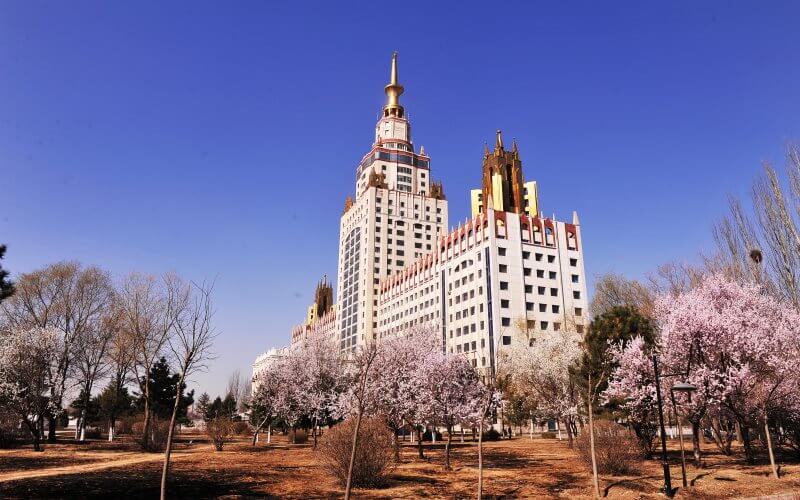
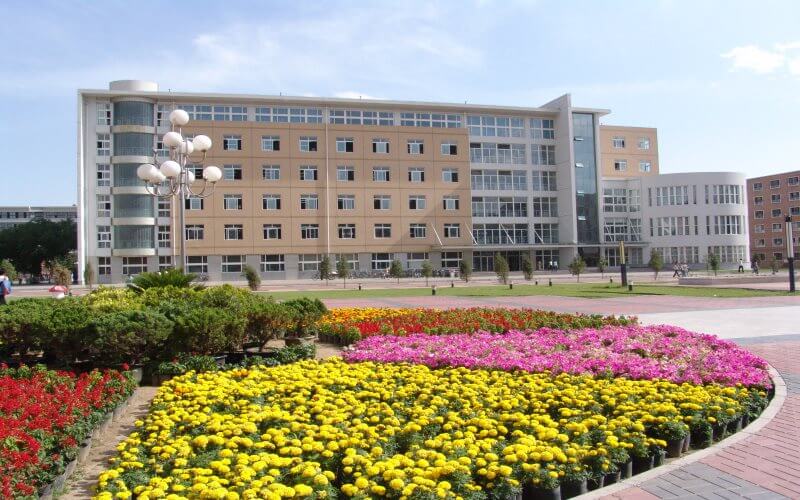
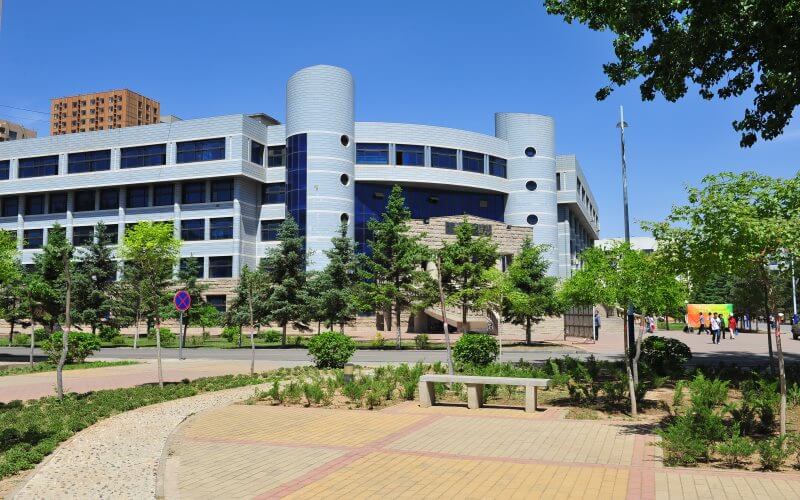

Inner Mongolia University of Technology, located in Hohhot, is a multi-disciplinary university with a focus on engineering. It integrates engineering, science, management, law, humanities, economics, and arts, offering a comprehensive system for talent cultivation at the bachelor’s, master’s, and doctoral levels. The university was founded in 1951 as the Senior Industrial School of Suiyuan Province, initiating the development of engineering education in Inner Mongolia. In 1958, with support from Tsinghua University and other institutions, it established Inner Mongolia Institute of Technology, marking the beginning of undergraduate education at the university. In 1983, the university was placed under the administration of the Inner Mongolia Autonomous Region, and in 1984, it gained the right to confer master's degrees. In 1993, it was renamed Inner Mongolia University of Technology, and in 2003, it became authorized to confer doctoral degrees.
The university has four campuses—Xincheng, Jinchuan, Zhungeer, and Kangbashi—covering a total area of 3,727 acres and a building area of 1.408 million square meters. It is part of the “China Western Universities Basic Capacity Building Project” and the “Education Strong Nation Promotion Project.”
With 23 teaching departments, the university offers 84 undergraduate programs, with 67 currently recruiting students. It has 20 national-level and 10 regional-level first-class undergraduate programs, and 10 undergraduate programs that have passed professional accreditation evaluations. The university also has a National Engineering Practice Base for Students, a National Experimental Teaching Demonstration Center, 9 national-level first-class undergraduate courses, and 1 national-level course ideological and political demonstration course. It has 26 master’s degree authorization points in first-level disciplines, 17 professional master’s degree categories, 9 doctoral degree authorization points in first-level disciplines, 1 doctoral professional degree authorization point, and 3 postdoctoral research stations. The university has a top-tier discipline for training talent in Inner Mongolia, with a national and regional focus on engineering, materials science, and chemistry, which are ranked among the top 1% globally in the ESI rankings.
The university also has key national-level research platforms, such as the Wind and Solar Energy Utilization Technology Key Laboratory of the Ministry of Education, the Advanced Light Metal Materials Development and Processing Protection Engineering Research Center, and the National Local Joint Engineering Research Center for Coal-Based Solid Waste High-Value Utilization. It undertakes significant national science and technology projects and has received multiple awards, including the National Defense Technology Invention Award (Second Prize) and numerous provincial and national scientific achievements.
The university is committed to talent development with strong faculty support. It has 2,187 staff members, including 1,560 full-time teachers, 218 professors, 551 associate professors, 137 doctoral advisors, and 794 teachers with doctoral degrees. The faculty includes 19 nationally recognized scholars, and 89 individuals have been honored as “Outstanding Experts” by the government. The university’s faculty and staff have received a variety of national and provincial honors, including recognition as National Model Teachers and Excellence in Teaching.
Currently, the university has 28,508 students, including 4,310 full-time graduate students (294 doctoral and 4,016 master’s students), 1,037 part-time master’s students, and 23,086 undergraduate students. There are 75 international students enrolled.
The university adheres to an open educational philosophy and has established cooperation with 90 universities and research institutes in 22 countries, including the UK, Germany, the US, Canada, Russia, Belarus, Japan, and South Korea. It also collaborates with local enterprises, including more than 50 large companies such as Mengneng Group. It is a participating institution in the China Government Scholarship Program and the Inner Mongolia Autonomous Region Government Scholarship Program.
Over the 73 years since its establishment, Inner Mongolia University of Technology has developed in tandem with the national and regional reforms, becoming a leading institution for applied research in engineering, producing highly skilled graduates who are praised for their solid foundations, practical work ethic, and pragmatic approach. With more than 210,000 alumni, the university has become a key force in regional economic and social development.
Looking to the future, the university will continue to follow the guidance of Xi Jinping’s Thought on Socialism with Chinese Characteristics for a New Era, focusing on the development of an internationally influential, distinctive, and high-quality applied research university, contributing to the realization of the Chinese Dream and the modernization of Inner Mongolia.
(Statistics as of November 13, 2024)
开始对话
成为第一个分享想法的人!