


Mudanjiang Medical University is the only provincial general undergraduate medical institution in the southeastern region of Heilongjiang Province, located in Mudanjiang, an important central city and scenic tourist city in the southeastern part of Heilongjiang Province. The school's history dates back to 1946, with the establishment of Mudanjiang Regional Hospital, and to 1956, when the Heilongjiang Provincial Health Cadres Training School was founded. In 1958, Mudanjiang Medical College was established, with the famous historian Mr. Guo Moruo inscribing its name. In May 2024, the Ministry of Education approved the university’s name change to Mudanjiang Medical University.
The university began its undergraduate education in 1958 and was granted the right to confer master's degrees in 2013. In 2006, during the Ministry of Education's undergraduate teaching evaluation, the expert group gave it an excellent rating. In 2010, the university was recognized as a distinctive application-oriented undergraduate institution in Heilongjiang Province. In 2012, it was selected as one of the first pilot universities for the National Excellent Doctor Education and Training Program. In 2015, it was awarded the title of "National Civilized Unit," and it received a 10-year valid accreditation for its Clinical Medicine program during the Ministry of Education's clinical medicine certification, placing it at the forefront of local medical schools. In 2016, the university received high praise from experts during the national undergraduate teaching audit evaluation. In 2020, it was selected as one of the first batch of demonstration universities for distinctive application-oriented undergraduate education in Heilongjiang Province.
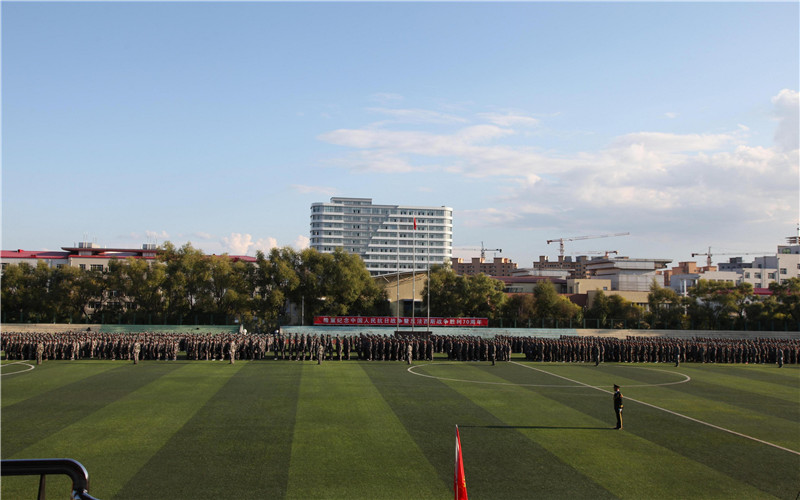
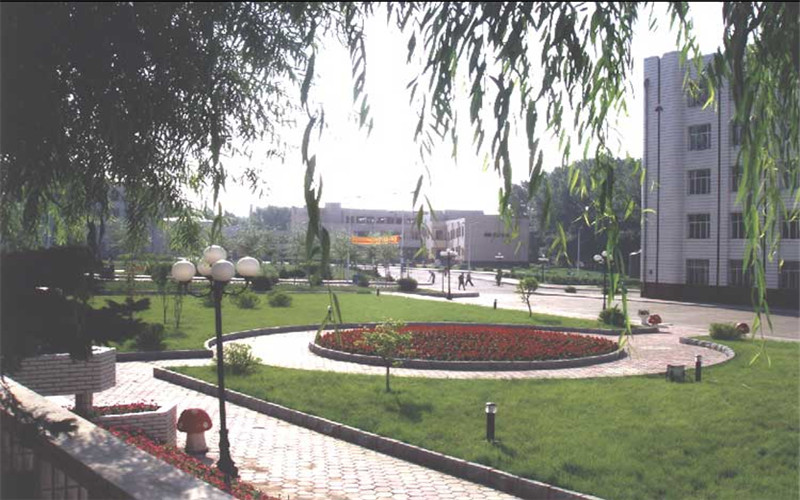
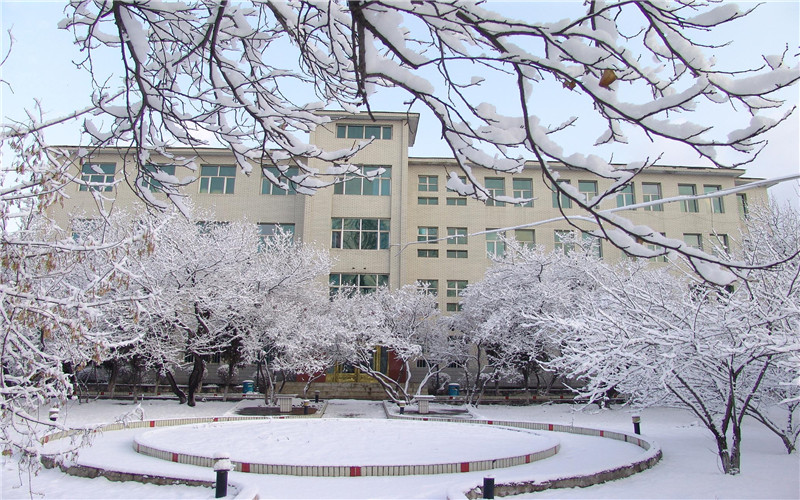
The university covers an area of more than 700,000 square meters, with a building area of over 350,000 square meters. The total value of teaching and research equipment is more than 270 million yuan. The library houses over one million physical books, 700,000 e-books, and 15 databases, equipped with an advanced electronic book system and a computer network service system. The university has two directly affiliated hospitals and six non-directly affiliated hospitals, with more than 100 practice teaching bases, including teaching and internship hospitals, located in major cities like Beijing, Shanghai, Guangzhou, and Shenzhen. The affiliated Hongqi Hospital is one of the first standardized training bases for resident physicians in China.
The university enrolls students from all 29 provinces, autonomous regions, and municipalities directly under the central government. It currently has 11,697 full-time master's and undergraduate students. The university offers 23 undergraduate programs in clinical medicine, medical imaging, pharmaceutical engineering, public administration, and other fields, covering four academic disciplines: medicine, science, engineering, and management. Among them, Clinical Medicine, Medical Imaging, Anesthesiology, and Medical Laboratory Science are provincial key programs, and 10 programs, including Clinical Medicine, Medical Imaging, Medical Laboratory Technology, and Pharmaceutical Engineering, are recognized as provincial first-class undergraduate programs. Medical Imaging is a nationally recognized first-class distinctive program and a provincial talent cultivation model innovation zone. The university has 3 master's degree programs in primary disciplines, 4 master's professional degree programs, and 35 master's second-level disciplines, covering medicine, science, and engineering. Practical and applied clinical medicine and chronic disease prevention in high-altitude regions are key areas of development under the "Double First-Class" initiative in Heilongjiang Province. Basic Medicine, Biology, Internal Medicine, and Imaging Medicine & Nuclear Medicine are provincial key disciplines, while Surgery and Pharmacy are provincial emerging disciplines. The university employs 2,935 staff members (including those in two directly affiliated hospitals), with 273 doctoral and master's degree supervisors and 167 teachers holding doctoral degrees. Among the staff, there are 7 national-level experts and provincial experts who have received special allowances, 1 recipient of the national "May 1st" Labor Medal, 3 special professors of the "Longjiang Scholars" program, 4 leaders of provincial talent teams, 8 reserve leaders of provincial talent teams, 6 provincial-level teaching experts, and 3 experts with outstanding contributions to health and youth work in the province. The two directly affiliated hospitals have 27 doctors listed as "Famous Doctors of Longjiang" and 2 as "Young Famous Chinese Medicine Doctors of Longjiang." In the last five years, the university's faculty has won 28 national-level awards, including the Grand Prize in the National Medical Imaging Technology Teachers' Mixed Teaching Design Competition.
The university is a member of the China-Russia Medical Universities Alliance and has established a "Chronic Disease and Drug Research Center" within the alliance. It has 5 provincial key laboratories, 1 provincial new R&D institution, and 1 provincial collaborative innovation center, along with 2 postdoctoral innovation practice bases. It also has a provincial biopharmaceutical technology innovation service platform and the only jointly constructed pharmaceutical R&D platform with the provincial Science and Technology Department and the Mudanjiang Municipal Government.
The university attaches great importance to scientific research and discipline development, vigorously promoting technological innovation. It has won a second-class National Technology Invention Award and two first-class provincial and ministerial science and technology awards. In the past five years, the university has received 26 provincial and ministerial science and technology awards, and two dual-position professors have received the National Natural Science Award, the Second-Class Technology Progress Award, and the He Liang He Li Foundation Science and Technology Progress Award. The university has undertaken 1,306 research projects, including 87 national, provincial, and key research projects. It has published 4,221 papers in academic journals, including several in international journals such as Cell Research and Cancer Cell. It has also edited over 100 textbooks published by People's Medical Publishing House, Science Press, and Higher Education Press. The university actively engages in domestic and international academic exchanges, establishing cooperative relationships with institutions such as the Pacific National Medical University in Russia, the University of Tennessee in the United States, and Fatima University in the Philippines.
The university fully implements the Party’s education policies, focusing on moral education and strengthening the ideological and political education of students. It emphasizes the development of practical skills and continuously improves graduates' comprehensive quality and adaptability, which is highly recognized by employers. In the last five years, the university has won over 100 national-level awards, including those in national student competitions in medical imaging, medical laboratory technology, and pharmaceutical engineering.
The university adheres to the "two purposes" educational direction and has formed a distinctive and high-quality application-oriented medical talent training model. It plays a key role in serving the development of regional healthcare and local economic and social development, earning national and societal recognition. In 1989, it received the national award for outstanding teaching achievements. Since its establishment, the university has trained over 80,000 graduates in medicine and pharmacy, many of whom have become key contributors to the modernization of grassroots healthcare, making significant contributions to the development of healthcare in Heilongjiang Province and the nation.
Standing at a new historical starting point, the university will continue to be guided by Xi Jinping's Thought on Socialism with Chinese Characteristics for a New Era, fully implement the spirit of the 20th National Congress of the Communist Party of China, and follow the Party's education policies to cultivate moral values, inherit Mudanjiang Medical University’s red legacy, and promote the university’s spirit of "Perseverance, Love for the School, Pragmatism, Cooperation, Innovation, and Dedication." The university will continue to foster a clean political environment and strive to achieve its goal of becoming a high-level, distinctive application-oriented medical university.
(As of June 2024)
开始对话
成为第一个分享想法的人!