


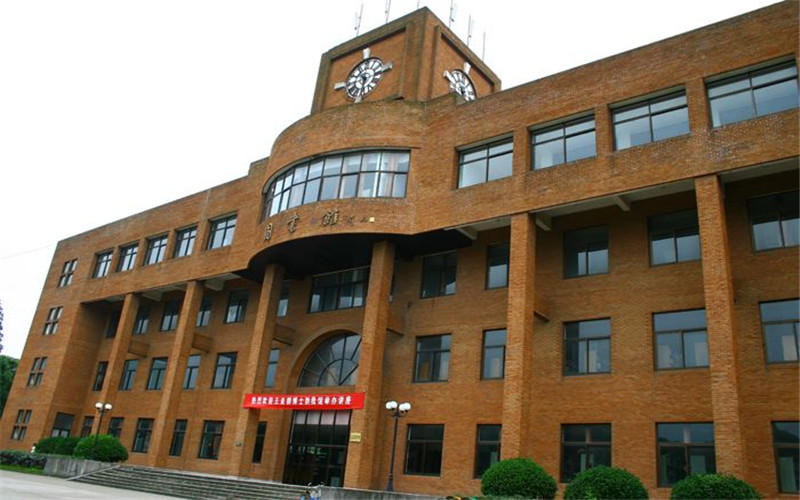

Ningbo University (NBU) is a key university of Zhejiang, China and one of the universities in the country's “Shuang Yi Liu” (“Double First-Class”) Initiative, enjoying the joint support from the provincial government of Zhejiang, the Ministry of Education (MOE) and Ningbo Municipality, as well as from the State Oceanic Administration and Ningbo Municipality.
NBU was set up in 1986 with the donations from Sir Yue-Kong Pao, the shipping magnet in Hong Kong. Mr. Deng Xiaoping inscribed the name of Ningbo University in Chinese characters “Ning Bo Da Xue” to express his best wishes for the new-born university. General Secretary Xi Jinping instructed during his administration in Zhejiang, “I hope Ningbo University will strive to become a first-class local comprehensive university in China, and make new and greater contributions to building Zhejiang into an innovative province and China into a harmonious socialist society."
In the course of its founding and development, NBU has received great care, support and help from the Communist Party committees and governments at all levels, the “Ningbobang” (“Ningbo-native merchant group”) at home and abroad and all sectors of society. In the early years, NBU owed a lot to five prestigious universities in China for their great support, namely, Zhejiang University, Fudan University, University of Science and Technology of China, Peking University, and the former Hangzhou University.
In 1992, it was listed among the first batch of colleges and universities in China to admit students. In 1995, it passed the evaluation of the undergraduate education organized by the former State Education Commission (present MOE). In 1996, the former Ningbo University, Ningbo Normal College and Zhejiang Fisheries College Ningbo Branch merged into one to become a new Ningbo University. In 2000, NBU was listed as the key university by Zhejiang Provincial Government. In 2011, the State Oceanic Administration and Ningbo Municipality agreed to jointly develop NBU. In 2012, it became a university co-funded by Zhejiang Provincial Government, the MOE and Ningbo Municipality. In 2015, it was selected as one of the first batch of key universities in Zhejiang Province. In 2017, it was approved as a “Double First-Class” university of the country.
Through the hard work of generations of people from the NBU community, NBU has become a teaching and research-oriented university and made way to the Top 100 in China in comprehensive strength.
NBU is structured into 23 schools, 10 direct research institutes and 5 direct affiliated hospitals, with 12 disciplines covering economics, law, education, literature, history, science, engineering, agriculture, medicine, management, art and inter-discipline. According to Essential Science Indicators (ESI), 12 disciplines of NBU, including engineering, clinical medicine, chemistry, materials science, animal and plant science, agricultural science, environment and ecology, pharmacology and toxicology, biology and biochemistry, computer science, physics, and general social sciences, have ranked top 1% in the world.
There are 9 primary doctoral programs, 9 post-doctoral research stations, 31 primary master programs, 27 professional master programs and 59 undergraduate programs.
It is entitled to exempt students from postgraduate examinations, and to enroll international students having obtained the Chinese Government Scholarship and the International Chinese Language Teachers Scholarship, as well as students from Hong Kong, Macao and Taiwan.
The campus is home to 20,162 full-time undergraduate students, 12,412 graduate students (including 213 international students), 1,126 international students (including 986 studying for academic degrees), and 7,287 students for continuing education.
NBU has got 3,157 faculty members, 2,149 of whom are teachers and researchers. Among the teaching and research staff, there are 525 professors, 698 associate professors and 1,711 doctoral degree holders.
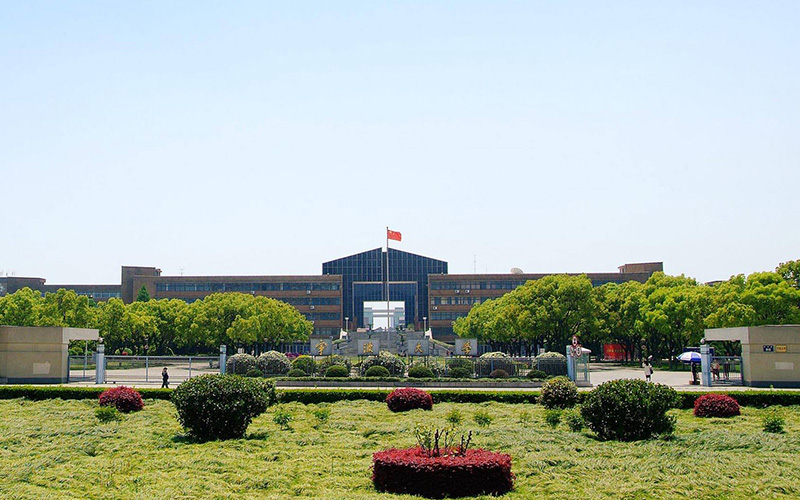
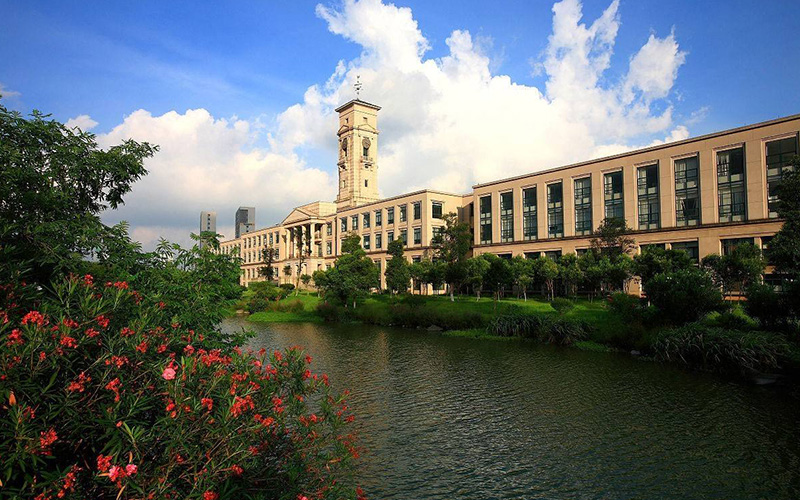
NBU has its main campus in the North Higher Education Park of Ningbo, and also the Meishan Campus, with a total area of 203.67 hectares. The NBU library covers an area of 51,000 square meters, with a collection of 3.24 million paper books and 2.58 million electronic books. Its instruments and equipment total 1.31 billion yuan in worth.
Upholding the fundamental task of “fostering virtue through education”, NBU has vigorously developed first-class undergraduate and postgraduate education, and carried out the training model reform by giving students more alternatives in choosing their major. To date, NBU has won 1 first prize and 5 second prizes for national teaching achievements. There are 49 first-class undergraduate programs, 6 national distinctive specialties, 3 national comprehensive reform projects, 2 national outstanding talent training programs, 17 nationally and internationally accredited specialties, 1 national teaching team, 2 national experimental teaching demonstration centers, 1 national virtual simulation center, and 1 national practice base for college students, 1 experimental reform zone for talent training of the MOE, 1 innovation experimental zone for talent training model of the MOE, 1 national university cultural quality education base; 7 non-direct affiliated hospitals and 12 clinical teaching hospitals; 20 national first-class undergraduate courses, 4 national top-quality courses for educational resource sharing, 1 national top-quality open video course, 2 quality courses of teaching-international-students-in-English of the MOE, 182 provincial first-class undergraduate courses, 16 provincial top-quality online open courses, and 216 industry-university collaboration programs of the Department of Higher Education of the MOE..
In terms of quality of postgraduate education, NBU ranks among Top 100 in China. It is home to 1 national joint cultivation demonstration base for postgraduate students with master's degrees in education, and 7 joint cultivation bases for postgraduate students in Zhejiang. It has won 2 second prizes for national teaching achievements, 2 second prizes for provincial teaching achievements, and 1 first prize for provincial basic education achievements; 1 grand prize for national practice and teaching achievements for postgraduates with professional degrees in agriculture, 3 first prizes of Zhejiang Education Society Teaching Achievement Award, 31 provincial excellent demonstration courses, 81 provincial excellent postgraduate practice achievements, 35 excellent cases of national committees for graduate education of professional degrees, and 102 provincial excellent postgraduate teaching cases.
NBU has greatly advanced innovation and entrepreneurship education. It has won the "Advanced Group Award for Universities" (only 4 in China) in the China International College Students’ “Internet+” Innovation and Entrepreneurship Competition for 7 consecutive years. In the 6th and 7th competitions, it ranked second in China in the total number of gold awards. And in the 8th competition, NBU won the “Best Employment Promotion Award” (only 2 in China), fulfilling the zero breakthrough in the gold awards of the industrial sector. It has won a total of 33 gold and 29 silver awards in the previous nine competitions, ranking the third in China. It is one of the five universities which have won the “Winners’ Cup" in the national “Challenge Cup” series competitions for 11 consecutive years. Among them, in the 18th “Challenge Cup” National Extracurricular Academic and Technological Works for College Students, NBU won the grand prize again after 8 years, ranking the first in terms of total scores in the province for the first time.
The employment rate of NBU’s graduating students ranks among the top in the province, and the satisfaction level of its graduates with their alma mater after graduation for one year ranks second in the province. The university was listed as a national-level self-employment innovation experimental area, a national university student innovation and entrepreneurship training base, one of the first batch of national demonstration universities in deepening innovation and entrepreneurship education reform, a national university practice education base for innovation and entrepreneurship, a national-level university with typical experience in innovation and entrepreneurship, a national top 50 university of student employment, a model entrepreneurship university of Zhejiang Province, a mass entrepreneurship innovation demonstration base of Zhejiang Province, one of the first batch of national innovation and entrepreneurship education practice bases, and a provincial entrepreneurship incubation demonstration base approved by the Zhejiang Province Human Resources and Social Security Department.
NBU is dedicated to the talent development strategy. Among its faculty members, there are 11 full-time academicians, including 2 CAS academicians and 3 CAE academicians (including 1 foreign academician), 6 foreign academicians of the Royal Academy of Engineering and other foreign academies, 36 people in the “National Outstanding Talents Program”, 1 member of the State Council Discipline Review Group, 7 people in the “National Hundred and Thousand and Ten-Thousand Talent Project”, 7 winners of National Outstanding Youth Fund, 15 persons enjoying special allowances from the State Council, 11 winners of National Excellent Youth Fund, 3 young winners of the “Innovative Talent Promotion Program” of the Ministry of Science and Technology (MOST), 1 leading member of the "Innovative Team Development Program" of the MOE, 15 winners of the “New-Century Excellent Talents Program” of the MOE, 1 provincial top talent, 5 provincial special experts, 1 provincial leading innovation and entrepreneurship team, 13 national and provincial experts with outstanding contributions, 62 provincial excellent talents, 13 Qianjiang Scholars, 8 provincial “151 project” key funded talents and 18 first-level talents.
To be geared to the strategic needs of the state and the region, NBU attaches great importance to academic, scientific and technological innovation. In these years, NBU has won 1 second prize of the National Natural Science Award, 1 second prize of the National Technology Invention Award, and 2 second prizes of the National Science and Technology Progress Award, which are breakthroughs ever made in history. Its research level in social sciences ranks in the global top 1% according to ESI. It won 6 awards in the 8th University Excellent Achievement Awards in Social Sciences of the MOE, ranking the first in the province in the total number of awards and second prizes; It has won 6 first prizes of Zhejiang Province Science and Technology Award for 3 consecutive years.
The campus is home to 1 national key laboratory co-constructed by the MOST and Zhejiang Province, 1 national key laboratory cultivation base, 1 national and local joint engineering laboratory, 1 national university science park (the organizer), and 1 international sci-tech cooperation base of the MOST, 1 national-level achievement promotion agency, 2 key laboratories of the MOE, 1 international cooperation laboratory of the MOE, 1 engineering center of the MOE, 1 collaborative innovation center co-constructed of the MOE and Zhejiang Province, 2 "111 plan" bases for discipline innovation and talent introduction, 1 collaborative innovation service platform for efficient aquaculture in Zhejiang, 1 research workstation of the MOE, 2 key laboratories of the Ministry of Agriculture and Rural Affairs, 1 university intellectual property information and service center accredited by the State Intellectual Property Office and the MOE, 1 key research base for social sciences of the State Sports General Administration, 3 engineering research centers in Zhejiang, 4 international sci-tech cooperation bases in Zhejiang, 3 international cooperation laboratories in Zhejiang, 1 key research base of philosophy and social sciences in Zhejiang, 1 new-type key professional think tank in Zhejiang, 1 new-type think tank cultivation base in Zhejiang, 5 “2011 collaborative innovation centers” in Zhejiang, 2 new-type think tanks for universities in Zhejiang, 1 supportive think tank for promoting the integrated development of Yangtze River Delta in Zhejiang, 1 international and regional research center of the National Ethnic Affairs Commission, one of the first batch of research bases for Xi Jinping Thought of Socialism with Chinese Characteristics in the New Era in Zhejiang, 1 research base for the Party’s united front in the new era in Zhejiang, and the Ningbo branch of the higher education digital resource center of universities in Zhejiang.
NBU has built 12 local research institutes with governments at all levels, 25 university-enterprise research institutes with leading enterprises, 149 university-enterprise (local) scientific research cooperation platforms with local governments, enterprises and institutions, and achieved 1 patent transfer worth of over ten million yuan and 3 valuation investments. It has won the Top 10 Excellent Case of Industry-University-Research Cooperation among Chinese Universities, and 9 awards of “China Industry-University-Research Cooperation Innovation and Promotion Award” for 4 consecutive years, which is the highest honor in China. It has also won the Outstanding Contribution Project Award and 1 first prize of “Golden Bridge Award”, the highest award in the national technology market, as well as the championship in the global final of the “University Startup World Cup”, fulfilling a zero breakthrough in the event for Chinese teams.
Committed to "improving quality and efficiency" in higher education for international students in China, NBU has actively advanced international education and focused on cultivating outstanding international students with solid professional expertise, excellent academic capacities, a great knowledge of and friendly attitudes towards China. It has established cooperation and exchanges with over 100 foreign universities and research institutions, and has been selected as one of the first batch of construction bases for “Internationalized Characteristic Universities in Zhejiang Province" and the Ningbo International Cultural Exchange Base. It has also passed the national higher education quality accreditation for international students in China.
NBU has established a cooperative education institution with Angers University of France. The university offers other 3 Sino-foreign cooperative programs approved by the MOE, including the Sino-French Clinical Medicine Double Doctoral Degrees Program, the China-Australia MBA Program and the Sino-US Mathematics and Applied Mathematics Undergraduate Program. It has run two Confucius Institutes in cooperation with the University of Iceland and the Matafu University of Madagascar, 3 reverse "2+2" projects in cooperation with Moscow State Management University in Russia, Changshin University in South Korea, and Binus University in Indonesia.
NBU has been approved for the “Online International Chinese Language Teachers Scholarship Program” by the Center for Language Education and Cooperation of the MOE, the "University Graduate Program" of the Chinese Government Scholarship for the 2022-2023 academic year by the China Scholarship Council (CSC), and a leading teacher studio construction base for international student national education in Zhejiang, and taken the lead in establishing the "China-CEEC Universities Alliance on Physical Education and Research (CCUAPER)". It has also been approved for 2 international cooperation training projects for innovative talents by the CSC, including the “International Cooperation Training Project for Innovative Talents in Mechanics and Advanced Manufacturing Technology” and the “International Cooperation Training Project for Innovative Talents in Clinical Medicine”. To date, the university has sent 8 students to international organizations such as the United Nations Development Program and the United Nations International Law Commission for internships.
NBU has established close ties with universities in Hong Kong, Macao and Taiwan, such as the Chinese University of Hong Kong, the Hongkong Baptist University, the Hong Kong University of Science and Technology, the University of Macao and the Macao University of Science and Technology. It has also signed cooperation protocols with 34 universities in Taiwan, such as Taiwan Ocean University, Taiwan’s Tamkang University and Soochow University. In 1993, NBU took the lead in Chinese Mainland in initiating student exchange programs with universities in Taiwan. To date, it has exchanged student visits with Taiwan universities for 25 times. Its exchange program with the Chinese University of Hong Kong was listed as the “10,000 Talents Plan” project of the MOE.
Today, guided by the motto of “Seeking the Truth from Facts and Putting Knowledge to Practice” and the spirit of “inclusiveness, self-improvement, pragmatic innovation, and keeping pace with the times”, Ningbo University has been fully implementing the high-quality development strategy, solidly promoting the building of a "Double First-Class" university, and pressing ahead towards the goal of becoming a research-oriented university with distinctive characteristics.
(The above data are updated until December 31, 2023)
开始对话
成为第一个分享想法的人!