

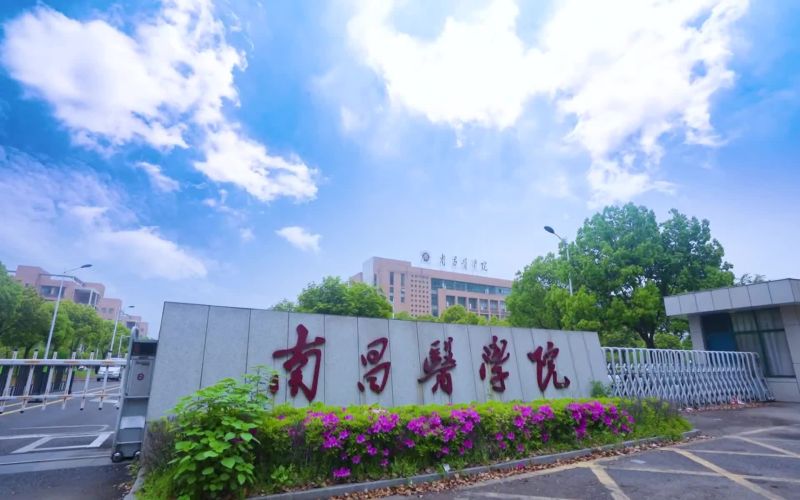

Nanchang Medical College is located in the beautiful "Hero City"—Nanchang, Jiangxi Province. Organized by the People's Government of Jiangxi Province, administratively managed by the Jiangxi Provincial Health Commission, and operationally guided by the Jiangxi Provincial Department of Education, the school was established with the approval of the Ministry of Education. It is a full-time regular undergraduate higher medical institution that integrates teaching, medical care, and scientific research, primarily dedicated to cultivating high-quality applied and technical-skill talents required for economic and social development.
In 2020, to address the shortcomings in medical education during the post-pandemic era, accelerate the construction of a strong public health system, and better enhance people's health and well-being, the Jiangxi Provincial Party Committee and the Provincial Government decided to found Nanchang Medical College. It was formed mainly from the Jiangxi Provincial People's Hospital, the Science and Technology College of Jiangxi University of Chinese Medicine, and the Jiangxi Health Vocational College. In January 2021, the Ministry of Education officially approved the establishment of Nanchang Medical College. In September 2021, the college enrolled its inaugural class (the Class of 2021) from 30 provinces and municipalities nationwide. In January 2022, it was approved as a planned construction unit for newly added master's degree-granting institutions under the province's "14th Five-Year Plan."
The school covers a total area of 1,455.44 mu (about 240 acres), with educational activities mainly concentrated in two campuses: Xianghu and Jiulonghu. It boasts 5 directly affiliated Grade 3A (Class A tertiary) hospitals, 6 non-directly affiliated hospitals, and 1 non-directly affiliated blood research institute. The college features 10 national-level research platforms, 50 provincial-level research platforms, 3 "Academician Workstations," 1 Ministry of Education "Master Studio," 1 Ministry of Education "Curriculum Ideological and Political Demonstration Project," and 4 provincial-level "Famous Teacher Studios." Currently, there are over 15,000 full-time undergraduate students enrolled.
The college has a faculty team of both full-time and part-time members with excellent qualifications and high academic, teaching, and scientific research levels. There are currently 901 full-time teachers, of which 348 hold senior professional titles (accounting for 38.6%), and 810 hold doctoral or master's degrees (accounting for 89.9%). There are 38 doctoral supervisors and 335 master's supervisors. The main campus and directly affiliated hospitals have appointed 10 first-level discipline leaders and 29 second-level discipline leaders. There are currently 4 provincial-level teaching reform teams. As of December 2025, the school's faculty have won 5 national scientific research achievement awards and 43 provincial scientific research achievement awards, led 100 National Natural Science Foundation projects, led or participated in 1,599 provincial and ministerial-level scientific research projects, and published 1,550 high-quality SCI research papers. The school appointed Professor Chen Fener, an outstanding alumnus of Nanchang Medical College and an academician of the Chinese Academy of Engineering, as its Honorary President. Additionally, the school has established university-level partnerships with institutions such as Peking Union Medical College to jointly advance the development of Nanchang Medical College into a high-level, exemplary applied medical university.
The school is composed of 12 teaching schools and departments: the School of Clinical Medicine, School of Stomatology, School of Public Health, School of Integrated Traditional Chinese and Western Medicine, School of Nursing, School of Health Management, School of Pharmacy, School of Laboratory Medicine, School of Medical Imaging, School of Marxism, School of Basic Medical Sciences, and the Department of Public Subject Teaching. It currently offers 22 undergraduate majors, including Clinical Medicine, Stomatology, Integrated Traditional Chinese and Western Clinical Medicine, Traditional Chinese Medicine, Acupuncture and Tuina, Preventive Medicine, Nursing, Midwifery, Stomatological Technology, Pharmacy, Traditional Chinese Pharmacy, Cultivation and Identification of Chinese Herbal Medicines, Medical Laboratory Technology, Health Inspection and Quarantine, Medical Imaging Technology, Intelligent Imaging Engineering, Rehabilitation Therapeutics, Elderly Service Management, and Elderly Care and Management. These programs span disciplines such as medicine and management, forming a specialized cluster of "medicine, pharmacy, nursing, technology, and management" that aligns with the development of healthcare services in the province and region.
A new era brings new missions, and a new journey calls for new responsibilities. Nanchang Medical College will consistently hold high the great banner of Xi Jinping Thought on Socialism with Chinese Characteristics for a New Era, adhere to the socialist direction of running the school, and fully implement the Party's educational policy. It aims to fulfill the fundamental task of "fostering virtue through education" (Lide Shuren) and operates under the mission of "serving national development, promoting social progress, and bravely undertaking the mission of health." Adhering to the educational positioning of "based in Jiangxi, facing the grassroots, rooted in health, and serving society," and upholding the school motto of "Great Virtue and Excellent Expertise, Innovation and Hard Work," the college cultivates socialist builders and successors with well-rounded moral, intellectual, physical, aesthetic, and labor development.
During the "15th Five-Year Plan" period, the school will unswervingly follow the path of applied development, taking undergraduate education as the main focus while striving to overcome the bottlenecks in becoming a master's degree-granting institution. Guided by modern medicine, it will promote the integration of Traditional Chinese and Western medicine as well as the parallel development of medicine and pharmacy. The college will focus on establishing three master's degree-applying disciplines (Traditional Chinese Pharmacy, Nursing, and Medical Technology) and prioritize the development of three disciplinary directions (Clinical Medicine, Public Health, and Integrated Traditional Chinese and Western Medicine). It will make concentrated efforts to introduce a group of outstanding talents, leading figures, and discipline leaders, build multiple scientific research teams, set up and layout a series of key scientific research platforms, construct a modern medical talent cultivation system with distinct characteristics, and strive to provide high-quality medical education that satisfies the people. (The above data is as of December 2025)
开始对话
成为第一个分享想法的人!