


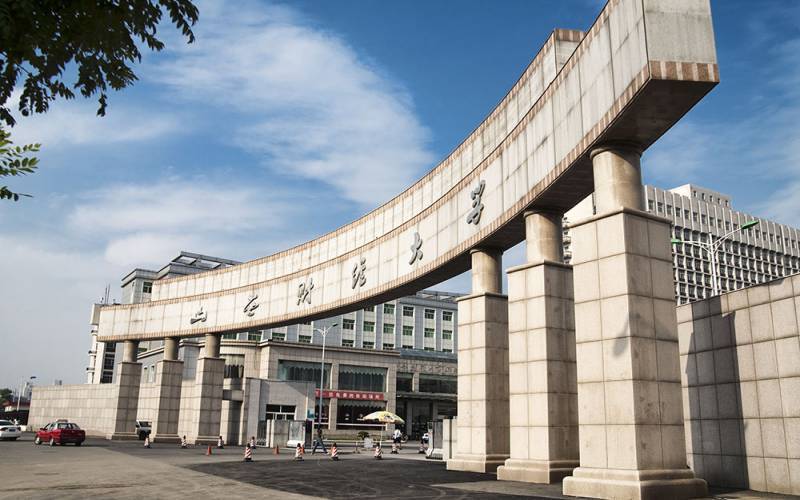

Shanxi University of Finance and Economics is a provincially administered higher education institution with a long history and distinctive characteristics. It is also one of the earliest finance and economics universities established after the founding of the People’s Republic of China. The university is located in Taiyuan, the capital of Shanxi Province, a nationally renowned historical and cultural city known as the “Dragon City.”
History and Institutional Characteristics
Founded in 1951, the university originated from several cadre training schools, including the Shanxi Banking Cadre School, Commercial Cadre School, Supply and Marketing Cooperative Cadre School, Financial Cadre School, and Grain Cadre School. In September 1958, these five schools were merged to form Shanxi Institute of Finance and Economics. In December 1984, Shanxi Institute of Economic Management was established. In October 1997, Shanxi Institute of Finance and Economics and Shanxi Institute of Economic Management were merged to form Shanxi University of Finance and Economics.
Over the years, the university has remained committed to its mission of “cultivating talent for the Party and the nation,” upholding the motto “Cultivate virtue and integrity, pursue broad knowledge and truth.” It has developed a disciplinary system centered on economics, management, statistics, and law, with coordinated development across economics, management, law, science, engineering, humanities, arts, and education. To date, the university has trained over 240,000 graduates, producing a large number of outstanding professionals in finance and economics.
Organizational Structure and Academic Programs
The university comprises 20 Party and administrative departments, 22 teaching units, 5 key research institutions, and 11 supporting and affiliated organizations. It hosts 5 provincial key research bases in humanities and social sciences, 1 provincial collaborative innovation center, and 1 provincial key think tank.
It offers:
-
4 doctoral degree authorization points in first-level disciplines
-
10 master’s degree authorization points in first-level disciplines
-
19 professional master’s degree programs
-
4 provincial key disciplines and 5 key disciplines under development
-
2 postdoctoral research stations
The university provides 55 undergraduate programs, including:
-
5 nationally recognized特色 (featured) majors
-
20 national first-class undergraduate program construction sites
-
19 provincial first-class undergraduate program construction sites
-
1 national experimental teaching demonstration center
Faculty and Talent Development
The university has 1,660 faculty and staff members, including 1,138 full-time teachers. Among them are 539 professors and associate professors, and 746 faculty members hold doctoral degrees. There are 107 high-level talents, including recipients of State Council special allowances, Ministry of Education New Century Excellent Talents, and various provincial-level distinguished scholars.
The student body totals 21,520, including:
-
16,894 undergraduate students
-
4,358 master’s students
-
219 doctoral students
-
49 international students
-
8,330 continuing education students
The university emphasizes the all-round development of students in morality, intellect, physical education, aesthetics, and labor education. Its graduates are known for solid foundations, comprehensive abilities, and strong practical and innovative skills, maintaining top employment outcomes within the province.
Teaching and Research
The university prioritizes teaching and continuously advances educational reform. In the past three years, it has:
-
Won 29 teaching achievement awards
-
Established 16 national first-class courses and 89 provincial first-class courses
-
Approved 168 provincial teaching reform projects
In research, it emphasizes organized, high-quality output:
-
206 national and Ministry of Education projects
-
1,291 provincial-level projects
-
385 industry-funded (horizontal) projects
-
206 academic monographs published
-
2,068 academic papers published
-
394 research awards received
Notably:
-
In 2022, it ranked 3rd nationwide and 1st among finance universities in Ministry of Education humanities and social sciences projects (31 projects).
-
It ranked 38th nationwide and 3rd among finance universities in National Social Science Fund projects.
-
In 2023 and 2024, it continued to rank among the top universities nationwide and within finance institutions for research project approvals.
Its journals, Journal of Shanxi University of Finance and Economics and Journal of Statistics, are highly ranked nationally, with the latter recognized as an A-level core journal.
International Exchange and Cooperation
The university actively promotes openness and collaboration:
-
Partnerships with 25 local governments and enterprises
-
Strategic cooperation with 8 top domestic universities
-
Academic exchange with nearly 40 universities across countries such as the United States, Germany, Russia, Canada, Japan, the Czech Republic, and Australia
Nearly 300 faculty members have overseas study or research experience. The Sino-German College, the largest such collaboration among finance universities in China, has sent over 3,000 students to Germany over 22 years and serves as a flagship model of international cooperation in Shanxi Province.
Campus and Facilities
The university operates across three campuses: Wucheng, Yingze, and Dongshan, covering 1,954 mu (about 130 hectares), with a total building area of nearly 600,000 square meters.
Key facilities include:
-
A modern library (40,903 m²) with 2.1 million printed books and 48 databases
-
RFID smart library systems and advanced learning spaces
-
Experimental training centers, IT education centers, sports complexes
-
International academic exchange center
-
Jin Merchants Museum
These provide a strong infrastructure for teaching and research.
Vision and Outlook
Moving forward, the university will continue to be guided by Xi Jinping Thought on Socialism with Chinese Characteristics for a New Era, uphold its fundamental mission of moral education, and strive toward becoming a distinctive, high-level, first-class finance and economics university in China, with confidence, determination, and a commitment to excellence.
开始对话
成为第一个分享想法的人!