
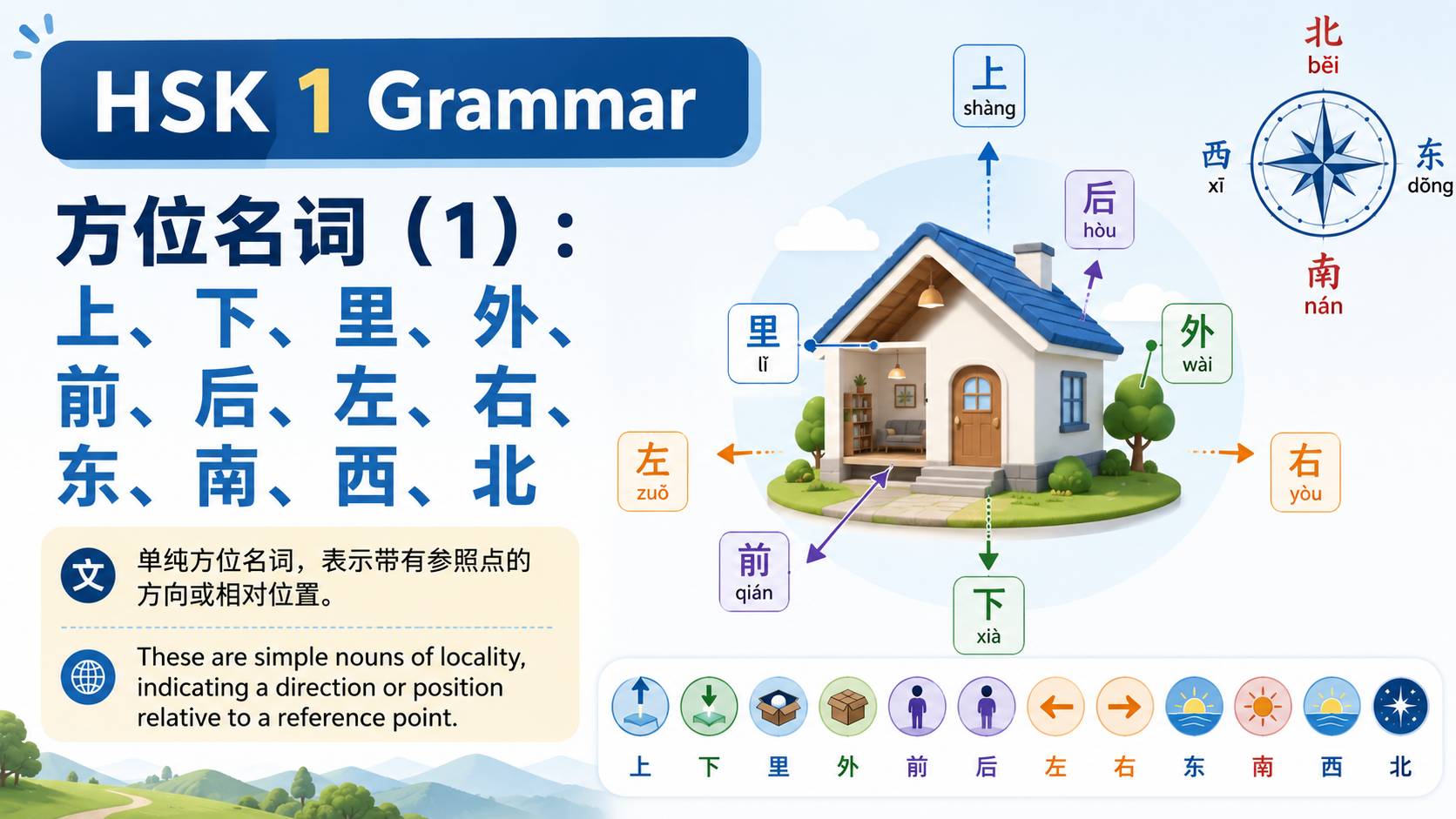
方位名词(1):上、下、里、外、前、后、左、右、 东、南、西、北
HSK 1基本语义及用法
单纯方位名词,表示带有参照点的方向或相对位置。
These are simple nouns of locality, indicating a direction or position relative to a reference point.
典型例句和对话
| 例句 | ①书在桌子上。 | ②衣服在门后。 | ③房间里没有人。 |
|
交 |
(在家) 儿子: 妈妈,我的书 在哪儿? 妈妈:书在桌子上。 |
(孩子准备上学) 孩子: 妈妈,我的衣 服在哪儿? 妈妈:衣服在门后。 |
(在家) 妈妈: 孩 子 们, 快 出 来吃饭了。 爸爸: 房间里没有人, 他们在外面。 |
补充例句
①门票不在桌子上。
- Ménpiào bù zài zhuōzi shàng.
- The ticket is not on the table.
- El boleto no está sobre la mesa.
②他不在楼下,他在楼上。
- Tā bù zài lóuxià, tā zài lóushàng.
- He is not downstairs; he is upstairs.
- Él no está abajo, él está arriba.
③门前有很多树。
- Mén qián yǒu hěn duō shù.
- There are many trees in front of the door.
- Hay muchos árboles frente a la puerta.
④楼后有一家医院。
- Lóu hòu yǒu yī jiā yīyuàn.
- There is a hospital behind the building.
- Hay un hospital detrás del edificio.
⑤手机在书包里。
- Shǒujī zài shūbāo lǐ.
- The phone is in the backpack.
- El teléfono está en la mochila.
⑥我在教学楼外等你。
- Wǒ zài jiàoxuélóu wài děng nǐ.
- I am waiting for you outside the teaching building.
- Estoy esperándote fuera del edificio de clases.
结构特点
单纯方位名词常常用在名词后面,表示处所。
N + 上 / 下 / 里 / 外 / 前 / 后
书在 桌子 上。
楼 后 有一家医院。
小提示
(1)名词和单纯方位名词中间不可以加结构助词“的”。例如:
* 书包在门的后。
书包在门后。
(2)国家名、地名等词语后面不用“里”。例如:
* 北京里有很多外国人。
北京有很多外国人。
(3) “左、右、东、南、西、北”一般不单独使用,而是与“面、边、方”组合。 例如:
左边、东面
قواعد ذات صلة

“我们、你们、他们、她们”都是复数人称代词。“我们”指称说话者一方群体;“你们”指称听话者一方群体;“他们、她们”指称除说话者和听话者以外的其他人,这些人都是男性或有男有女时用“他们”,都是女性时用“她们”。
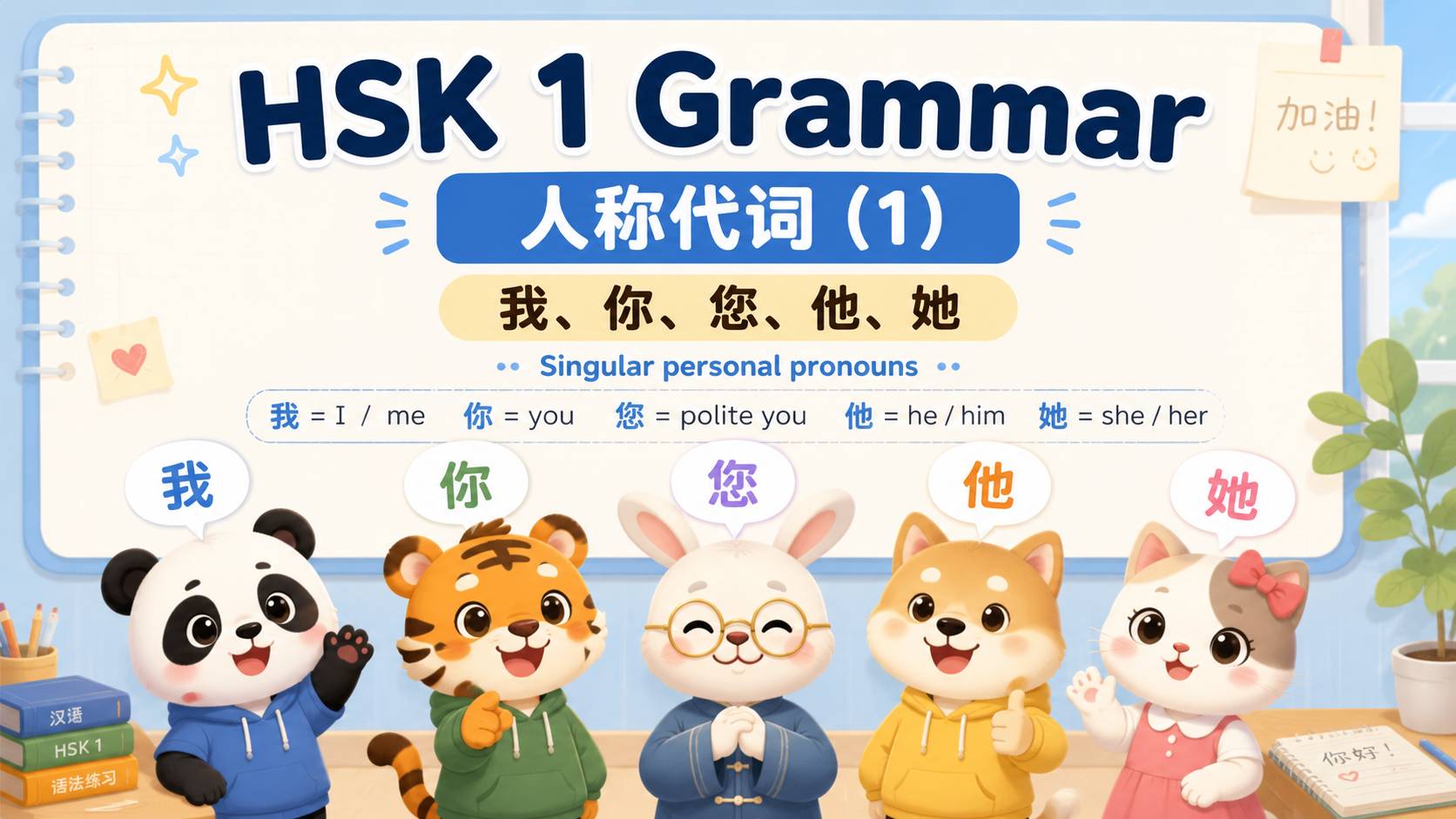
“我、你、您、他、她”都是单数人称代词。“我”指称说话者本人;“你、您”指称听话者,“您”是“你”的尊称,“他、她”指称除说话者和听话者以外的其他人,“他〞指称男性,“她〞指称女性。They are all singular personal pronouns. 我 means "I/me", 你 and 您 mean "you", the latter being the honorific form; 他 means "he/him" and 她 means "she/her".
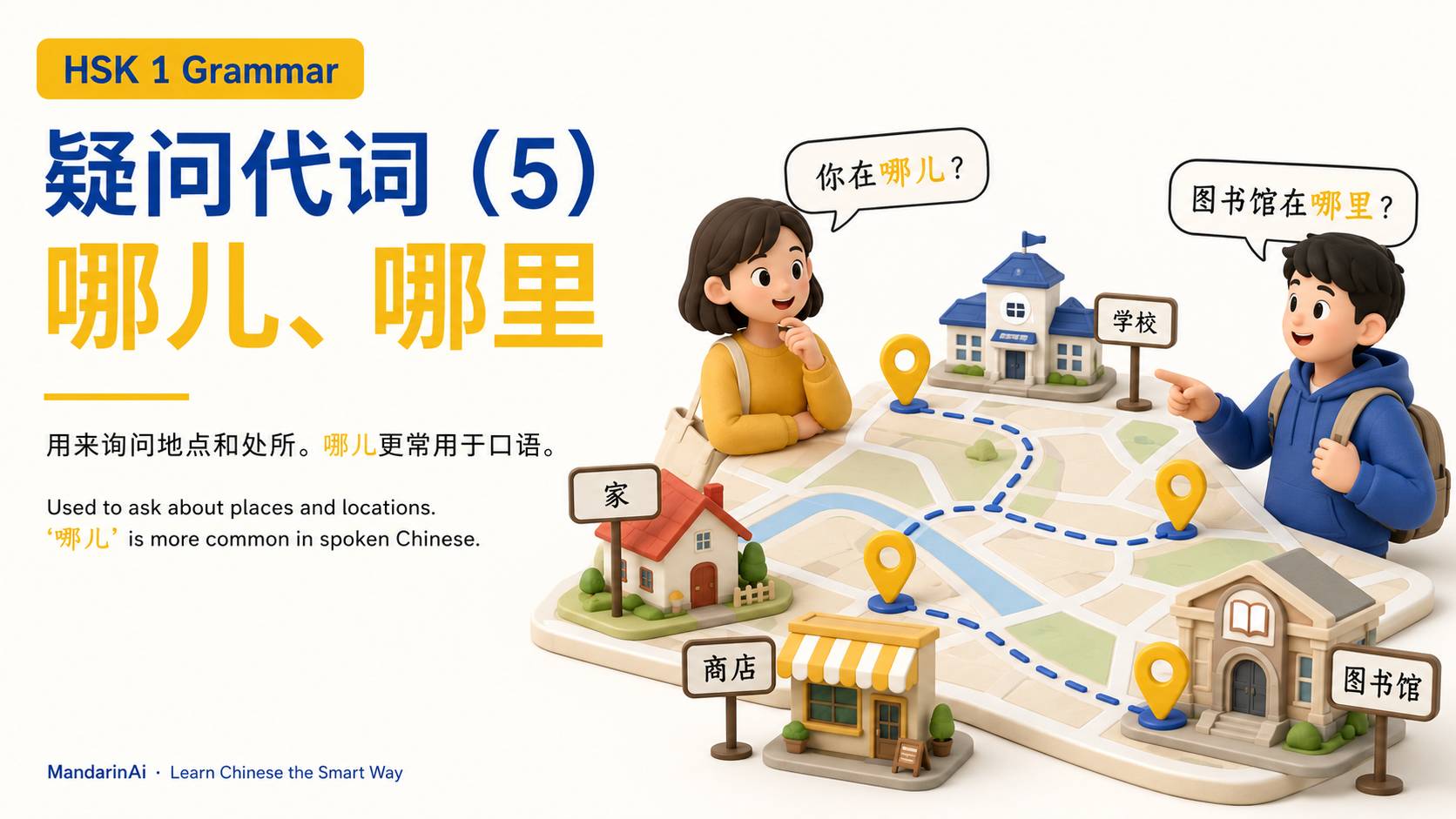
用在疑问向中,用来询问地点和处所。“哪儿”更常用于口语。They are used to ask about places and locations. 哪儿 is more often used in spoken Chinese.

用在疑问句中,后面加上形容词,询问程度或数量,例如年龄、时间、高度、长 度、距离等。It is used in interrogative sentences, followed by an adjective, to ask about the degree or quantity such as age, time, height, length, distance, etc.

表示希望、打算做某事的意愿,语气比“要”委婉。It indicates the subject’s hope or plan to do something. Its tone is milder than 要.
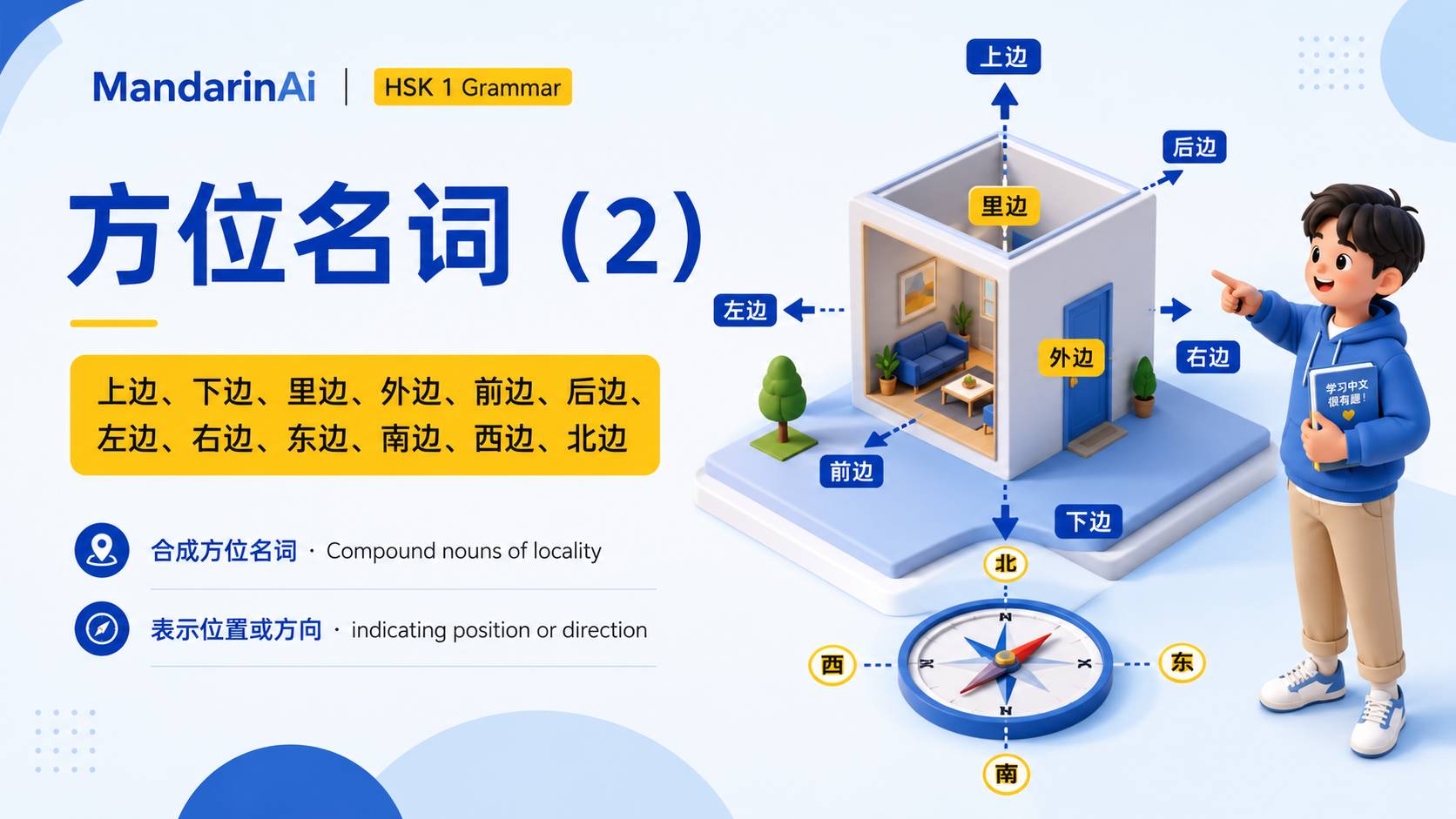
合成方位名词,表示处于上、下、里、外、前、后、左、右、东、南、西、北的 位置或方向。These are compound nouns of locality, indicating a position or direction that points upward / downward / inward /outward / forward / backward / leftward / rightward / eastward / southward / westward / northward.
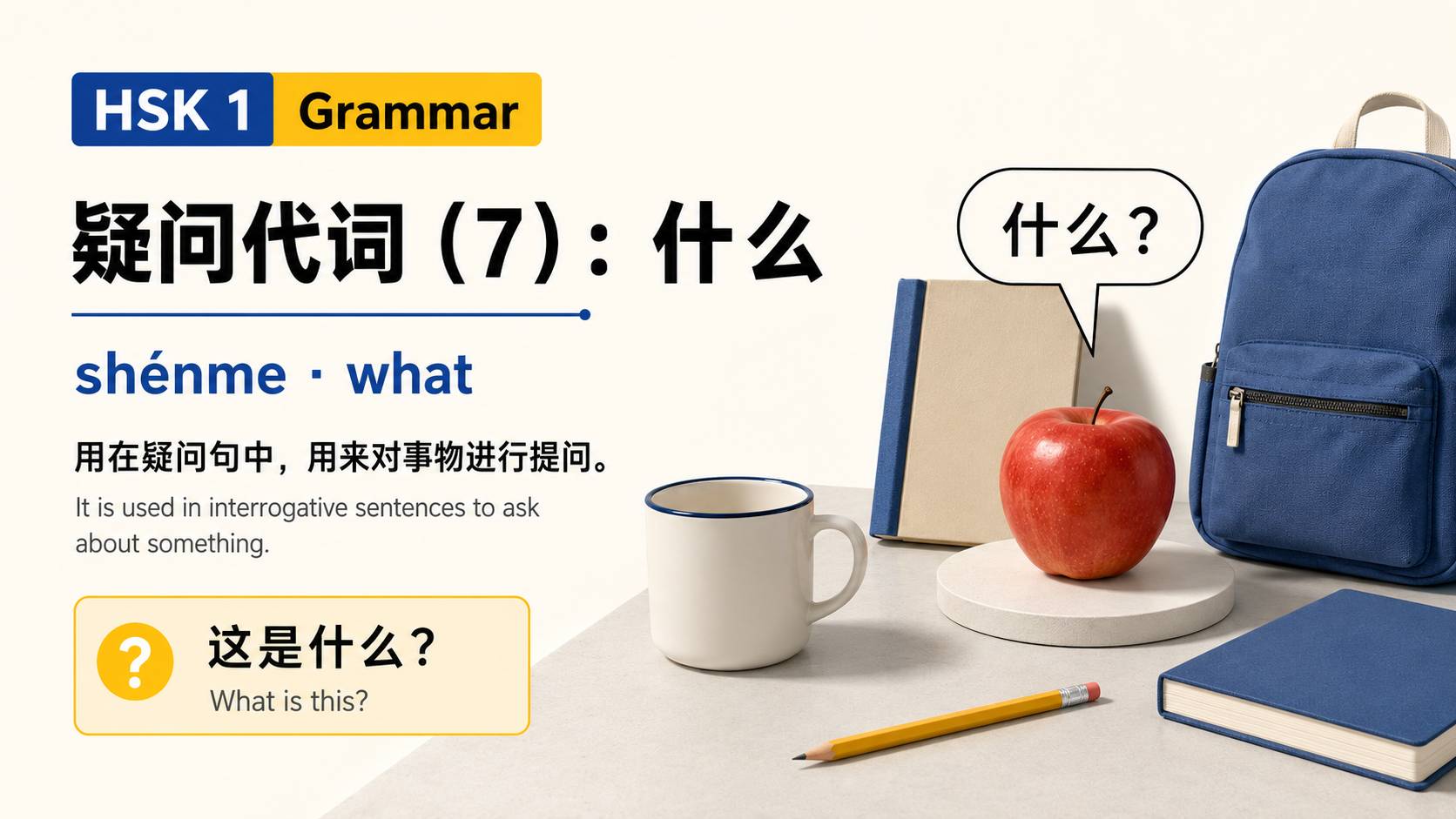
用在疑问向中,用来对事物进行提问。It is used in interrogative sentences to ask about something.

用在疑问句中,询问数量,例如人数、价格 年龄等。或者不清楚到底有多少的数量It is used in interrogative sentences to ask about the quantity, such as the number of people price, age, etc. The number is normally larger than 10 or totally unknown.
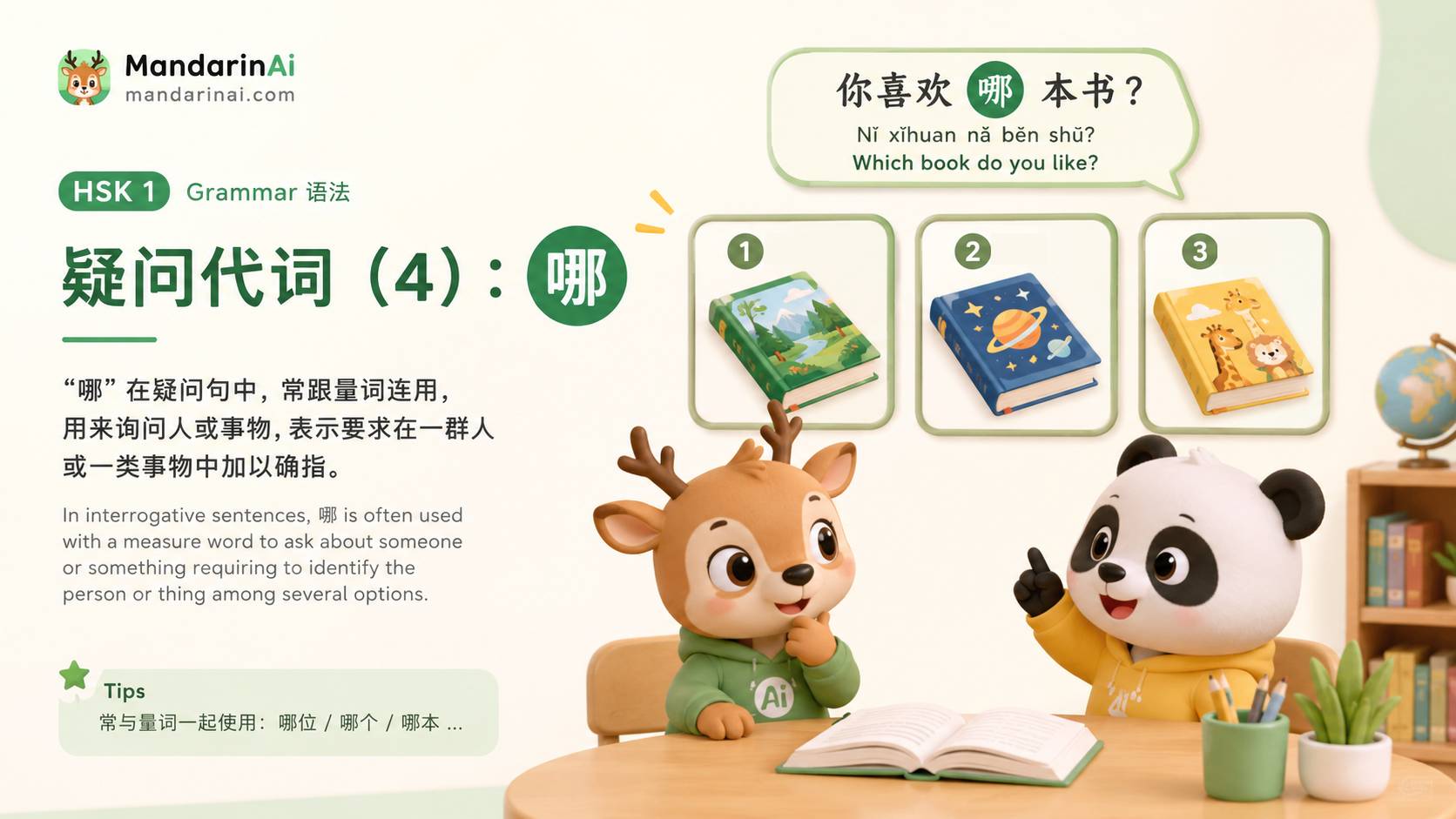
“哪”在疑问句中,常跟量词连用,用来询问人或事物,表示要求在一群人或一类事物中加以确指。In interrogative sentences, 哪 is often used with a measure word to ask about someone or something requiring to identify the person or thing among several options.
ابدأ المحادثة
كن أول من يشارك أفكاره!