
方位名词(2):上边、下边、里边、外边、前边、后边、 左边、右边、东边、南边、西边、北边
HSK 1基本语义及用法
合成方位名词,表示处于上、下、里、外、前、后、左、右、东、南、西、北的 位置或方向。
These are compound nouns of locality, indicating a position or direction that points upward / downward / inward /outward / forward / backward / leftward / rightward / eastward / southward / westward / northward.
典型例句和对话
| 例句 | ①手机在书包里边。 Shǒujī zài shūbāo lǐbian. The phone is in the backpack. El teléfono está en la mochila. |
②他去东边的车站。 Tā qù dōngbiān de chēzhàn. He goes to the station in the east. Él va a la estación del este. |
③商场南边有一家银行。 Shāngchǎng nánbiān yǒu yì jiā yínháng. There is a bank to the south of the mall. Hay un banco al sur del centro comercial. |
|
交 |
(在教室) A:你的手机呢? A: Nǐ de shǒujī ne? A: Where is your phone? A: ¿Dónde está tu teléfono? B:手机在书包里边。 B: Shǒujī zài shūbāo lǐbian. B: The phone is in the backpack. B: El teléfono está en la mochila. |
(在房间) A:我去西边的车站,你去北边的车站,小王呢? A: Wǒ qù xībiān de chēzhàn, nǐ qù běibiān de chēzhàn, xiǎo wáng ne? A: I’m going to the station in the west, you are going to the station in the north, what about Xiao Wang? A: Yo voy a la estación del oeste, tú vas a la estación del norte, ¿y Xiao Wang? B:他去东边的车站。 B: Tā qù dōngbiān de chēzhàn. B: He goes to the station in the east. B: Él va a la estación del este. |
(在商场) 顾客:请问,商场旁边有银行吗? Gùkè: Qǐngwèn, shāngchǎng pángbiān yǒu yínháng ma? Customer: Excuse me, is there a bank next to the mall? Cliente: Disculpe, ¿hay un banco al lado del centro comercial? 店员:商场南边有一家银行。 Diànyuán: Shāngchǎng nánbiān yǒu yì jiā yínháng. Clerk: There is a bank to the south of the mall. Empleado: Hay un banco al sur del centro comercial. |
补充例句
①书架上边有很多书。
Shūjià shàngbian yǒu hěn duō shū.
There are many books on the shelf.
Hay muchos libros en el estante.
②她的车票在钱包里边。
Tā de chēpiào zài qiánbāo lǐbian.
Her ticket is in the wallet.
Su billete está en la cartera.
③他在车站外边等我。
Tā zài chēzhàn wàibian děng wǒ.
He is waiting for me outside the station.
Él me está esperando fuera de la estación.
④我去前边的商店。
Wǒ qù qiánbiān de shāngdiàn.
I’m going to the store in the front.
Voy a la tienda de adelante.
⑤银行在邮局的后边。
Yínháng zài yóujú de hòubian.
The bank is behind the post office.
El banco está detrás de la oficina de correos.
⑥商场在邮局的北边。
Shāngchǎng zài yóujú de běibian.
The mall is to the north of the post office.
El centro comercial está al norte de la oficina de correos.
结构特点
合成方位名词“上边、下边、里边、外边、南边、北边”等可以单独作主语、宾 语或定语;也可以用在名词的后面,表示处所,这时名词与合成方位名词之间可以加 结构助词“的”,也可以不加。
① N 方位 + VP
上边 有一本书。
② S + V + N 方位
银行 在 北边。
③ N 方位 + 的 + N
他去 东边 的 车站。
④ N(+ 的)+ N 方位
书架 的 上边 有很多书。 银行在 邮局 的 北边。
小提示
(1) “上边、下边、里边、外边、南边、北边”等合成方位名词与“上、下、里、 外、南、北”等单纯方位名词的语义基本相同,都可以用在名词后面,表示处所。名 词与合成方位名词之间可以加结构助词“的”,也可以不加;但名词与单纯方位名词 之间不可以加结构助词“的”。例如:
* 手机在书包的里。
手机在书包(的)里边。
* 书架的上有很多书。
书架(的)上边有很多书。
(2)合成方位名词可以用在名词前,也可以用在名词后,但意思不一样。“合成方 位名词 + 的 + 名词”表示某人或某事物,对应的疑问词语是“哪个”;“名词(+ 的)+ 合成方位名词”表示处所,对应的疑问词语是“哪儿”。例如:
A:你去哪个商店?
B:我去南边的商店。
A:书店在哪儿?
B:书店在商店的南边

قواعد ذات صلة

“我们、你们、他们、她们”都是复数人称代词。“我们”指称说话者一方群体;“你们”指称听话者一方群体;“他们、她们”指称除说话者和听话者以外的其他人,这些人都是男性或有男有女时用“他们”,都是女性时用“她们”。

“我、你、您、他、她”都是单数人称代词。“我”指称说话者本人;“你、您”指称听话者,“您”是“你”的尊称,“他、她”指称除说话者和听话者以外的其他人,“他〞指称男性,“她〞指称女性。They are all singular personal pronouns. 我 means "I/me", 你 and 您 mean "you", the latter being the honorific form; 他 means "he/him" and 她 means "she/her".
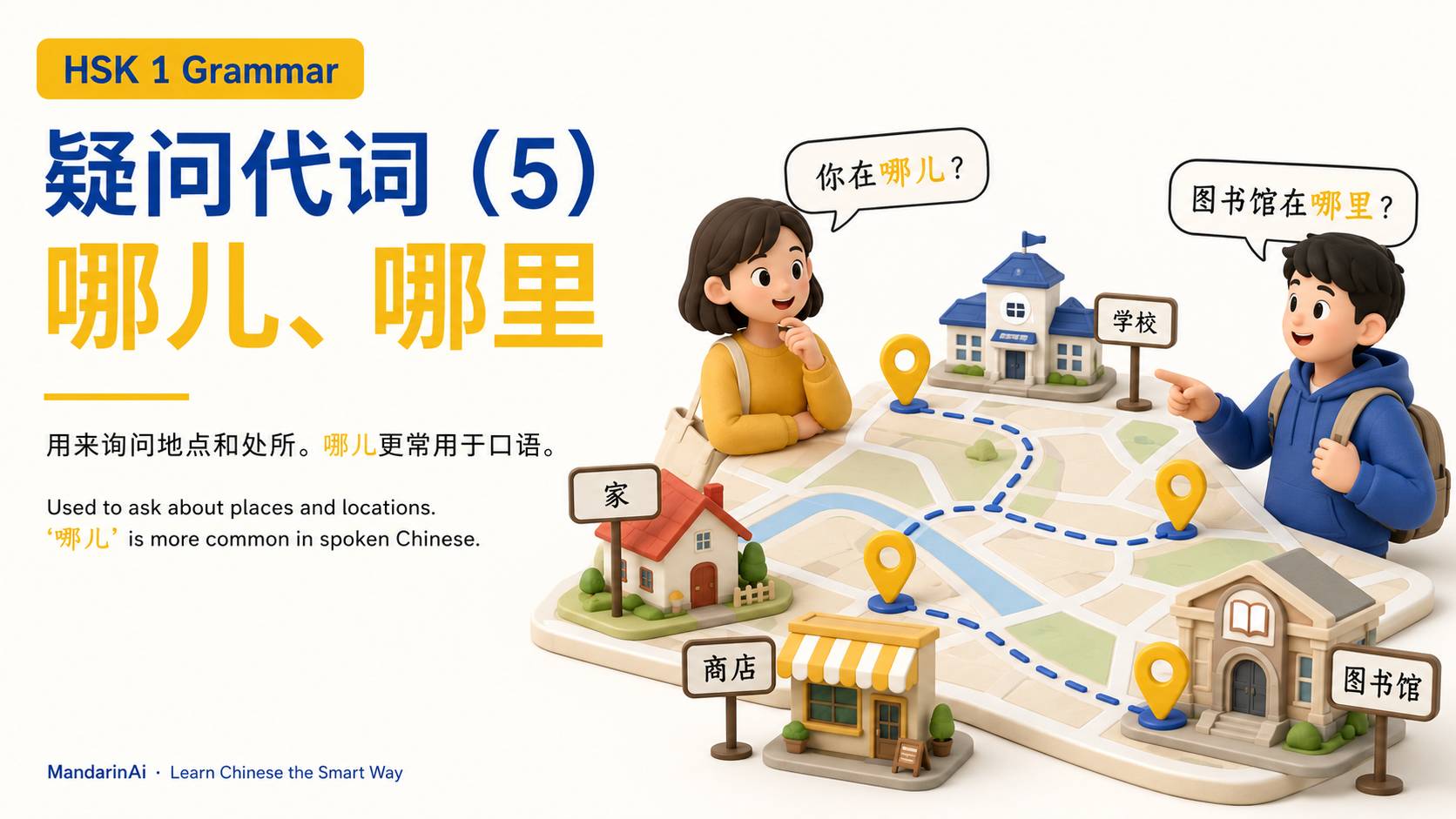
用在疑问向中,用来询问地点和处所。“哪儿”更常用于口语。They are used to ask about places and locations. 哪儿 is more often used in spoken Chinese.

用在疑问句中,后面加上形容词,询问程度或数量,例如年龄、时间、高度、长 度、距离等。It is used in interrogative sentences, followed by an adjective, to ask about the degree or quantity such as age, time, height, length, distance, etc.

表示希望、打算做某事的意愿,语气比“要”委婉。It indicates the subject’s hope or plan to do something. Its tone is milder than 要.
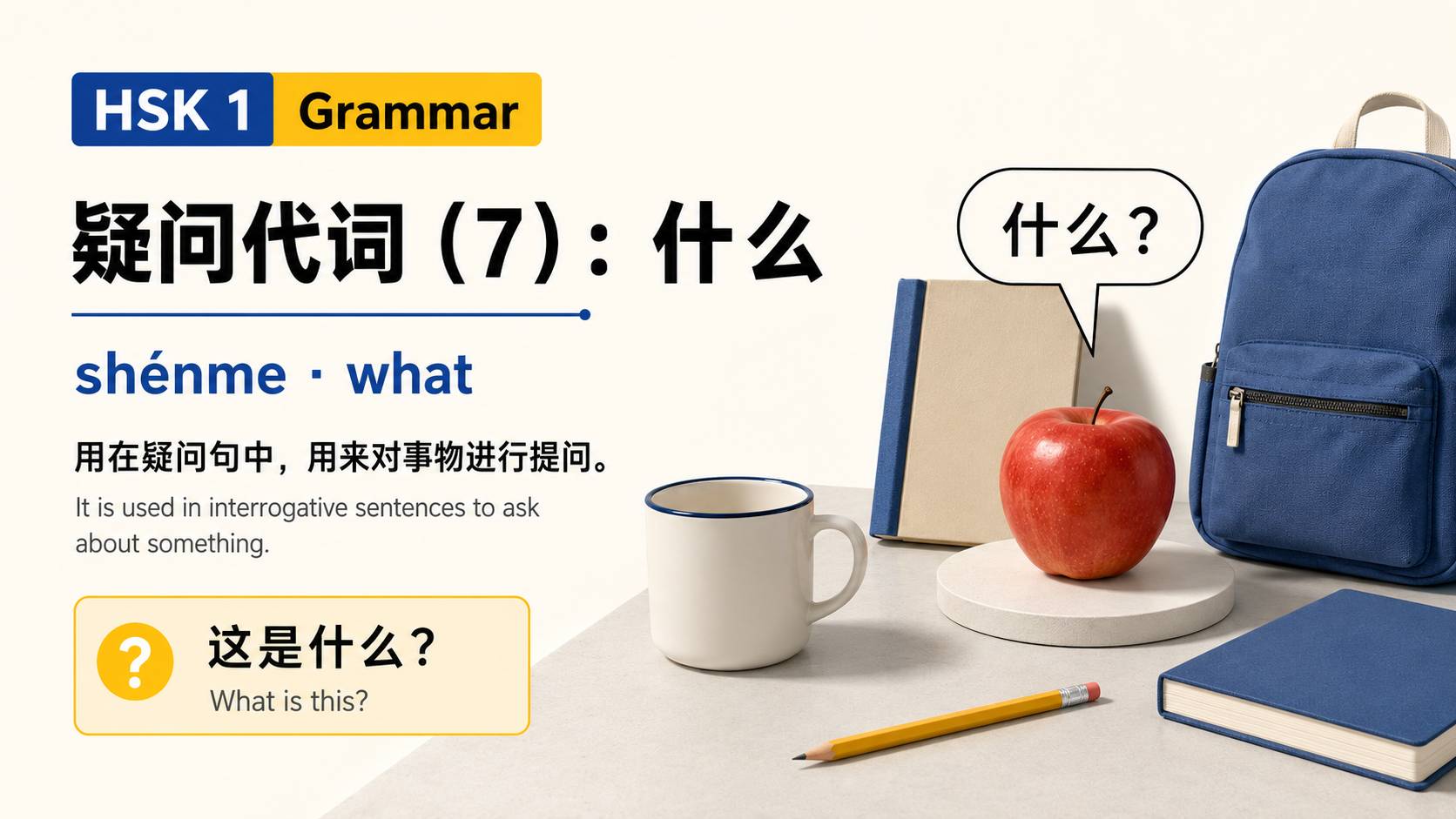
用在疑问向中,用来对事物进行提问。It is used in interrogative sentences to ask about something.

用在疑问句中,询问数量,例如人数、价格 年龄等。或者不清楚到底有多少的数量It is used in interrogative sentences to ask about the quantity, such as the number of people price, age, etc. The number is normally larger than 10 or totally unknown.
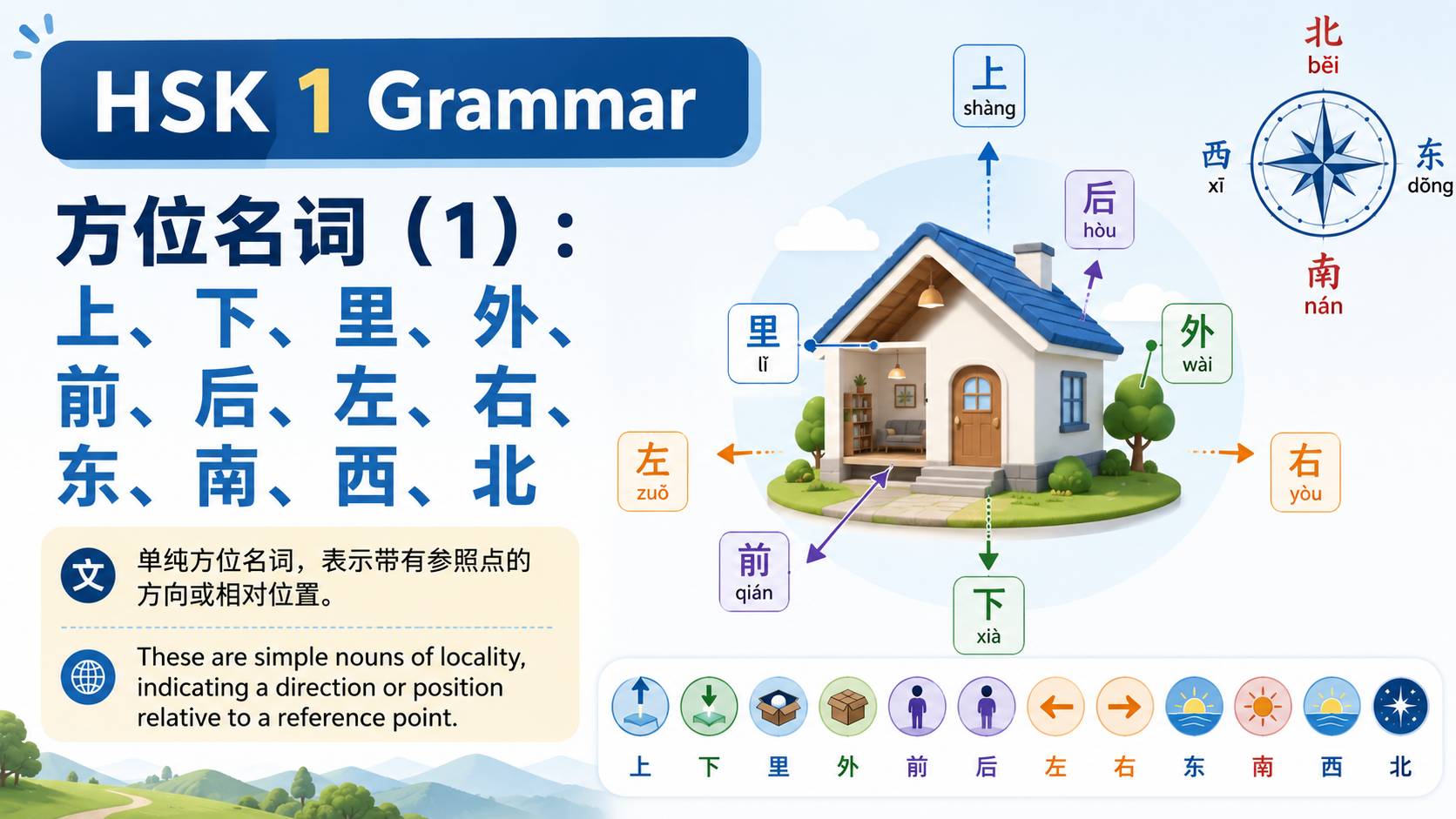
单纯方位名词,表示带有参照点的方向或相对位置。These are simple nouns of locality, indicating a direction or position relative to a reference point.

“哪”在疑问句中,常跟量词连用,用来询问人或事物,表示要求在一群人或一类事物中加以确指。In interrogative sentences, 哪 is often used with a measure word to ask about someone or something requiring to identify the person or thing among several options.
ابدأ المحادثة
كن أول من يشارك أفكاره!