



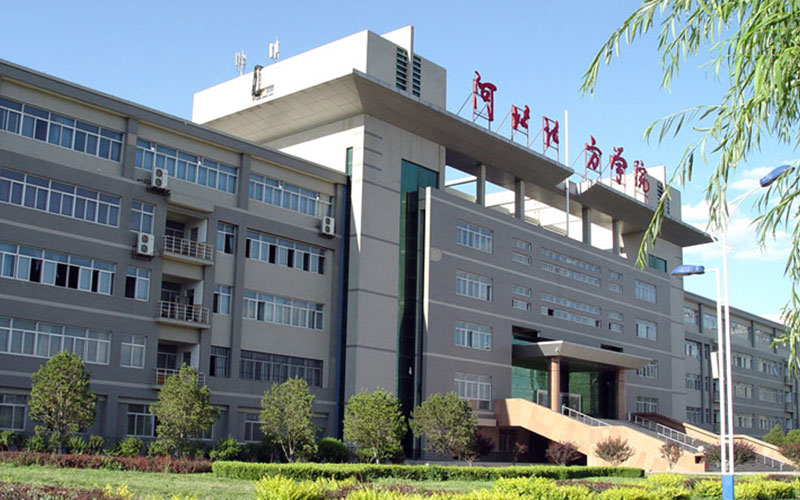

Hebei North University is located in Zhangjiakou, one of the host cities for the 2022 Beijing Winter Olympics and Paralympics. The university is rich in cultural heritage, drawing on the spirit of the Great Wall and the essence of Zhangyuan culture. With a long history and deep cultural accumulation, it is a comprehensive provincial university with the authority to confer master's degrees, located in the northwest of Hebei Province.
The university was established in September 2003 through the merger of three provincial institutions: Zhangjiakou Medical College, Zhangjiakou Normal College, and Zhangjiakou Agricultural College. The origin of Zhangjiakou Medical College dates back to 1945 when it was founded as the Jin-Cha-Ji Bethune Health School, which was upgraded to a full-fledged medical institution in 1982. Zhangjiakou Normal College was founded in 1950, and Zhangjiakou Agricultural College was founded in 1923. Over its century-long history, the university has accumulated rich educational experience and developed a high level of teaching and research, making significant contributions to local economic development and social progress.
The university has four campuses: West, East, South, and North. It covers an area of 1.0453 million square meters, with a building area of 476,000 square meters. The campus is equipped with modern teaching facilities, an advanced campus network, experimental centers, provincial-level experimental teaching demonstration centers, and basic laboratories for all disciplines. The library holds more than 2.08 million books in physical form. The university has two directly affiliated hospitals and two non-directly affiliated hospitals, as well as 296 professional practice teaching bases. The First Affiliated Hospital is the largest in the region, with the most complete departments, advanced equipment, and high medical standards. It integrates medical services, teaching, research, prevention, and rehabilitation, and is a Class-A tertiary hospital and a national baby-friendly hospital.
The university employs 5,306 staff members (including those in the affiliated hospitals). Of these, 1,495 are employed on the main campus, including 200 professors, 441 associate professors, and 1,234 faculty members with master's or doctoral degrees. The staff also includes 1,221 master's advisors. Among the faculty, there are recipients of special government allowances from the State Council, national teaching experts, national model workers, and other notable titles such as "Most Beautiful University Counselors" and experts in national agricultural technology systems.
The university has more than 25,000 full-time students, including over 1,600 master's students and 290 international students. It offers programs through 18 schools and 1 teaching department, including the Medical Department, Basic Medical School, School of Medicine, School of Traditional Chinese Medicine, School of Pharmacy, School of Arts, School of Economics and Management, School of Information Science and Engineering, School of Animal Science, International Education School, Clinical Medicine School, and the Graduate School.
The university offers a wide range of disciplines covering 11 categories, including natural sciences, engineering, agriculture, medicine, literature, management, law, economics, art, history, and education. The medical and agricultural sciences are its strengths, while other disciplines are also developed in an interdisciplinary and mutually reinforcing manner. The university offers master's programs in Clinical Medicine, Pharmacy, Basic Medicine, and Food Science & Engineering, as well as professional degrees in clinical medicine, agriculture, veterinary medicine, and education. Key disciplines include Pharmacology, Medical Informatics, Pathology, and several provincial-level key medical specialties. The university also offers nationally recognized programs in Clinical Medicine, Forensic Medicine, and several other specialties.
The university has 76 undergraduate programs, including its traditional strengths in Clinical Medicine, Traditional Chinese Medicine, and Medical Laboratory Technology. It also offers specialized programs such as Pharmacy, which is a national-level featured program. The university is a pilot institution for the Excellence in Agriculture and Forestry Talent Education Program, and several programs have been recognized as national or provincial "first-class" undergraduate programs.
In research, the university operates six provincial research platforms, including the Hebei Provincial Key Laboratory of Neuropharmacology, the Hebei Provincial Key Laboratory of Agricultural Product Safety, and several other innovation centers. It also has five provincial research bases and three provincial science popularization bases. The university’s international exchange programs are growing, with stable partnerships with universities in Russia, the UK, Finland, the USA, Japan, Canada, Australia, and New Zealand. The university has also developed exchange programs for students from countries like Pakistan, Nepal, Bangladesh, and South Africa.
Since its establishment, the university has educated over 200,000 graduates, many of whom have made significant contributions in various fields, including prominent experts, professors, and scientists. The university continues to foster outstanding talent, contributing to the economic and social development of Hebei and surrounding regions.
With a rich heritage and a bright future ahead, the university is committed to building a modern, open, and distinctive high-level applied university, continuously striving for progress in education and research.
(Edited and approved by the Department of Publicity and United Front Work, April 18, 2024)
ابدأ المحادثة
كن أول من يشارك أفكاره!