



Hubei University of Chinese Medicine is located in Hubei Province, known as the birthplace of Shennong and the hometown of Li Shizhen, an important source of Chinese medicine culture. The university was established in 1958, originating from the Hubei Provincial Chinese Medicine School, founded in 1954. In 2003, the former Hubei University of Chinese Medicine merged with the former Hubei Pharmaceutical Inspection College to form the new Hubei University of Chinese Medicine. In March 2010, it was renamed Hubei University of Chinese Medicine.
The university is co-funded by the People's Government of Hubei Province and the National Administration of Traditional Chinese Medicine. It is one of the earliest institutions in China to offer undergraduate education in traditional Chinese medicine and postgraduate education in this field. It is also one of the first universities in China to be approved for postgraduate programs in traditional Chinese medicine by the Ministry of Education. The university is recognized for its excellence in undergraduate teaching and is a graduate school for students who are exempted from entrance exams for their Master's degrees. It is the first provincial university in Hubei to have doctoral degree programs in first-level disciplines and is among the first provincial universities in the province to establish postdoctoral research stations. The university was also one of the first in the country to accept international students, and it is one of the first provincial universities to offer Sino-foreign cooperative education programs. The university is part of the "National Central and Western Universities Capacity Building Project" and is regarded as a “domestically top-tier discipline-building university” in Hubei Province.
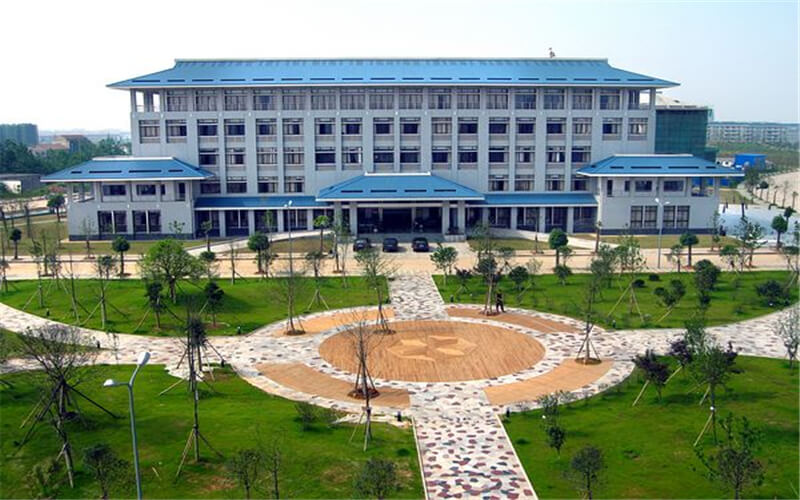
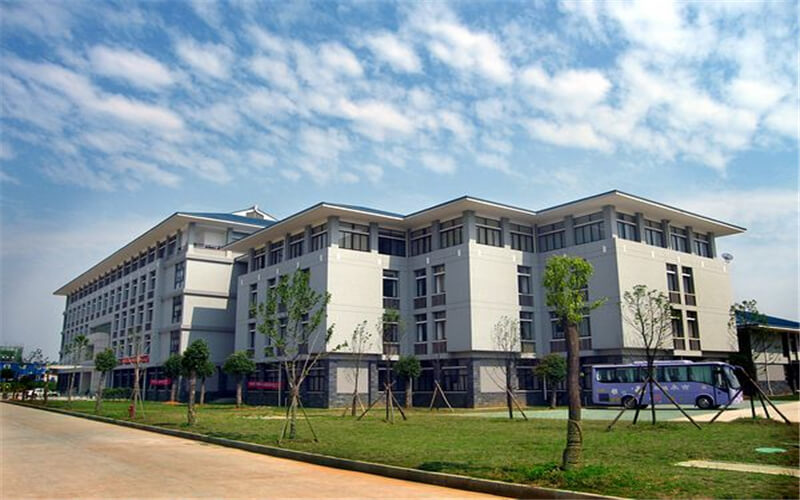
The university is located in Wuhan, the capital of Hubei Province, which is known as the "Nine Provinces' Thoroughfare." The campus spans two districts: Wuchang and Hongshan, covering a total area of 1,610 acres. The Tanhualin campus is located in the heart of Wuchang District, steeped in history and culture, with a serene, elegant atmosphere. The former site of Wenhua University on this campus is a cultural heritage site in Wuhan. The Huangjiahube campus is a picturesque, garden-style campus with modern, comprehensive facilities that radiate grandeur and solemnity. The university has been recognized as a “National Civilized Unit” and has received several other awards, such as “National Advanced School for Creating a Civilized Campus,” and “Hubei Province Civilized Unit.”
The university offers education at all levels, including undergraduate, master’s, and doctoral programs, with a wide range of types, including full-time domestic higher education, international student education, and adult continuing education. Over the past 66 years, the university has adhered to its educational philosophy of combining "inheritance and innovation" and "science and humanities," promoting the spirit of "diligence, pragmatism, exploration, and innovation." The university has trained over 100,000 graduates, including notable alumni such as academicians of the Chinese Academy of Engineering Tian Jinzhou and Chen Shilin, international academicians such as Wang Jie, and national renowned traditional Chinese medicine masters, including Li Jinyong, Mei Guoqiang, and Tu Jinwen. The alumni also include experts in Chinese medicine and industry leaders, contributing significantly to the development of traditional Chinese medicine in Hubei and beyond.
The university is known for its unique educational approach and rich teaching experience, establishing a balanced curriculum across disciplines, including traditional Chinese medicine and pharmacy, as well as other fields such as literature, science, engineering, management, economics, and education. The university has 7 major disciplines: Medicine, Science, Engineering, Management, Literature, Education, and Economics, offering 35 undergraduate programs. It has 3 doctoral degree programs and 13 master’s degree programs. The university has 6 national-level Chinese medicine disciplines and 15 key disciplines under the National Administration of Traditional Chinese Medicine. The university’s Chinese medicine program has been selected for the Hubei Province "Top Domestic Discipline" cultivation program. It has 4 provincial key disciplines and 14 provincial-level key traditional Chinese medicine disciplines. The university also has several key medical and pharmaceutical specialties and is home to internationally recognized research centers in liver disease, kidney disease, acupuncture, and other specialties. Its clinical medicine, pharmacology, and toxicology disciplines rank in the top 1% of the global ESI (Essential Science Indicators) rankings.
The university emphasizes talent cultivation and has made significant strides in innovation in education. It has established experimental classes for top Chinese medicine talent, including "Chinese Medicine Reform Experimental Classes" and "Top Talent Classes for Chinese Medicine." Students from the university have earned prestigious awards, including national-level and provincial-level honors in competitions such as the "Challenge Cup" and in clinical and medical skills competitions. More than 70% of its medical graduates are employed in top-tier hospitals, and nearly 30% work for Fortune 500 companies or major corporations in China.
With a faculty of 1,670 employees, including 1,219 full-time teachers, the university has an impressive roster of nationally recognized faculty, including 3 national Chinese medicine masters, 4 nationally renowned Chinese medicine doctors, 13 experts honored with the National Outstanding Contribution Award for Traditional Chinese Medicine, and more than 80 excellent scientific and technological workers. The university is committed to providing the highest quality education and training, supported by a highly capable faculty.
The university boasts strong research capabilities, with key laboratories and research centers such as the Ministry of Education's Key Laboratory of Chinese Medicine Resources and Compound Medicine, the National Administration of Traditional Chinese Medicine's national research centers, and several provincial-level research platforms. The university is a designated research base for national Chinese medicine clinical research and epidemic prevention.
International collaboration is a key focus for the university, which has established partnerships with over 80 universities, academic groups, and research institutions in more than 30 countries and regions. The university actively promotes international exchanges, collaborations, and the education of international students, contributing to the global development of Chinese medicine. It is also advancing the integration of Chinese medicine into the "Belt and Road" initiative, contributing to the establishment of higher education systems in countries along the Belt and Road.
Looking to the future, the university will continue to be guided by Xi Jinping’s thoughts on socialism with Chinese characteristics for the new era, striving to accelerate the development of a distinctive, world-class university of traditional Chinese medicine. The university is committed to contributing to the modernization of Hubei Province and China, and to the development of health services in China and beyond.
Updated: June 2024
ابدأ المحادثة
كن أول من يشارك أفكاره!