



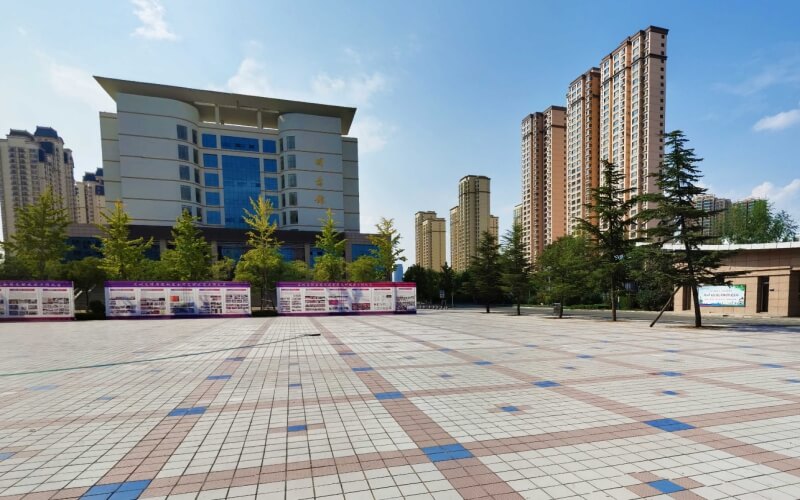
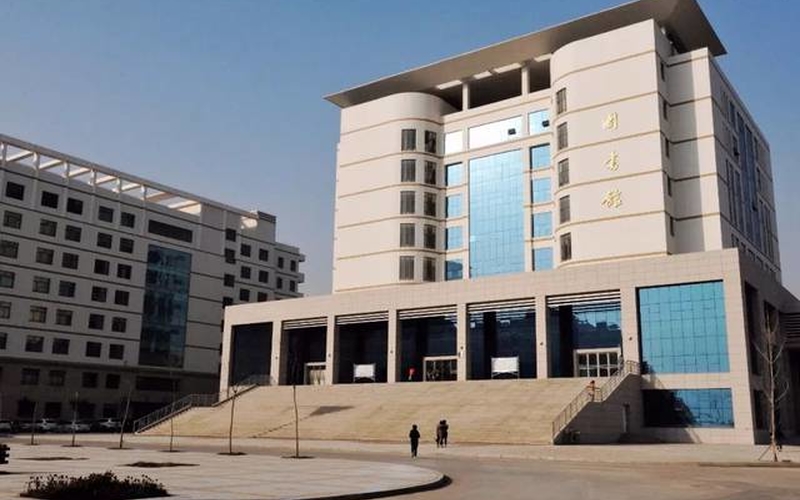

Lanzhou University of Arts and Science is a public undergraduate institution approved by the Ministry of Education and is a provincial university in Gansu. It is one of the first universities in Gansu to transition towards applied education. The university is a designated institution for the conferral of master's degrees in Gansu, and has established support relationships with China University of Communications, Beijing Institute of Technology, and Lanzhou University. It is also a founding member of the "Belt and Road" University Alliance and holds various other honors, including being a "First Batch of Civilized Campuses" in Gansu Province, a "New Era Demonstration University for Party Building in Gansu," and the recipient of several other provincial and national accolades.
Located in Lanzhou, a key city on the Silk Road Economic Belt, the university enjoys strategic geographical advantages, connecting eastern and western China, as well as northern and southern regions. Lanzhou's rich natural and cultural resources provide ample opportunities for the university to nurture students and foster their development.
Founded in 1950 through the merger of several institutions, including Gansu Education College, Gansu United University, Gansu Provincial Art School, and Gansu Film School, the university has consistently followed the Party’s educational guidelines. It has inherited the educational philosophy of Xin Anting, the first Party Secretary and President of Gansu Education College, who contributed to the development of basic education and the writing of textbooks in the early years of the People's Republic of China. The university adheres to the educational principle of "Unity of Knowledge and Action" and continues to cultivate high-quality applied talents for Gansu's economic and social development. It currently serves approximately 12,000 students.
The university’s mission is centered on fostering virtues and talents, with a focus on "educating students for the Party, nurturing talents for the country, emphasizing application, and serving development." The university is committed to its distinctive regional, open, and application-oriented approach. It actively integrates into Gansu's efforts to build a strong cultural and tourism province and has gradually developed a multidisciplinary model that blends arts and sciences while empowering cultural and tourism industries. The university’s core educational values are rooted in the belief of "Enhancing Morality, Strengthening Skills, and Inspiring Action." It seeks to cultivate well-rounded, high-quality professionals with social responsibility, humanistic awareness, innovation, and practical skills.
The university comprises 14 colleges and offers 42 undergraduate programs, forming a broad discipline system that includes liberal arts, arts, management, and engineering. Guided by the principles of new liberal arts and new engineering, the university focuses on developing three major clusters in cultural creativity, tourism management, and media studies. 88% of its programs directly contribute to the development of the region's cultural and tourism industries. It offers unique programs in intangible cultural heritage protection, theatrical performance, drama and film art design, and broadcasting engineering. The university has established the Dunhuang Dance teaching system, which is a hallmark of its curriculum.
As the only application-oriented university in the province focused on the cultural and tourism industries, Lanzhou University of Arts and Science serves as the secretariat of the Gansu Cultural Tourism Science and Education Innovation Alliance. It also serves as the secretariat for the Gansu Intangible Cultural Heritage Protection Association. The university has created the first "Modern Cultural Tourism International Industry College" in the province, which builds a collaborative educational model that integrates government, industry, and academia. The university has been granted nine provincial-level research platforms and bases, including centers for the study of intangible cultural heritage and Dunhuang dance talent development, and has established research institutes focused on high-quality cultural tourism development, Dunhuang dance heritage, and intangible cultural heritage.
The university has a strong commitment to scientific research, having secured multiple national and provincial research projects, including 14 projects funded by the National Social Science Fund, Natural Science Fund, and Art Fund. It has also won more than 40 provincial-level awards, including the Gansu Provincial Philosophy and Social Science Outstanding Achievement Award and the Dunhuang Arts Award. It has received national teaching achievement awards and several provincial-level teaching excellence awards.
Lanzhou University of Arts and Science continuously strengthens its faculty and staff, currently employing 874 people, including 651 full-time faculty members. Among them, 324 hold senior titles (50% of the faculty), 108 have doctoral degrees (16.6%), and 415 have master's degrees or higher (80.3%). The university has implemented talent programs such as the "Yan Yuan Scholar Program" and the "Yan Yuan Talents Program," and it actively attracts and cultivates high-level talents to build a strong "dual-skilled" teaching team. Among its faculty are national award-winning educators and experts in various fields.
The university has a robust approach to collaboration and partnerships, working with local governments, enterprises, and universities to deepen industry-education integration. It actively participates in the "Belt and Road" initiative, with strategic partnerships in research, talent cultivation, and cultural exchanges with universities in countries such as Uzbekistan, Tajikistan, Azerbaijan, Iran, South Korea, and Taiwan. The university also supports student exchanges to countries like Kazakhstan, Belarus, Ukraine, Armenia, Moldova, and Azerbaijan.
Looking to the future, the university is guided by Xi Jinping’s New Era Socialist Thought, focusing on the revitalization of higher education in central and western China. It is committed to political leadership in education, ensuring high-quality education, strengthening its distinctive character, and promoting rigorous governance. The university aims to become a high-level, application-oriented institution, contributing to the modernization of Gansu and the cultural and tourism industries.
(Updated by the Party Office of the University in September 2024)
Iniciar la conversación
¡Sé el primero en compartir tus pensamientos!