



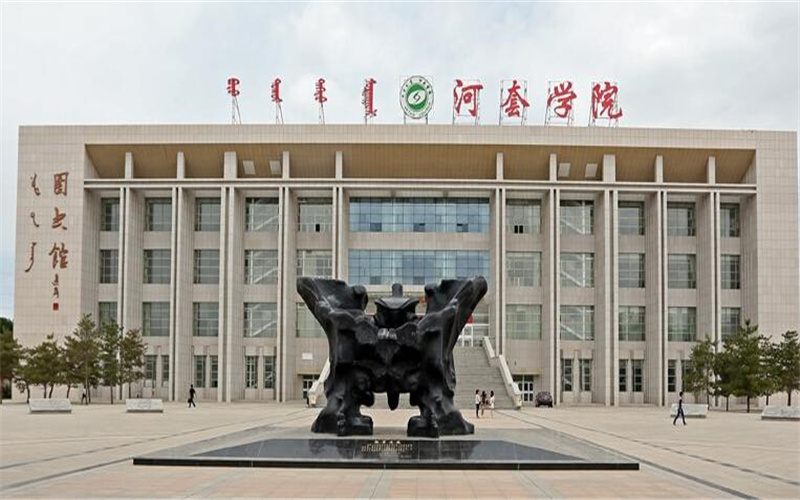
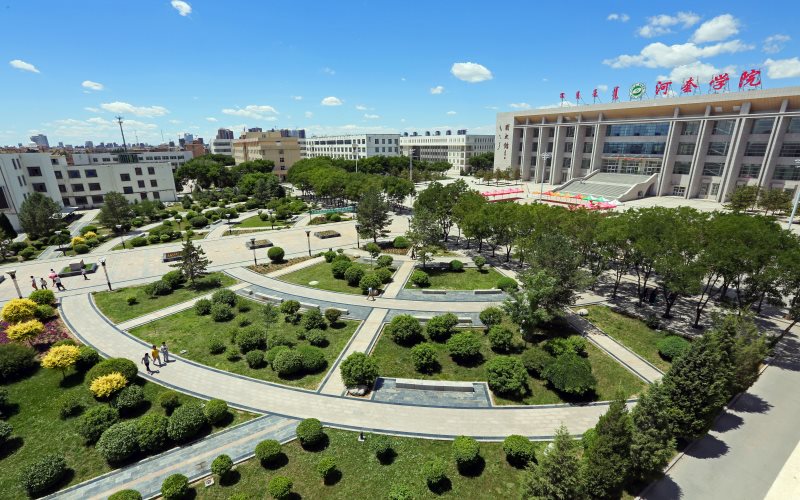

Hetao College is a regional applied undergraduate institution located in the western part of Inner Mongolia, situated along the famous Hetao Plain near the bend of the Yellow River in northern China.
Historical Development: The predecessor of Hetao College was Hetao University, established in 1985, approved by the Autonomous Region People's Government and filed with the Ministry of Education. The first president was the renowned economist Professor Chen Liangbi. The establishment of the school received close attention from national leaders. In 1986, the then Vice President of China, Ulanfu, personally wrote the school's name. In 1996, the Vice Chairman of the National People's Congress Standing Committee, Cheng Siyuan, visited the school for guidance. The early years were difficult, with financial constraints, inadequate infrastructure, and a lack of faculty. However, the school received significant support from various levels of government, the local community, and the people of Bayannur.
In the new millennium, the school underwent two rounds of educational resource optimization. In 2001, the Bayannur Education College and Bayannur Normal School (founded in 1943 by General Fu Zuoyi as the Shaanba Normal School of the former province of Suiyuan) merged into Hetao University. In 2004, several local schools, including the Bayannur branch of Inner Mongolia Radio and Television University and others, were also merged into Hetao University.
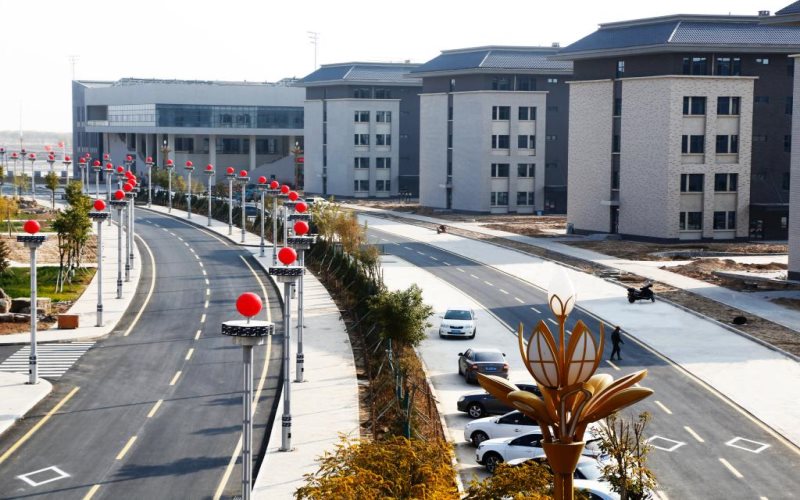
In 2012, Hetao University was upgraded to an undergraduate institution and renamed Hetao College. The management system was adjusted to a two-tiered system under the jurisdiction of both the Inner Mongolia Autonomous Region and Bayannur City, with a focus on regional governance. At the time of the upgrade, the Bayannur Municipal Government invested 1.028 billion yuan to build a new campus along the Yellow River (Shuanghe Campus), which was completed and put into use by the end of 2018. This greatly improved the school's infrastructure. In 2016, the college was granted the authority to confer bachelor's degrees and was approved as a pilot institution for overall transformation by the regional government. In 2020, the college passed the Ministry of Education's undergraduate teaching evaluation, marking a new phase in its development.
Educational Facilities: The college covers an area of 1,047.98 acres, with a total building area of 438,400 square meters. The total value of teaching and research equipment is 199.29 million yuan. The library holds 1.08 million printed books, 620,000 electronic books, and provides access to 20 Chinese and foreign language databases.
Teaching Scale: The college has 14 academic departments and a continuing education school. It currently has 11,693 full-time students, with 3,016 minority students, accounting for 25.8% of the total student body.
Faculty: The college employs 971 staff, including 632 full-time teachers. There are 326 teachers with senior titles, 139 teachers with doctoral degrees, and 415 with master's degrees. Teachers with master's or higher degrees account for 80% of the full-time teaching staff. The college also has 112 dual-skilled teachers, accounting for 16.3% of the full-time faculty. Among its faculty, there are 9 leading experts under the "Grassland Talent," "New Century 321 Talent," and "Hetao Talent" programs, along with 12 provincial-level teaching teams, 13 teaching experts, and 9 emerging teaching talents.
Academic Development: The college offers 37 undergraduate programs in nine disciplines, including literature, science, agriculture, engineering, education, management, economics, arts, and medicine. It currently has 10 provincial-level first-class undergraduate programs, 1 national-level first-class undergraduate course, 20 provincial-level first-class undergraduate courses, and 10 online open courses. The college has received approval for 3 national-level teaching research projects, 2 Ministry of Education projects on new agriculture reform, and 18 industry-university collaboration projects. There are 2 provincial-level experimental teaching demonstration centers and 1 virtual simulation teaching center for ideological courses.
Scientific Research: The college has 1 provincial-level key laboratory, 2 engineering technology research centers, 1 academician workstation, and 12 doctoral workstations. It has undertaken 1,192 research projects, including 14 national-level projects. The college has also received 315 intellectual property authorizations, published 332 monographs, and produced 3,330 papers, including 64 indexed by SCI. The college has won 13 scientific and technological awards at the municipal level or above.
Cultural Heritage: The college has made significant efforts in researching and preserving Hetao culture. Faculty members have received approval for 42 projects related to Hetao culture research, written 3 monographs, and published 68 papers. It has established research centers and bases for the study of Ulat culture and Mongolian traditional handicrafts. Notably, the monograph Research on the Ulat Heroic Epic won a third-place award for social science works from the regional government.
Open Education: The college has established partnerships with domestic and international universities, including Beijing Normal University, Xiamen University, Ningxia University, and the University of Rzeszów in Poland. It is also actively involved in the "Belt and Road" initiative and has educational collaborations with Mongolia.
Social Service: Hetao College actively supports regional economic and social development. It has established several new research institutions, such as the "Hetao College Modern Agricultural and Animal Husbandry Technology Transfer Center" and the "Hard Wheat Technology Innovation Center." These centers focus on innovative research and technology transfer in agriculture and rural development. The college is also involved in the "Rural Revitalization" initiative, establishing demonstration sites for smart agriculture, promoting new agricultural technologies, and improving the quality of local livestock production.
This is a summary of Hetao College's rich history, development, and contributions to education, research, and regional growth.
Commencez la conversation
Soyez le premier à partager vos réflexions !