


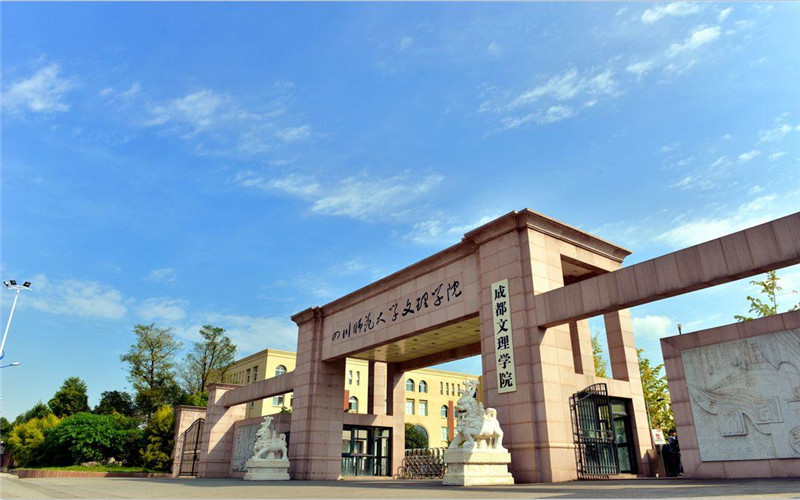



Rooted in the fertile land of Tianfu and deeply invested in education, Chengdu College of Arts and Sciences was founded in 1999. In 2004, it was approved by the Ministry of Education to establish the College of Arts and Sciences of Sichuan Normal University (an independent college). In 2012, it was authorized as a degree-granting institution, and in 2014, it was approved by the Ministry of Education to transition into Chengdu University of Arts and Sciences (an independently established private undergraduate institution). In 2023, it passed the Ministry of Education’s undergraduate teaching work evaluation in one go and was also approved as a construction project for a master’s degree-granting institution by the Sichuan Provincial People’s Government Degree Committee. The university is the vice-chair unit of the Party Building Professional Committee of the China Private Education Association, the chair unit of the Party Building Work Professional Committee of the Sichuan Private Education Association, and a "National Private School Party Building Characteristic Project Construction Base." It has been selected as a "Sichuan Provincial Demonstration University for Party Building Work."
Since its establishment, the university has fully implemented the Party’s educational policies, fulfilled the fundamental task of fostering morality and cultivating talent, and aims to "build a long-lasting university and cultivate happy lives." The university upholds its motto "Broad Learning, Clear Reasoning, Strong Will, Practical Action" and the educational philosophy of "Creating a School Satisfactory to Students and Cultivating Students Satisfactory to Society." It adheres to the principles of "cultivating virtue through culture, seeking truth through reason, embracing diversity, and advancing with the times." In recent years, through the approach of "promoting construction through evaluation," the university has continuously improved its educational conditions, standardized teaching management, steadily enhanced teaching quality, and strengthened its ability to serve local and regional economic, social, and cultural development, laying a solid foundation for its high-quality development.
The university has established a provincial-level experimental teaching demonstration center and 16 university-level experimental (training) centers. It has developed a number of stable off-campus internship and training bases, including four provincial-level student off-campus training bases, providing strong support for students' practical training and professional development. The university currently has over 1,900 full-time faculty members, including more than 100 national and provincial experts. In the past three years, its faculty has won over 80 awards in provincial and national teaching competitions.
The university has 11 academic departments and offers more than 40 undergraduate programs in eight major disciplines: literature, education, arts, economics, management, law, science, and engineering. It has developed five major disciplinary clusters, including teacher education, digital intelligence for social sciences, cultural creativity, cultural tourism and wellness, and intelligent engineering. The university has more than 20 provincial-level first-class undergraduate programs, characteristic programs, and applied demonstration programs. In the past three years, the university has undertaken more than 200 provincial and national teaching and research projects, published over 1,000 academic papers in key domestic and international journals, and won more than 200 patents and various levels of teaching and research achievement awards.
The university adheres to a connotative development approach, continuously explores the laws of applied undergraduate education and talent cultivation, updates educational concepts, deepens teaching reforms, and improves education quality. It has gradually formed three distinctive educational features. The university places great emphasis on strengthening Party leadership and Party building. It implements the "135" Party building work model, focusing on one theme (comprehensively enforcing Party discipline), three major projects (Leadership Project, Soul-Casting Project, and Foundation-Strengthening Project), and consolidating five connections (between the Party committee and decision-making bodies, Party building and talent development, Party building and teaching research, Party building and ideological political work, and Party building and international development). This model has helped integrate Party leadership with the rule of law, deepening the fusion of Party building and institutional development, transforming the Party’s political and organizational advantages into developmental and competitive advantages. The university has several national and provincial-level benchmark departments, model Party branches, and teacher Party branch "dual-leader" workstations already approved or in development.
The university is dedicated to providing applied higher education, cultivating applied talents, with disciplines and professional setups aligned with local industrial needs. The approach to applied talent cultivation is diverse, and practical training is integrated into the entire educational process, forming a "two types and three transformations" talent cultivation system. The university strives to create a culturally rich, aesthetically pleasing, and vibrant campus environment, with the "three fragrances" of books, ink, and flowers immersing students and faculty in an environment conducive to intellectual and personal growth. The campus has become a cradle for nurturing students’ beautiful souls and shaping happy lives.
The university is committed to internationalization, implementing a talent cultivation strategy focused on "high-end, global, and personalized" approaches. It aims to cultivate internationally-minded talents who understand global rules, multiculturalism, and can participate in international affairs and competition. The university has established cooperative relationships with over 100 foreign universities, conducting academic exchanges and offering study abroad and overseas study opportunities. It collaborates with international organizations, such as the United Nations Population Fund’s UPower program for youth leaders. The university encourages students to intern with international organizations and participate in global activities, promoting opportunities such as the "Cambridge Youth Leadership Camp" and "Direct Access to Undergraduate and Master’s Degrees."
Following its successful evaluation, the university’s characteristics have been further enhanced, its influence rapidly increasing, and its social recognition rising. In the past three years, its students have won more than 2,000 national and provincial awards, with nearly 1,000 at the national level. The university's admission scores and student registration rates have increased yearly, ranking among the top in Sichuan Province for similar institutions. Over the past five years, the university’s employment rate has exceeded 90%, and it has won multiple awards as a "Sichuan Province Advanced Unit for Employment and Entrepreneurship Services." The satisfaction rate of employers and graduates exceeds 97%, and the satisfaction rate of students is 95%. Since its establishment, the university has produced over 100,000 high-quality applied talents for society.
Based on the new development stage, adhering to new development concepts, and integrating into the new development pattern, the university will continue to follow the guidance of the 20th National Congress and Xi Jinping’s Thought on Socialism with Chinese Characteristics for a New Era. It will further emancipate its mind and work hard to open up a new chapter for the high-quality development of its education, striving to build the university into a nationally renowned, distinctive, applied private university.
(Updated in August 2024)
Начать разговор
Будьте первым, кто поделится своими мыслями!