


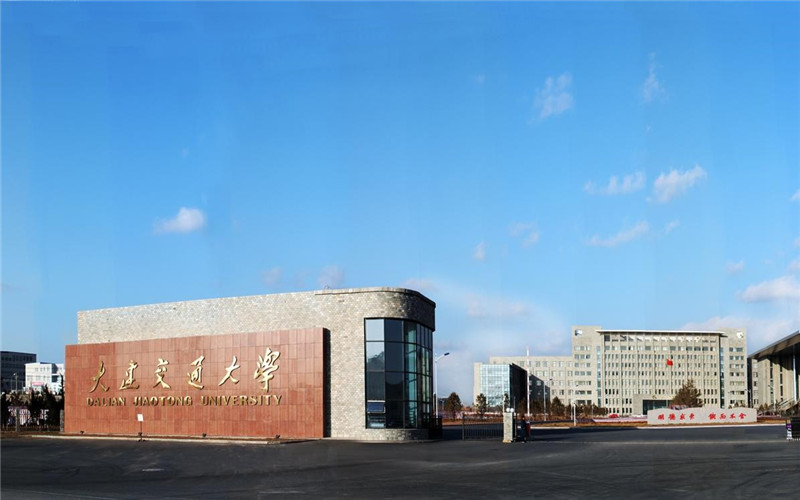

Dalian Jiaotong University is the only higher education institution in Northeast China with a focus on rail transportation. The university was founded in 1956 in response to the development needs of China’s railway locomotive and rolling stock industry, originally established as Dalian Locomotive and Rolling Stock Manufacturing School. It was upgraded to Dalian Railway Institute in 1958, under the administration of the former Ministry of Railways. In February 2000, the university was transferred to the management of the Liaoning Provincial Government. In May 2004, it was renamed Dalian Jiaotong University.
Throughout its history, the university has adhered to its mission, focusing on serving regional economic and social development, the rail transportation industry, and national strategic needs. It has developed the motto “Ming De Qiu Suo, Qi Er Bu Xie” (Seek truth with perseverance and resolve), and has cultivated over 100,000 graduates. The majority of graduates work in the rail transportation sector, with some becoming leading figures and core technical talents in the industry, earning the university the reputation of being the "Cradle of Engineers for China’s Rail Transport Equipment Manufacturing Industry."
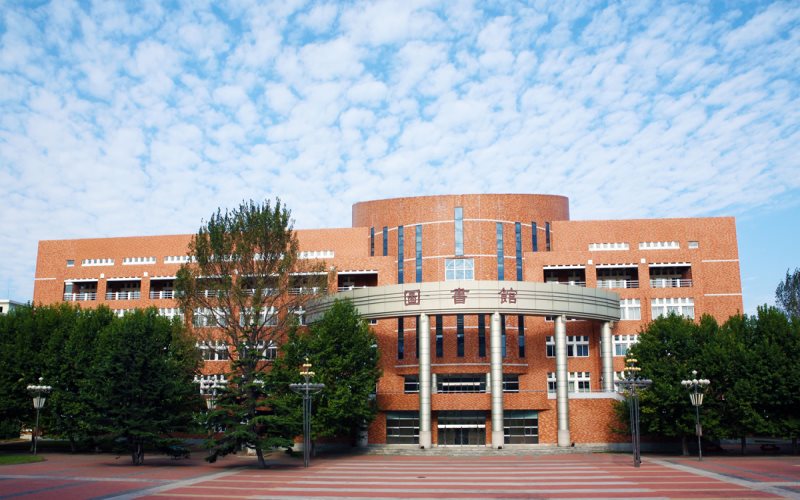
The university currently has two campuses: Shahekou Campus and Lushunkou Campus, covering a total area of 820,000 square meters, with a building area of 546,000 square meters. The total value of teaching and research equipment is 464 million RMB. The university's library houses 1.35 million volumes of paper-based resources, 1.55 million e-books, and 26,227 e-journals in both Chinese and foreign languages.
Dalian Jiaotong University has the authority to grant doctoral, master's, and bachelor's degrees and is recognized as a key institution for first-class disciplines in Liaoning Province. Two disciplines—Mechanical Engineering and Materials Science and Engineering—are designated as first-class disciplines at the provincial level. Three disciplines—Mechanical Engineering, Materials Science and Engineering, and Transportation Engineering—are provincial key disciplines. Both Engineering and Materials Science are in the top 1% globally according to the ESI (Essential Science Indicators). The university has two postdoctoral research stations in Mechanical Engineering and Materials Science and Engineering, with three first-level doctoral programs, 13 first-level master's programs, 8 professional master's degree programs, and 45 undergraduate programs, including 5 five-year dual-degree programs across six fields: Engineering, Management, Literature, Science, Law, and Arts. As of now, the university has 20,551 full-time students, including 16,189 undergraduates and 4,362 graduate students (master's and doctoral).
The university has the qualification to recommend outstanding undergraduates for direct admission to graduate studies without an entrance exam. It is a participant in the Ministry of Education’s second batch of "Excellent Engineer Education and Training Program," a national software talent international training base in Dalian, and a national innovation experimental zone for talent cultivation. The university has been recognized as a "National Advanced Unit for Industry-University-Research Cooperation" and an “Advanced Unit for College Student Social Practice” nationally. It is also home to the "National Railway May Fourth Red Flag Youth League Committee" and the "Liaoning Province May Fourth Red Flag Youth League Committee."
The university has established various national and provincial-level teaching and research platforms, including 16 national first-class undergraduate programs, 2 national comprehensive reform pilot programs, 5 pilot programs for the "Excellent Engineer Education and Training Program," and 10 programs accredited by the China Engineering Education Accreditation Association. It also boasts 4 provincial first-class undergraduate programs, 46 provincial-level construction projects, and 40 national and provincial research and development platforms, including the National Engineering Research Center and the Liaoning Provincial Industry Research Institute. Since 2018, the university has undertaken 116 national-level projects, including those from the National Key Research and Development Program, the National Natural Science Foundation, and the National Social Science Foundation, as well as 675 provincial and ministerial-level projects. It has published 337 academic works, secured 486 invention patents, and won 33 awards at the provincial or higher levels.
Dalian Jiaotong University is also a designated receiving institution for Chinese Government Scholarship international students and serves as an innovation base for the China-US Talent Cultivation Program. The university has established inter-university cooperation with over 100 institutions in 30 countries and regions, including Australia, the US, Japan, and Russia. In 2006, the university founded the Dalian Jiaotong University International College, offering joint programs with foreign universities. The university has a Confucius Institute in Thailand and a Chinese Language Teaching Center in Cambodia, both reflecting its focus on international outreach.
The university has received multiple awards for its outstanding Party-building work and social activities, including the "Outstanding Party Organization in Liaoning Province." It is a national leader in student social practice and a prominent institution in fostering youth Marxist ideologies in China.
In the new era, Dalian Jiaotong University is guided by Xi Jinping's New Era Socialist Thought with Chinese Characteristics, and actively implements the spirit of the 20th National Congress of the Communist Party. The university is committed to promoting quality development by deepening reforms, emphasizing the importance of political guidance, and adhering to the principles of moral education. The university aims to build itself into a world-class institution, striving for excellence and continuously improving, while accelerating the construction of its "Four High-Speed Trains," aiming to become a top-tier university in rail transport and regional economic development.
(Data as of October 2024)
Начать разговор
Будьте первым, кто поделится своими мыслями!