





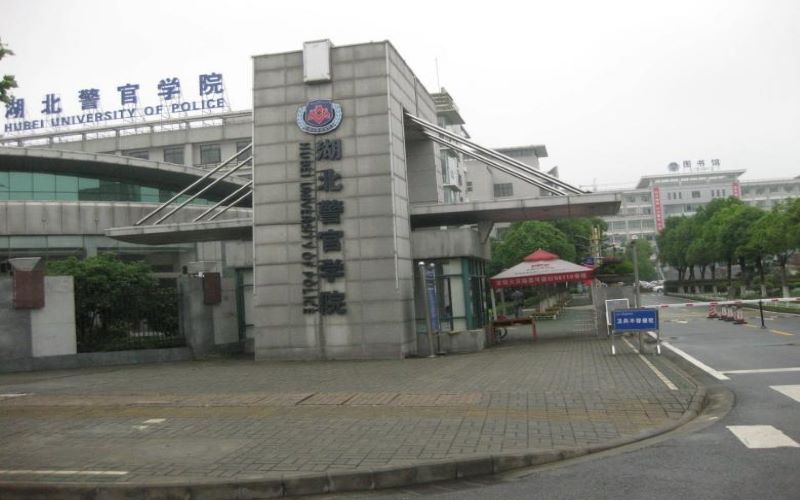
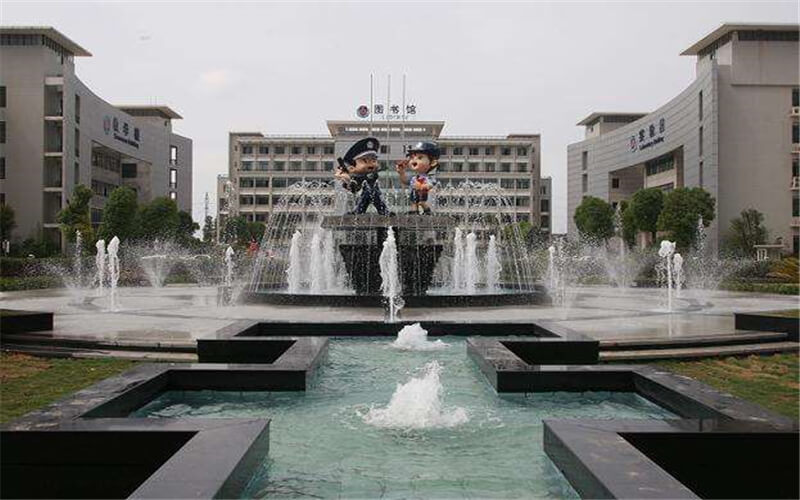

Hubei University of Police is a provincial police academy under the jurisdiction of Hubei Province, with its history dating back to July 1949, when the Hubei Provincial People's Government Public Security Department established the Public Security Cadre Training Class. Over the years, it has undergone various stages of development, including being known as the Hubei Public Security School, Wuhan Branch of the Central People's Public Security College, the Second Central Police Officers’ School, Hubei Provincial Police School, and Hubei People's Police School.
In April 1984, the Hubei Provincial Police College was established, officially beginning higher education in public security. In June 1993, the school name was changed to Hubei Public Security College. In May 2002, the university became the first among provincial public security colleges in the country to offer bachelor's degree programs in public security and was renamed Hubei University of Police.
Since its founding, Hubei University of Police has trained and educated more than 150,000 professionals and specialists for law enforcement agencies and other sectors. Its alumni can be found across the country, with many becoming heroes, role models, and advanced figures in society. Numerous graduates have contributed significantly to China's socialist cause and modernization in their ordinary roles through diligent and selfless work.
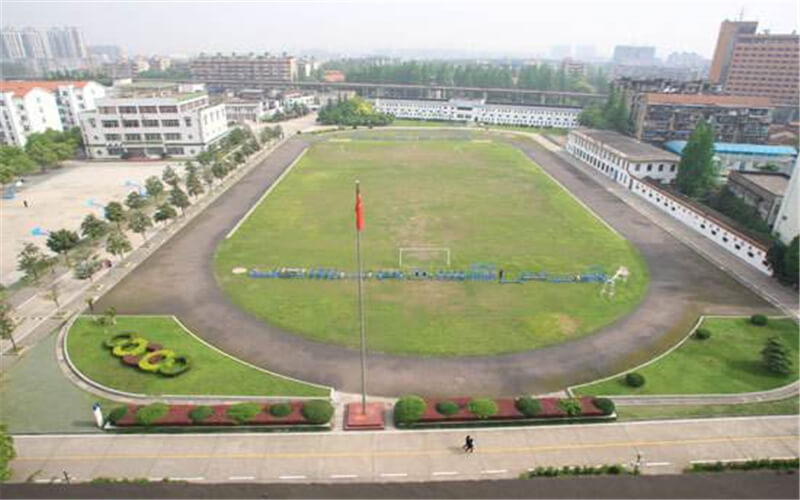
The university has two campuses: the South Campus on Jiefang Avenue in Wuhan and the North Campus on Naniwan Avenue, covering a total area of 512 acres. The university has 25 middle-level administrative departments. It currently has more than 6,000 full-time undergraduate students. The faculty consists of 421 staff members, including 108 professors and associate professors, and 242 teachers with doctoral or master’s degrees. Over 10 teachers have been awarded titles such as “National Excellent Teacher” and “Outstanding Educator” at the provincial or ministerial level, and many have been selected for the Ministry of Education’s Young Teachers Funding Program, with some enjoying special allowances from the State Council.
The university places great emphasis on building its academic and professional disciplines, focusing on law, public security studies, public security technology, and supporting fields such as computer science and technology. The university’s academic structure is centered around disciplines in public security and law, with an integrated approach that combines these fields with other programs. The university currently offers 12 undergraduate majors, including: Public Security, Criminal Investigation, Economic Crime Investigation, Criminal Science and Technology, Police Command and Tactics, Cybersecurity and Law Enforcement, International Police Affairs, and Traffic Management Engineering, as well as other programs in Law, Computer Science, Information Security, and English. The university is actively involved in the construction of “Double First Class” programs, including top-tier undergraduate programs and courses. There are currently two provincial-level advantageous and distinctive disciplines (Public Security Studies and Criminal Science and Technology), with national-level first-class undergraduate programs in Criminal Science and Technology and Criminal Investigation. The university has also established several provincial-level first-class undergraduate programs, including in Security Studies, Cybersecurity and Law Enforcement, and Traffic Management Engineering. Furthermore, 33 courses, such as Crime Scene Investigation, have been recognized as provincial first-class courses. Ten teaching teams have been awarded the title of Provincial Teaching Team.
The university focuses on the quality and reform of undergraduate education, building a talent development model with distinctive characteristics of modern police education. The university also attaches great importance to ideological and political education for students, establishing a comprehensive educational system that integrates all aspects of student development. It emphasizes a variety of educational modules, including daily police management, curriculum teaching, practical training, experimental teaching, internships, social practice, general education, and campus cultural activities. The university has achieved excellent results in national and provincial competitions, including the “Blue Bridge Cup,” “Smart Police Cup,” and the National Security Education and Innovation Competitions. In recent years, the university’s law students have maintained a high pass rate in the national legal qualification exams, reaching 66% over the past three years, which is among the best in the country.
The university has also strengthened its research work, guiding faculty members to actively undertake various research projects to provide intellectual support for public security work. The university has established important research platforms, including the Hubei Provincial Collaborative Innovation Center for Electronic Data Forensics and the Research Center for Social Security Governance. Faculty members have published over 300 academic papers in authoritative journals such as China Law Science and Legal Studies, and have led or participated in more than 400 national and provincial research projects. The university has received numerous awards for its research achievements, including the Ministry of Education’s Outstanding Scientific Research Award and the Ministry of Justice’s “National Law Research and Textbooks” Award. In recent years, faculty members have also obtained more than 50 national patents.
The university is committed to implementing practical training initiatives, establishing several training and research centers, such as the Criminal Science and Technology Training Center, the Provincial-Level Experimental Teaching Demonstration Center, and the “Three Truths” Judicial Appraisal Center. It has built 35 internship bases within provincial police departments and has organized students to participate in major security operations for events such as the G20 Summit in Hangzhou, the Shanghai Cooperation Organization Summit in Qingdao, and the World Military Games in Wuhan. These activities have contributed to the university’s reputation and received widespread recognition.
In addition to its educational efforts, the university also offers professional training for police officers, including being a training base for county and city police chiefs, foreign police officers, and Hubei provincial police officers. It trains thousands of personnel each year.
Entering the new era, the university is guided by Xi Jinping’s thought on socialism with Chinese characteristics for the new era. It emphasizes enhancing the "Four Consciousnesses," strengthening the "Four Confidences," and implementing the "Two Maintenances." The university is committed to cultivating talents for the Party and the country, promoting the modernization of the police education governance system, and improving the quality of education and talent training. It aims to build Hubei University of Police into a top-tier modern police academy, contributing to the development of the public security field and police force building across the country.
Data updated as of September 2024.
Начать разговор
Будьте первым, кто поделится своими мыслями!