


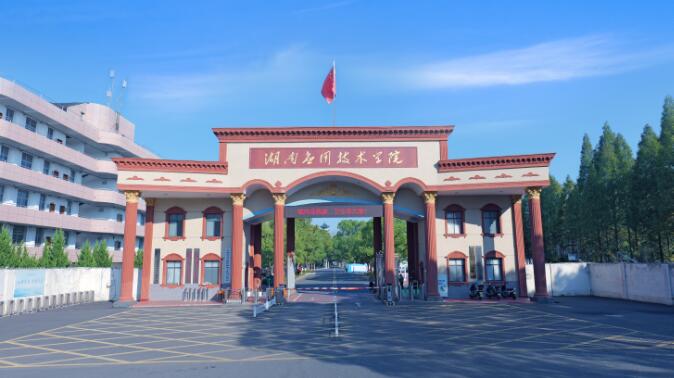

Hunan Applied Technology University is a full-time undergraduate institution approved by the Ministry of Education. The school was founded in 1994 as Changde Computer Technology School; in 1998, it became a pilot institution for higher education diploma programs and was renamed Changde Computer Specialized University. In 2004, it was upgraded to a nationally accredited vocational college and renamed Hunan Tongde Vocational College. In 2014, it was elevated to a full-time undergraduate institution and renamed Hunan Applied Technology University.
The university follows Xi Jinping's Thought on Socialism with Chinese Characteristics for a New Era, adheres to the direction of socialist education, operates in accordance with the law, and implements scientific management. The university aims to foster high-quality, application-oriented talents for regional economic and social development. Its motto, "Broad knowledge of past and present, inheriting civilization, enhancing capabilities, and serving the country," guides its educational spirit of "overcoming difficulties and striving for self-improvement." The university follows an educational philosophy that centers on teaching, quality, market orientation, innovation, and branding to shape a distinctive and application-oriented academic system.
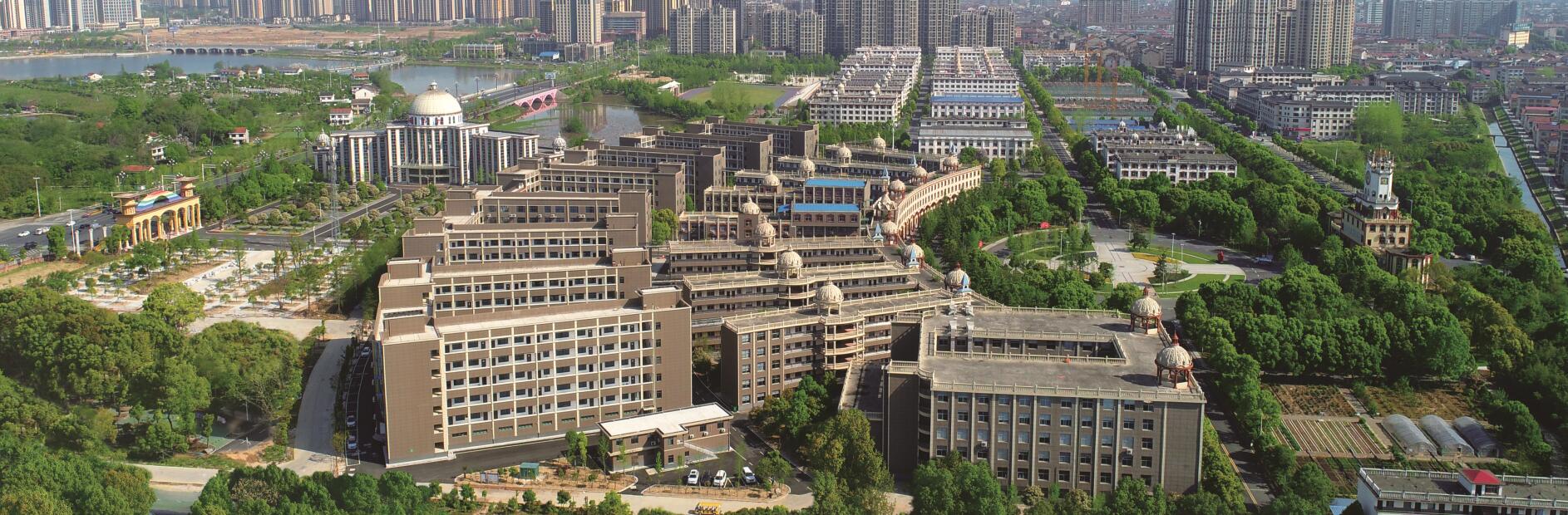
The university has two campuses (East and West), covering 1.1769 million square meters with a total building area of 529,400 square meters. This includes 219,600 square meters of teaching and administrative space. The university holds 1.641 million physical books and over 1.51 million electronic books. Broadband and Wi-Fi are available throughout the campus.
The university employs 885 faculty members, including 298 senior-title teachers and 710 teachers with master's or doctoral degrees. There are 150 "dual-qualified" teachers. The university currently has 14,310 full-time students, including 12,162 undergraduates and 2,148 diploma students.
The university has 11 teaching colleges and departments, offering 23 undergraduate programs and 13 diploma programs. The undergraduate programs include fields such as Landscape Architecture, Aquaculture, Mechanical Design and Automation, and Internet of Things Engineering, while diploma programs include Digital Media Art Design and Business English, among others.
Since becoming an undergraduate institution in 2014, the university has focused on building collaborative practice platforms both inside and outside the university. It has strengthened its integration of industry and education and established a collaborative school-enterprise training mechanism. The university has cooperated with companies such as China Hi-Tech Group Corporation and Changde Zhenkun Agricultural and Forestry Development Co., Ltd., and signed agreements with 118 enterprises and institutions for collaborative education. Additionally, it has established 86 stable internship and training bases with industry and business partners. The university has developed 13 engineering practice bases, 7 provincial-level innovation and entrepreneurship education centers, and 6 provincial-level school-enterprise cooperation innovation and entrepreneurship bases. Furthermore, the university has 175 professional experimental (training) rooms on campus, including 85 professional labs, 40 basic labs, and 50 training rooms, ensuring sufficient practical teaching resources for its programs.
The university's academic focus is on undergraduate education, with a discipline system that prioritizes engineering and management, features agricultural sciences, and includes coordinated development across multiple fields such as agriculture, engineering, management, economics, literature, and arts. The university has made significant progress in its discipline and program development, with 2 provincial-level "14th Five-Year" application-oriented disciplines, 3 provincial-level first-class undergraduate programs, and 1 provincial-level comprehensive reform pilot program. Five disciplines (Aquaculture, Design, Mechanical Design and Automation, Administrative Management, and Computer Application Technology) are designated as key university-level disciplines, while English, Chinese Language and Literature, and Marxist Theory are identified as key areas for development under the "14th Five-Year Plan."
Since its establishment, the university has trained over 50,000 graduates from higher vocational and undergraduate programs and has provided vocational training for more than 30,000 technical personnel, contributing significantly to the region's economic and social development. The university's graduate employment rate has consistently ranked among the best in its peer institutions. The university has received over 300 honors, including "Outstanding Private Higher Education Institution," "National Advanced Collective in Private Education," and "Top 10 Private Schools in Hunan Province." It has been featured in national and regional media outlets such as China Education Daily, People's Daily Overseas Edition, Renmin.com, Guangming Online, New Hunan, Red Net, Hunan TV, Changde TV, and Changde Daily, earning the reputation of being "a cradle for application-oriented and innovative talent development."
(Data as of August 31, 2024)
Начать разговор
Будьте первым, кто поделится своими мыслями!