



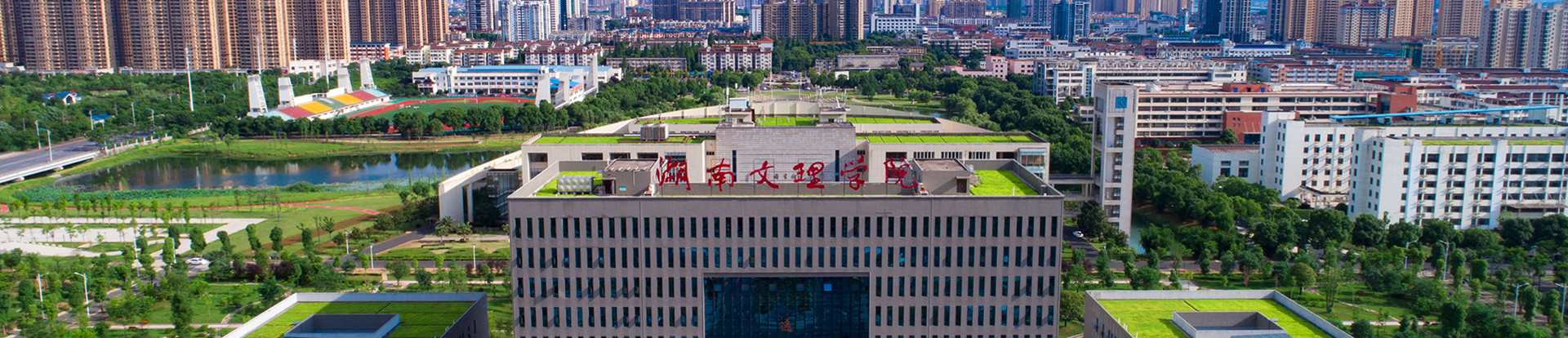
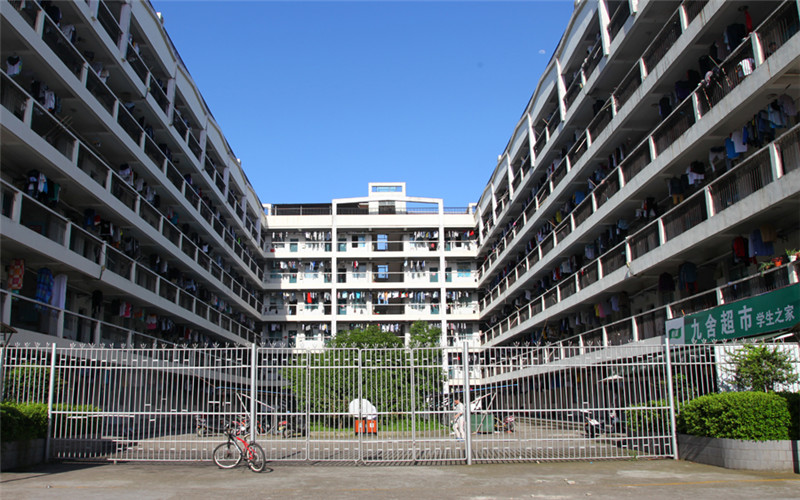
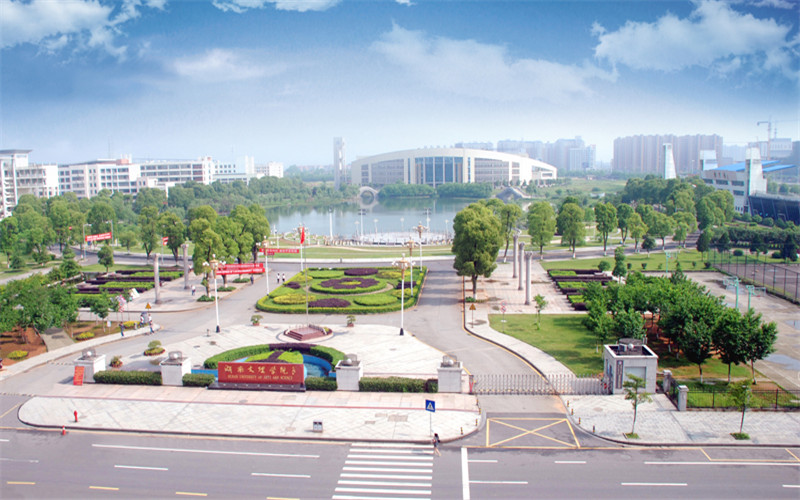

Hunan University of Arts and Science is a full-time, government-funded undergraduate institution established by the Hunan Provincial People's Government. Located in Changde, Hunan Province, also known as the "City in the Peach Blossom Spring," the university traces its roots back to 1958 as Changde Normal College (which was recognized as a National Excellent Normal College in 1988). It later incorporated resources and advantages from other local institutions, including Changde College of Higher Education, Hunan Agricultural University Changde Branch, Changde Education College, Changde Art School, and Changde Urban-Rural Construction Vocational Technical School. In 1999, it was upgraded to Changde Normal University, and in 2003, it was renamed to its current title. In 2020, it was included in the first batch of undergraduate universities in Hunan, and in 2024, it was approved as a university authorized to confer master's degrees. The university is renowned for its strong focus on teacher training and agricultural sciences, earning it the reputation as the "Cradle of Teachers" and the "Agricultural Wisdom Hub" in northwestern Hunan.
The university has been recognized as a "National Model Industry-Education Integration Applied Undergraduate University," a "Double First-Class" High-Level Applied and Characteristic College in Hunan Province, a "Model Worker Home" at the national level, a "Civilized Role Model" in Hunan Province, and a "Pilot University for Comprehensive Reform in the Education of All-Round Talent Development" in Hunan. It has received numerous national and provincial honors, including the designation of “Model Party Branches” for its outstanding party work.
University Development and Infrastructure
The university continuously improves its educational environment and campus conditions. It covers more than 2,000 acres with a total building area of 837,400 square meters, including 450,400 square meters of teaching and administrative space. The university also boasts 179,600 square meters dedicated to laboratories and practical training areas, with equipment valued at over 378 million yuan. Its library holds over 2.69 million printed books and nearly 3.17 million e-books. The university currently has 18 teaching colleges, 1 research institute, and 67 undergraduate programs. It offers a comprehensive range of disciplines covering economics, management, law, education, literature, history, art, science, engineering, agriculture, and medicine, enrolling students from all 31 provincial-level regions in China. The total number of full-time undergraduate students is 24,035.
Faculty and Talent Development
The university places a strong emphasis on building a high-quality faculty. It currently employs 1,588 staff members, including 1,287 full-time teachers. Among them, 125 are professors, and 507 hold doctoral degrees. The university also has 3 externally appointed academicians. Over 90 faculty members have been selected for national and provincial talent programs, including National Outstanding Youths, State Council Special Allowance Experts, and Hunan Provincial Teaching Masters. The university has 1 national-level teaching team, 10 provincial-level teaching and research teams, and faculty members serving as deputy chairs in the National Teaching Guidance Committee.
Educational Achievements
The university is committed to enhancing talent cultivation quality. It has been granted approval for several provincial and national-level innovation centers, including the Hunan Provincial Innovation Center for Ideological and Political Education. In recent years, the university has been approved for 1 national-level "New Liberal Arts" project and 5 provincial-level "Four New" projects. It has won 23 provincial teaching achievement awards, including 3 first prizes. The university has also received funding for over 300 provincial-level education reform projects. It is home to 24 national and provincial-level first-class undergraduate programs and 68 top-tier courses, including 7 provincial "Golden Courses" in ideological and political education. Furthermore, the university has been recognized as a "Model Institution for Graduate Employment" and has won several awards for its excellence in innovation and entrepreneurship education.
Research and Innovation
The university is deeply invested in scientific research, focusing on technological innovation and platform construction. Over the past few years, it has undertaken over 100 national-level research projects, including a special major project funded by the National Social Science Fund. It has published more than 5,000 high-level academic papers and over 300 academic books. The university has received 28 provincial and national research achievement awards, including 1 National Social Science Award and 2 provincial first prizes. It has filed more than 1,500 intellectual property patents and other rights. Additionally, the university has 8 national-level teaching and research platforms, 2 provincial "2011" collaborative innovation centers, 8 provincial key laboratories, 3 provincial engineering research centers, and numerous other research institutes and academic bases.
Serving Local and Regional Development
Rooted in the Wuling region, the university is dedicated to contributing to the "Three Highs and Four News" strategic blueprint. The university actively nurtures new types of productive forces suited to local development needs, with particular focus on synthetic biology. It aims to establish a Synthetic Biology Industry Innovation Center, a Synthetic Biology "Industry Research Institute," and an "Industry College" in Changde. The university has strengthened collaborations with local governments and over 500 enterprises, signing strategic cooperation agreements and providing technical support for local governments and businesses.
Cultural and International Engagement
The university emphasizes cultural heritage and innovation, with a focus on local history and culture. It is a National Base for College Students’ Cultural Quality Education and houses the "Northwest Hunan Culture Center," which highlights regional cultural features. The university is also known for its research on the biological warfare crimes of the Japanese during WWII, with research materials housed at the Hunan Revolutionary Military Museum. The university’s "Wuling Charm" arts brand has earned national and provincial awards, including 22 first-place prizes in national and provincial student art exhibitions.
Internationally, the university is committed to expanding global partnerships. It has established cooperation with over 70 universities in 20 countries and regions, including the U.S., the UK, Germany, and Japan. The university has received approval for 4 Sino-foreign cooperative education programs and has enrolled over 400 international students from 35 countries since 2004.
Vision for the Future
Guided by Xi Jinping's Thought on Socialism with Chinese Characteristics for a New Era, the university remains committed to its mission of "educating for the party, nurturing talent for the nation." With the motto "To learn widely and promote culture, to understand principles and seek truth," the university is steadily advancing toward its goal of becoming a distinctive, first-class applied university in China.
Начать разговор
Будьте первым, кто поделится своими мыслями!