


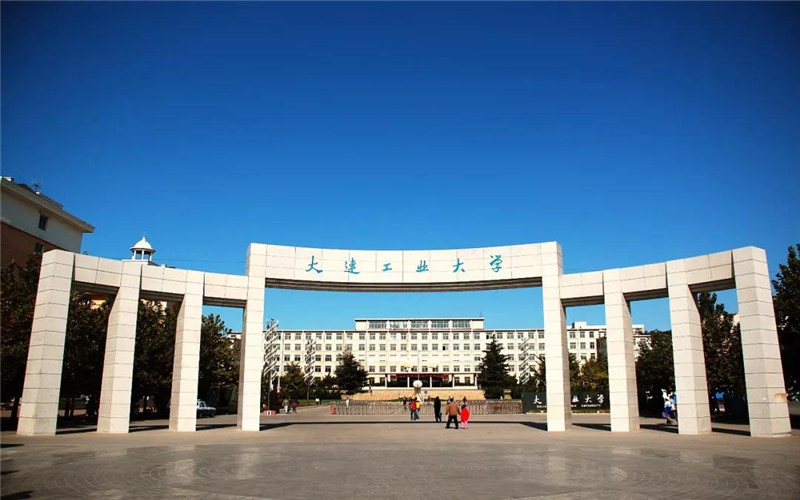
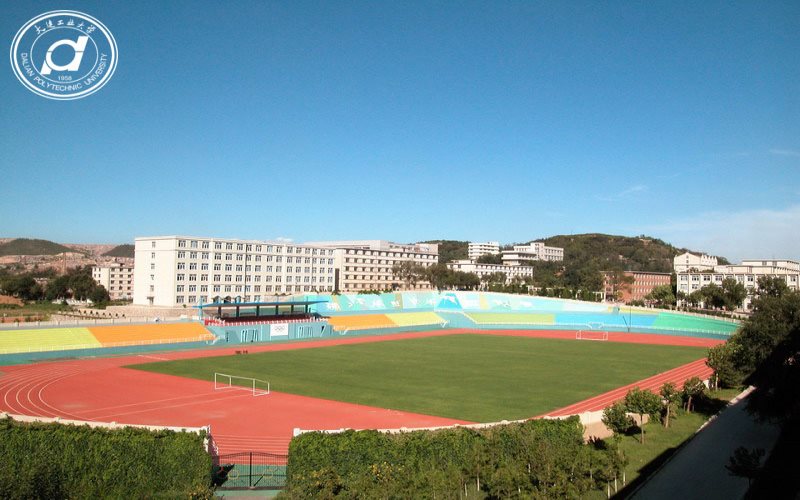
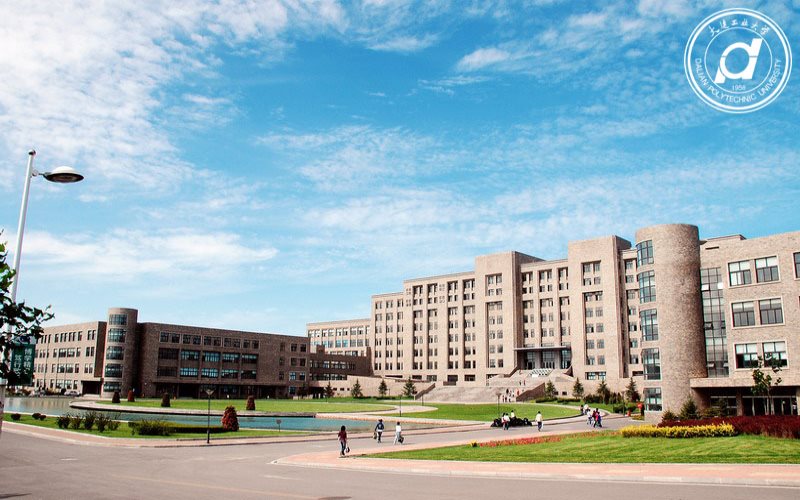

Founded in 1958, Dalian Polytechnic University is one of the first four light industry universities established in China. Originally under the Ministry of Light Industry, the university transitioned in 1998 to a system jointly managed by the central government and the local government of Liaoning Province. In March 2007, following approval by the Ministry of Education, the university changed its name from Dalian Light Industry Institute to Dalian Polytechnic University. Over more than half a century, the university has developed into a higher education institution primarily focused on engineering, with coordinated development in six academic disciplines: engineering, science, arts, literature, management, and economics. It is renowned for training professionals in food science, light industry, textiles, and the arts.
The university currently has two postdoctoral research stations in Food Science and Engineering, and Light Industry Technology and Engineering, and offers doctoral programs in these areas along with Textile Science and Engineering. It also has four self-established second-level doctoral programs in Food Machinery, Food Safety and Quality Management, Biomass Energy and Materials, and Fiber Composite Materials. The university has 14 first-level master’s degree programs and 9 master’s professional degree programs. Five of the university’s academic fields have entered the top 1% in the global ESI rankings, including Agricultural Sciences (0.118%), Chemistry (0.512%), Engineering (0.578%), Materials Science (0.775%), and Biochemistry and Molecular Biology (0.898%). The Food Science and Engineering program ranked third nationally in 2022 and 2023 according to ShanghaiRanking’s Best Chinese Subjects. In 2023, the university's Food and Health discipline group was approved as a "2023 Provincial Key Disciplines Group."
The university has 17 colleges and departments, offering 41 undergraduate programs, including four national-level characteristic programs and 11 national first-class program construction sites. Additionally, it has several provincially recognized programs, including 29 provincial first-class undergraduate education demonstration programs, 7 provincial specialty programs, and 5 provincial innovation and entrepreneurship education reform pilot programs. The university offers the privilege of recommending outstanding undergraduates for master’s degree studies without an entrance exam. The student body includes over 14,000 full-time undergraduates, 3,600 graduate students, and nearly 400 international students.
There are 1,328 staff members at the university, with 874 full-time faculty members, including 538 professors and associate professors. The faculty includes a member of the Chinese Academy of Engineering, and many other national-level talent awardees, including 9 national talent program awardees, 1 candidate for the National “Thousands of Talents” Program, 2 Education Ministry New Century Excellent Talent Program awardees, and 5 recipients of the China Association for Science and Technology’s "Youth Talent Program."
The university boasts 80 research platforms above the municipal level, including four national platforms: the National Ocean Food Engineering Technology Research Center, the Key Laboratory of Ocean Food Processing and Safety Control, and the National-Local Joint Engineering Laboratory for Biomass Catalysis Technology. It also has provincial and municipal research platforms, totaling 34 provincial and 35 municipal-level centers.
Dalian Polytechnic University emphasizes both basic and applied research. Over the past five years, it has undertaken 187 national-level research projects, including projects from the National Key R&D Program, the National Natural Science Foundation, and the National Social Science Foundation. The university has published 5,684 research papers, with 3,387 being high-quality academic papers. It has applied for 1,043 national invention patents and won numerous scientific and technological awards.
Guided by the national strategy of revitalizing the old industrial base in Northeast China, the university focuses on serving the development of Liaoning Province's five strategic areas. It leads initiatives such as the Liaoning Light Industry and Textile Industry-University-Enterprise Alliance and the Liaoning Polytechnic Research Institute for Light Industry and Textile Technology. The university has set up technology transfer demonstration centers at the national, provincial, and municipal levels and has established a pilot base for nutrition and health food in Dalian.
The university also prioritizes the quality of talent training. It was approved as a pilot institution for the Ministry of Education's "Excellence in Engineering Education" program in 2012, and for the "Excellence in Agricultural and Forestry Education" program in 2014. It has developed numerous practical education bases and innovation centers, such as the Dalian Innovation and Entrepreneurship Education Base and the "Outstanding Entrepreneurial Education Reform" award from the China Higher Education Association in 2018. It also runs a variety of undergraduate and graduate programs aimed at fostering international talents.
The university maintains an active international presence, with partnerships and exchanges with over 112 universities from countries including the U.S., UK, France, and Japan. It has established several joint educational programs with institutions like the University of Southampton, the University of Greenwich, and others. Since 2011, the university has also hosted numerous international students from more than 60 countries.
In the past few years, the university has continually advanced its global academic and educational outreach, including fostering international research collaborations and promoting its international graduate training programs. With the continued support of innovative leadership and educational reforms, Dalian Polytechnic University strives to make significant contributions to national and provincial development, underpinned by its mission to provide high-quality education and research in service of regional and global needs.
(Updated in April 2024)
Start the conversation
Be the first to share your thoughts!