


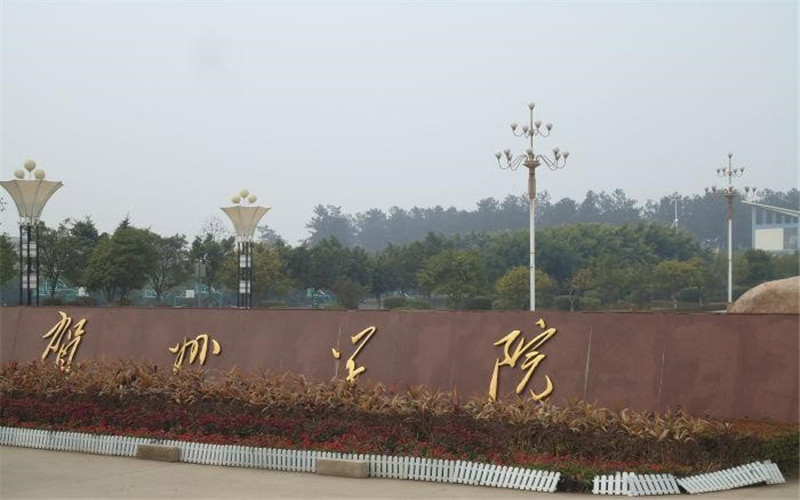

Hezhou University is a public full-time undergraduate institution sponsored by the People's Government of the Guangxi Zhuang Autonomous Region. It is located in Hezhou City, a regional transportation hub at the intersection of Guangxi, Hunan, and Guangdong provinces, known as China's first "City of Longevity" at the prefecture level, the World City of Longevity, and one of China's top ten wellness cities.
The university's predecessor, the Guangxi Provincial Pingle Normal School, was founded in 1943 during the turbulent era of the Anti-Japanese War. In 2006, Hezhou University was officially established with approval from the Ministry of Education. The university passed the Ministry of Education's undergraduate teaching evaluation in 2013 and re-evaluation in 2019, and was approved to grant master's degrees in 2024. The university is among the first cohort of cooperation schools for the Ministry of Education and ZTE Communications' ICT industry-education integration innovation base project, a 5G artificial intelligence industry-education integration training base supported by the National Development and Reform Commission, and is a key school for the Ministry of Education's "New Engineering" research and practice project. It is also a member of the China Applied Technology Universities (Colleges) Alliance, a pilot university for the comprehensive transformation and development of Guangxi, one of the first batch of demonstration schools for deepening innovation and entrepreneurship education reform in Guangxi, and a model school for building integrity in education in the region. Between 2019 and 2023, it ranked 62nd in the national competition rankings for newly established undergraduate universities, and it has consistently been ranked among the top 500 Chinese universities in the Shanghai Soft Science rankings, placing 9th in Guangxi in 2021, 2022, and 2024.
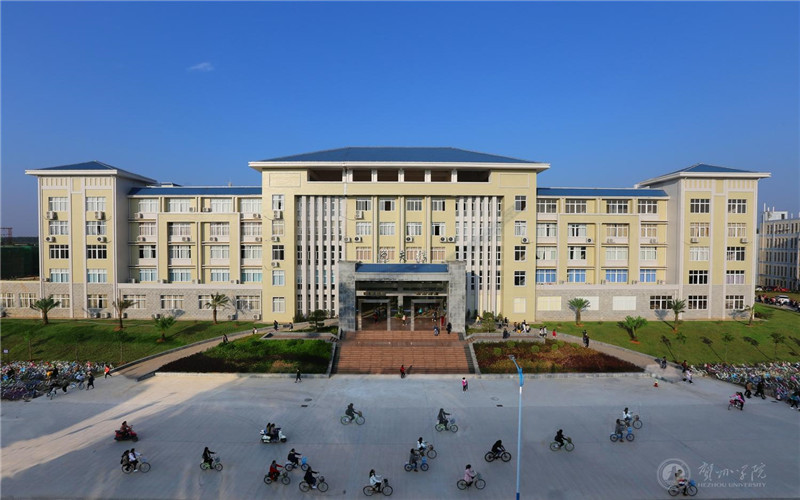
The university currently has two campuses, East and West, covering an area of 1,367.07 acres. The value of teaching and research instruments and equipment totals 363 million RMB, and the library holds 1.8018 million volumes of physical books. It offers 55 undergraduate programs across disciplines such as engineering, science, literature, education, art, economics, management, law, agriculture, and history. Among these, five programs have been selected for national-level first-class undergraduate program construction, including Communication Engineering, Food Science and Engineering, Tourism Management, Environmental Design, and Broadcasting and Television Production. The university has also established 11 provincial-level first-class programs in disciplines such as Engineering Management, and 5 specialized programs in civil engineering and other areas unique to Guangxi. It offers 13 provincial-level first-class undergraduate courses, 4 courses demonstrating ideological and political education, and 2 pilot virtual teaching and research rooms at the provincial level.
The university has received multiple accolades for its educational achievements, including 2 special prizes and 9 first prizes for teaching excellence at the provincial level, as well as numerous other awards. It has 19,066 full-time students and a faculty of 1,570 staff, including 1,209 full-time teachers, 1,029 of whom hold master's or doctoral degrees, and 380 with associate professorial ranks or higher. The university plans to recruit professional master's students in the fields of food and nutrition, tourism management, and materials and chemical engineering starting in 2025.
The university adheres to a localized approach, integrating interdisciplinary studies and actively participating in national and regional development strategies. It has established cooperative relationships with universities such as Dalian University of Technology, China University of Mining and Technology (Beijing), and Jiangnan University, as well as research institutions like the Chinese Academy of Sciences' Process Engineering Research Institute and Electronics Research Institute. The university boasts two first-class disciplines in Guangxi, namely Food Science and Engineering and Materials Science and Engineering, and has established several key laboratories and research centers that support local industrial development, such as the Guangxi Calcium Carbonate Resource Utilization Laboratory and the Guangxi Health Food Science and Technology Laboratory.
The university emphasizes open collaboration, continuing to deepen industry-education integration and school-government-enterprise cooperation, establishing 56 industry-based teaching platforms and 7 industry-specific colleges in partnership with well-known companies like ZTE, Huawei, and Phoenix Television Group. It has also set up modern industry colleges in fields such as prefabricated construction, calcium carbonate industries, and wellness tourism, with the aim of upgrading local industries.
Innovation and entrepreneurship education is deeply integrated into the university's talent development process. The university has been recognized as a demonstration school for innovation and entrepreneurship education in Guangxi and has received multiple national awards in various competitions, including the China International College Students Innovation & Entrepreneurship Competition and the "Challenge Cup" National College Students Entrepreneurship Competition.
The university also places great importance on cultural heritage and innovation. It has established a local ethnic culture research center and two national-level museums, including the Hezhou Ethnic Culture Museum, the first comprehensive public university museum in Guangxi, and the Hezhou Language Culture Museum, the first professional language museum in China. The university has received national awards for its participation in student art exhibitions and social practice activities.
With an emphasis on international exchange, the university has established inter-university relationships with over 30 universities worldwide, including those in Thailand, Indonesia, the UK, South Korea, Vietnam, Japan, the US, Malaysia, Ukraine, Ireland, the Czech Republic, and Poland, and has welcomed international students for nine consecutive years.
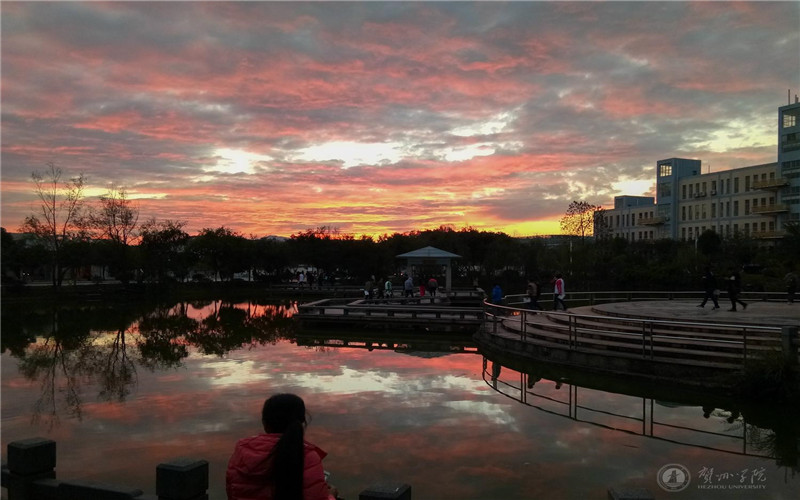
The university's campus is picturesque and serves as a national AAA-level tourist attraction. It has been recognized with several national and regional honors, including being named a "Model Unit for National Greening," a "National Demonstration Unit for Energy-saving Public Institutions," and a "Safe and Civilized Campus." The university has also earned accolades for its outstanding party building efforts, with numerous exemplary party branches and leadership teams.
Guided by Xi Jinping's Thought on Socialism with Chinese Characteristics for a New Era, the university is committed to fostering talent for the Party and the country, while adhering to the principles of quality-driven development, talent enhancement, and cultural shaping. The university aims to accelerate its development into a distinctive, high-level regional applied university, contributing to the modernization of Guangxi and the comprehensive rejuvenation of the Chinese nation.
(Updated October 2024)
开始对话
成为第一个分享想法的人!