



(May 2025)
Overview and History
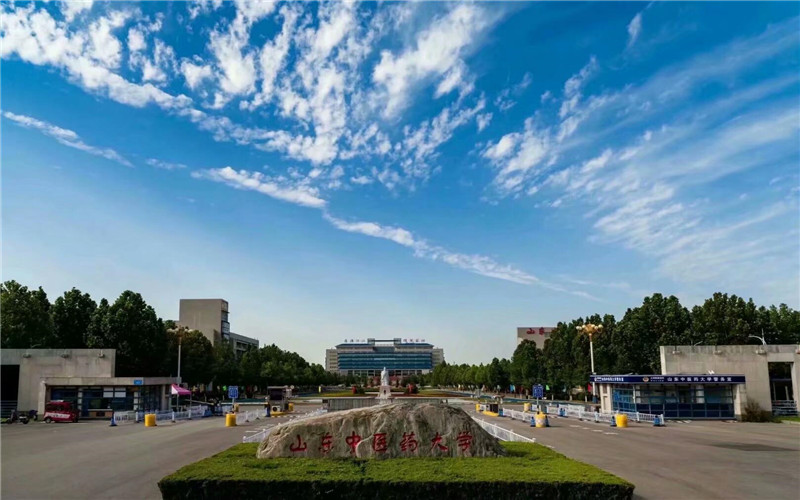
Shandong University of Traditional Chinese Medicine (SDUTCM), originally named Shandong College of Traditional Chinese Medicine, was founded in 1958. It is one of the earliest higher education institutions for traditional Chinese medicine (TCM) established in the early days of New China. In 1978, it was designated as a national key TCM university for development. In 1981, it became a key provincial university in Shandong, and in 1986, it was authorized to grant doctoral degrees. The institution was officially renamed Shandong University of Traditional Chinese Medicine in 1996. In 2007, the main campus relocated to Changqing, the hometown of the legendary ancient physician Bian Que.
Scale and Infrastructure
The university is co-sponsored by the Shandong Provincial People's Government and the National Administration of Traditional Chinese Medicine. It is recognized as a provincial-level "Civilized Campus" and features high-level disciplines and university status within the province.
-
Campus & Facilities: It covers a total area of 2,182 mu (approximately 359 acres) with a building area of 750,000 square meters. It currently operates the Changqing, Qianfoshan, and International Medical Center campuses in Jinan, as well as the Marine TCM Research Institute (Qingdao Academy of Chinese Medical Sciences) in Qingdao.
-
Student Body: There are 23,661 full-time students (17,736 undergraduates and 5,925 postgraduates) alongside 37,665 adult higher-education students.
-
Resources & Organization: The library houses 1.387 million physical books and journals, 808,000 e-books, 61 professional databases, and over 30,000 rare ancient books, making it a key protection unit for ancient texts in Shandong. The university consists of 18 teaching institutions, 5 research institutions, 5 educational support institutions, and 3 directly affiliated hospitals.
Guiding Ideology and Rankings
Guided by Xi Jinping Thought on Socialism with Chinese Characteristics for a New Era, the university upholds the "Two Establishments" and practices the "Two Safeguards." Centered on the fundamental task of fostering virtue through education, it adheres to socialist educational directions and the Party's educational policies. Following its motto—"Great Virtue and Compassion, Broad Learning and Earnest Practice"—and its educational philosophy—"Educating through Culture, Solidifying Foundations, Emphasizing Inheritance, and Braving Innovation"—SDUTCM is committed to preserving TCM's essence while innovating for the future. Over six decades, it has produced over 100,000 professionals in TCM and health services. In the ShanghaiRanking's Best Chinese Universities Ranking released in April, the university achieved its best historical result, ranking 170th nationally on the main list, and breaking into the Top 100 regional universities, Top 10 Shandong universities, and Top 10 TCM universities nationwide.
Discipline Development
-
Key Disciplines: SDUTCM features 3 national key disciplines (Basic Theories of TCM, History and Literature of TCM, and TCM Internal Medicine), ranking first among provincial undergraduate institutions.
-
Degree Programs: It was among the first institutions authorized to grant master's and doctoral degrees, currently offering 4 primary-level doctoral programs and 9 primary-level master's programs.
-
Recognitions: It was the first lead institution for the national "973" project. TCM is a "Peak Discipline" in Shandong; Integrated Traditional Chinese and Western Medicine, and Chinese Materia Medica are "Advantageous and Characteristic Disciplines"; and Biomedical Engineering is a "Cultivation Discipline." Eight projects were selected for the national high-level TCM key discipline construction program.
Education and Innovation
The university champions an undergraduate-focused, reform-driven approach. It has pioneered the "Shandong Model" for cultivating top-tier innovative TCM talents through specialized programs like the Bian Que Class, Bian Que Academy, Hua Tuo Class, Cang Gong Class, and Feng Wu Class. The Qilu Branch of the Wang Qi Academy is located here, and the typical experiences of its TCM major youth class were featured in People's Daily.
-
It offers 33 undergraduate majors, 27 of which are national or provincial first-class majors (ranking fourth among TCM universities).
-
The pass rate for the National Medical Licensing Examination is consistently in the top three among national TCM universities.
-
Recent accolades include winning the 2023 Hua Tuo Cup National Higher Education Acupuncture and Massage Clinical Skills Competition, the national Huangdi Neijing Knowledge Competition finals, and consecutive first prizes in national innovation and entrepreneurship competitions (including the "Internet+" competition). The Ministry of Education named it a Top 50 National Typical Experience University for Innovation and Entrepreneurship Education and a National Training Base for College Graduates' Employability.
Faculty and Talent
The university boasts a formidable, talent-driven faculty emphasizing professional ethics.
-
Supervisors: 292 doctoral supervisors and 1,296 master's supervisors.
-
Top Honors: 4 faculty members are named "National Medical Masters" (Zhang Canjia, Shang Dejun, Zhang Zhiyuan, Wang Xinlu), and 5 are "National Famous TCM Practitioners" (Ding Shuwen, Wang Xinlu, Zhang Minghe, Lian Fang, Gao Shuzhong).
-
Scholars: It hosts 5 "Qihuang Scholars," 6 "Young Qihuang Scholars," and dozens of Taishan Scholars across various expert categories.
-
Awards: The faculty includes winners of the National Innovation Excellence Award, National TCM Outstanding Contribution Award, National TCM Higher Education Teaching Masters, and two "National Huang Danian-style Teacher Teams."
Scientific Research
For two consecutive years, SDUTCM was the primary recipient of the National Science and Technology Progress Second Prize.
-
Research Platforms: It features 3 postdoctoral research stations, 1 Ministry of Education Key Laboratory, 6 Level-3 Key Laboratories, and 3 Key Research Rooms under the National Administration of TCM.
-
Innovations: Key facilities include the National TCM Clinical Research Base, the Marine TCM Research Institute, the TCM Innovation Research Institute, and the world's first Graphene Medicine Research Institute, as well as the nation's first TCM Antiviral Research Base.
-
Investment: Total laboratory space spans 157,400 square meters across campuses, with teaching and scientific research equipment valued at 1.018 billion RMB.
Cultural Heritage
SDUTCM is a national leader in the history and literature of TCM. It hosts the academic office for the Zhonghua Yizang (Chinese Medical Collection), the most comprehensive TCM ancient book collation project since the founding of New China. It heavily promotes three cultural calling cards: Confucian Medicine Culture, Bian Que's Hometown, and the Birthplace of Acupuncture and Moxibustion. The university established the country's first provincial-level TCM Culture Collaborative Innovation Center and the nation's first philosophy and social science key laboratory focused on "Chinese Traditional Virtues and Human Healthy Lifestyles." Its Shandong TCM Museum is a National TCM Culture Propaganda and Education Base.
Social Services and Health Care
-
Regional Development: Serving the Yellow River basin strategy, the university spearheaded regional alliances for TCM hospital development, pediatric tuina, and optometry.
-
Partnerships: It actively collaborates with numerous cities (Jinan, Qingdao, etc.), universities (Macau University of Science and Technology, Shandong University, etc.), and pharmaceutical enterprises (Dong-E-E-Jiao, Yiling Pharmaceutical, etc.). Since 2021, it has signed 567 technology transfer contracts worth 121 million RMB.
-
Clinical Care: Supporting the "Healthy China" initiative, it runs 3 directly affiliated hospitals, 12 non-directly affiliated hospitals, and 31 teaching hospitals. The Affiliated Hospital (Shandong Provincial Hospital of TCM) is a National TCM Inheritance and Innovation Center and has earned an "A+" rating in national performance monitoring for six consecutive years. The Second Affiliated Hospital is a national integrated "flagship" pilot, and the Affiliated Eye Hospital serves as a National Regional TCM (Ophthalmology) Diagnosis and Treatment Center.
International Exchange
Embracing open education, the university has partnerships with nearly 200 global institutions. It hosts international cooperation platforms like the "National TCM Service Export Base," the "China-Poland TCM Center," and the Shandong-Kenya Traditional Medicine Cooperation Center. Over recent years, it has trained nearly 2,500 international students and over 200 students from Hong Kong, Macao, and Taiwan.
Future Vision
Guided by Xi Jinping Thought on Socialism with Chinese Characteristics for a New Era, the university continues to promote its distinct development. It strives to cultivate high-quality TCM talents, push the creative transformation of TCM culture, serve the "Healthy China" initiative, and contribute to building a modern socialist province, actively writing a new chapter in the creation of a world-class domestic university of traditional Chinese medicine.
Начать разговор
Будьте первым, кто поделится своими мыслями!