
范围、协同副词(2):一块儿、一起
HSK 1基本语义及用法
Basic Meaning & Usage
典型例句和对话
Example Sentences & Conversations
补充例句
Additional Examples
结构特点
Structural Features
小提示
Tips

Related Grammar

“我们、你们、他们、她们”都是复数人称代词。“我们”指称说话者一方群体;“你们”指称听话者一方群体;“他们、她们”指称除说话者和听话者以外的其他人,这些人都是男性或有男有女时用“他们”,都是女性时用“她们”。
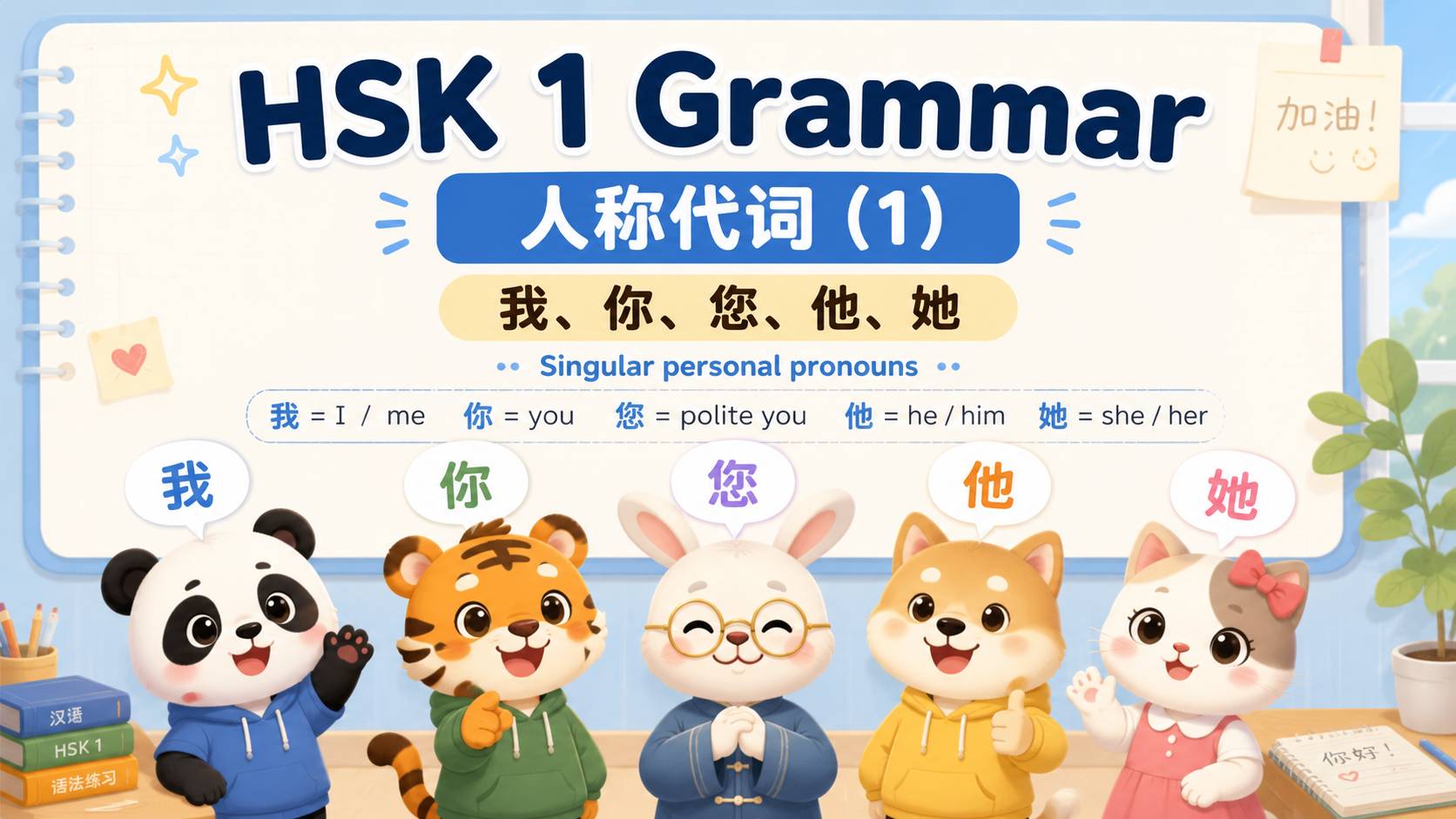
“我、你、您、他、她”都是单数人称代词。“我”指称说话者本人;“你、您”指称听话者,“您”是“你”的尊称,“他、她”指称除说话者和听话者以外的其他人,“他〞指称男性,“她〞指称女性。They are all singular personal pronouns. 我 means "I/me", 你 and 您 mean "you", the latter being the honorific form; 他 means "he/him" and 她 means "she/her".
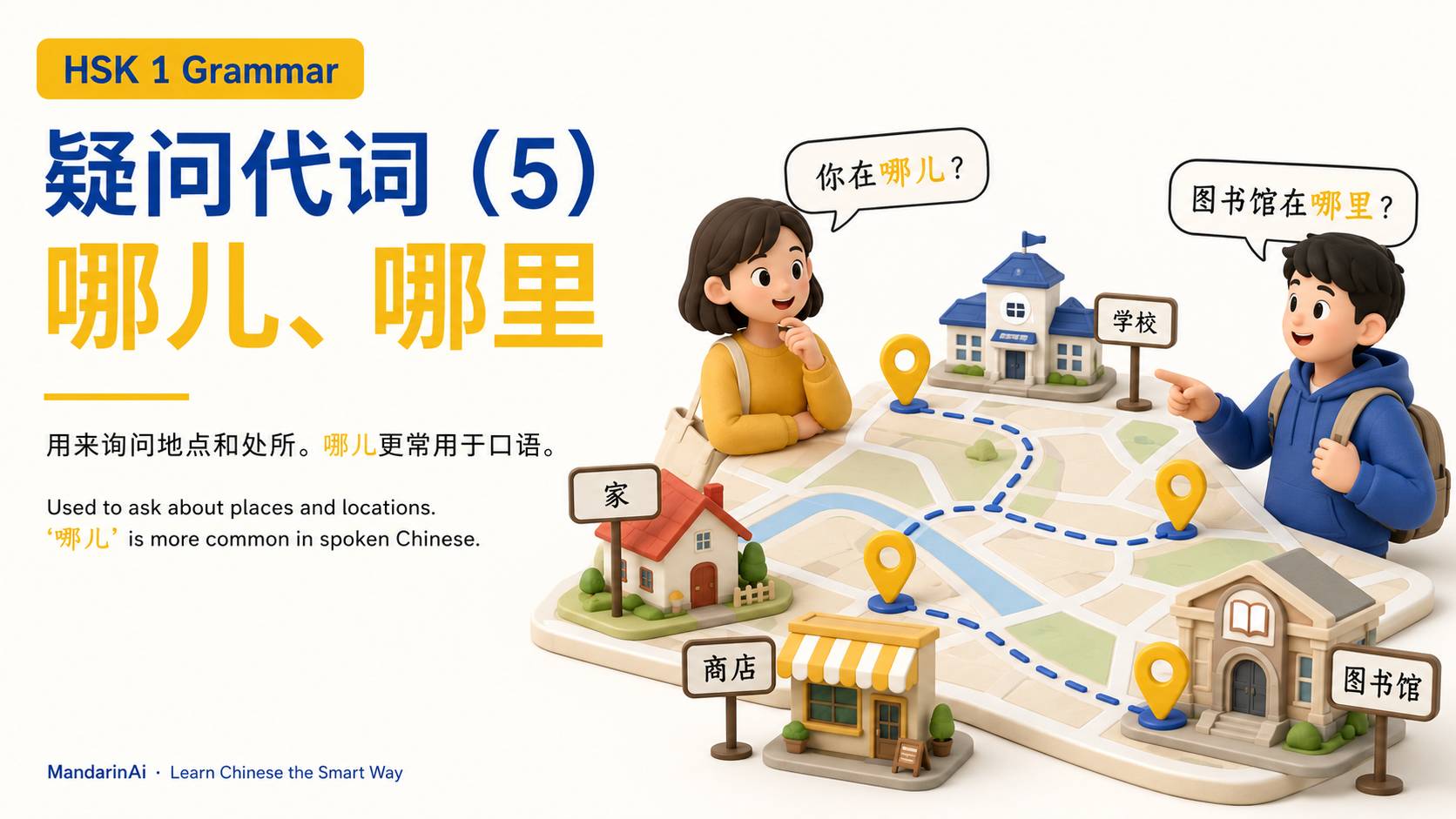
用在疑问向中,用来询问地点和处所。“哪儿”更常用于口语。They are used to ask about places and locations. 哪儿 is more often used in spoken Chinese.

用在疑问句中,后面加上形容词,询问程度或数量,例如年龄、时间、高度、长 度、距离等。It is used in interrogative sentences, followed by an adjective, to ask about the degree or quantity such as age, time, height, length, distance, etc.

表示希望、打算做某事的意愿,语气比“要”委婉。It indicates the subject’s hope or plan to do something. Its tone is milder than 要.
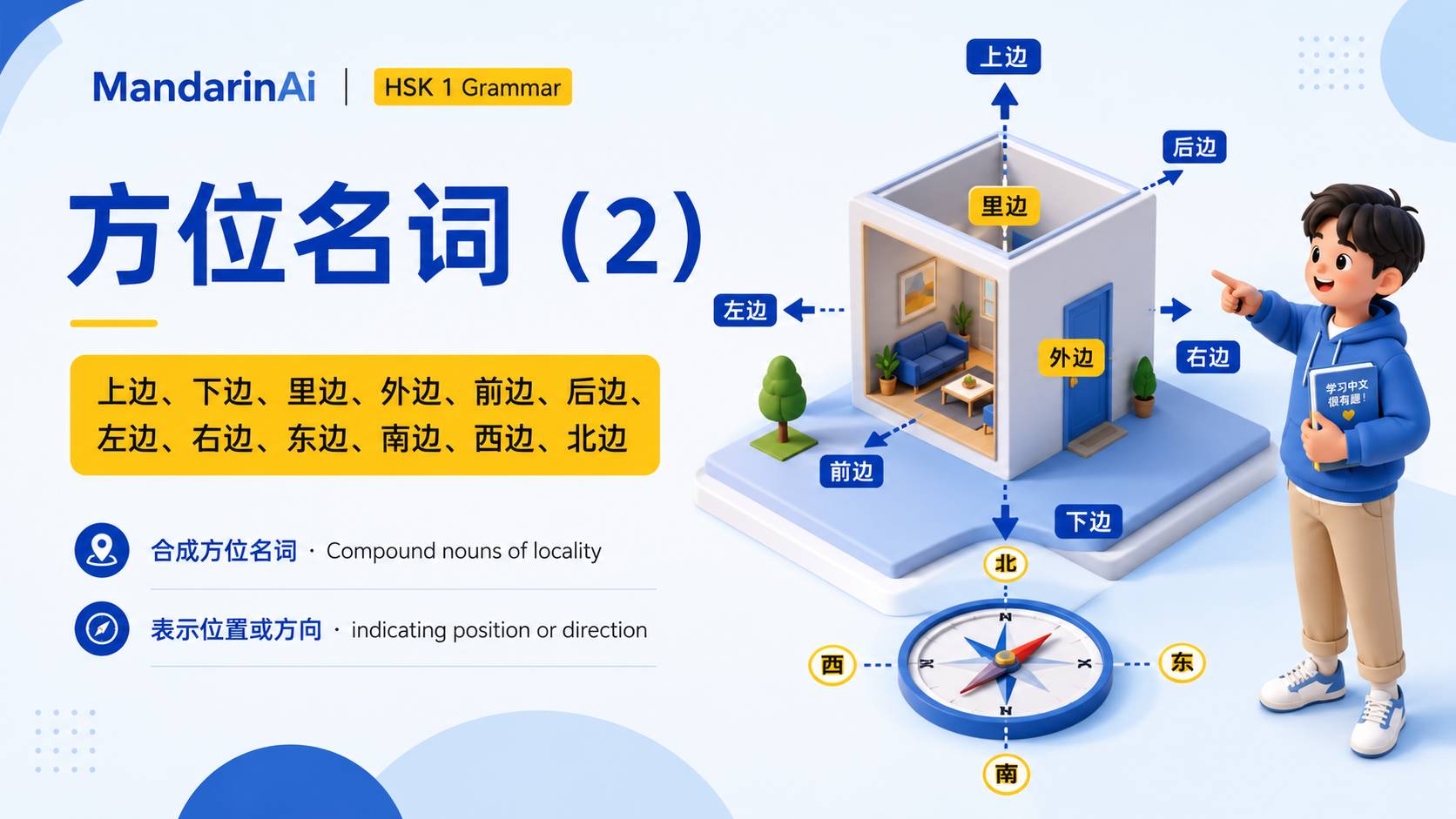
合成方位名词,表示处于上、下、里、外、前、后、左、右、东、南、西、北的 位置或方向。These are compound nouns of locality, indicating a position or direction that points upward / downward / inward /outward / forward / backward / leftward / rightward / eastward / southward / westward / northward.
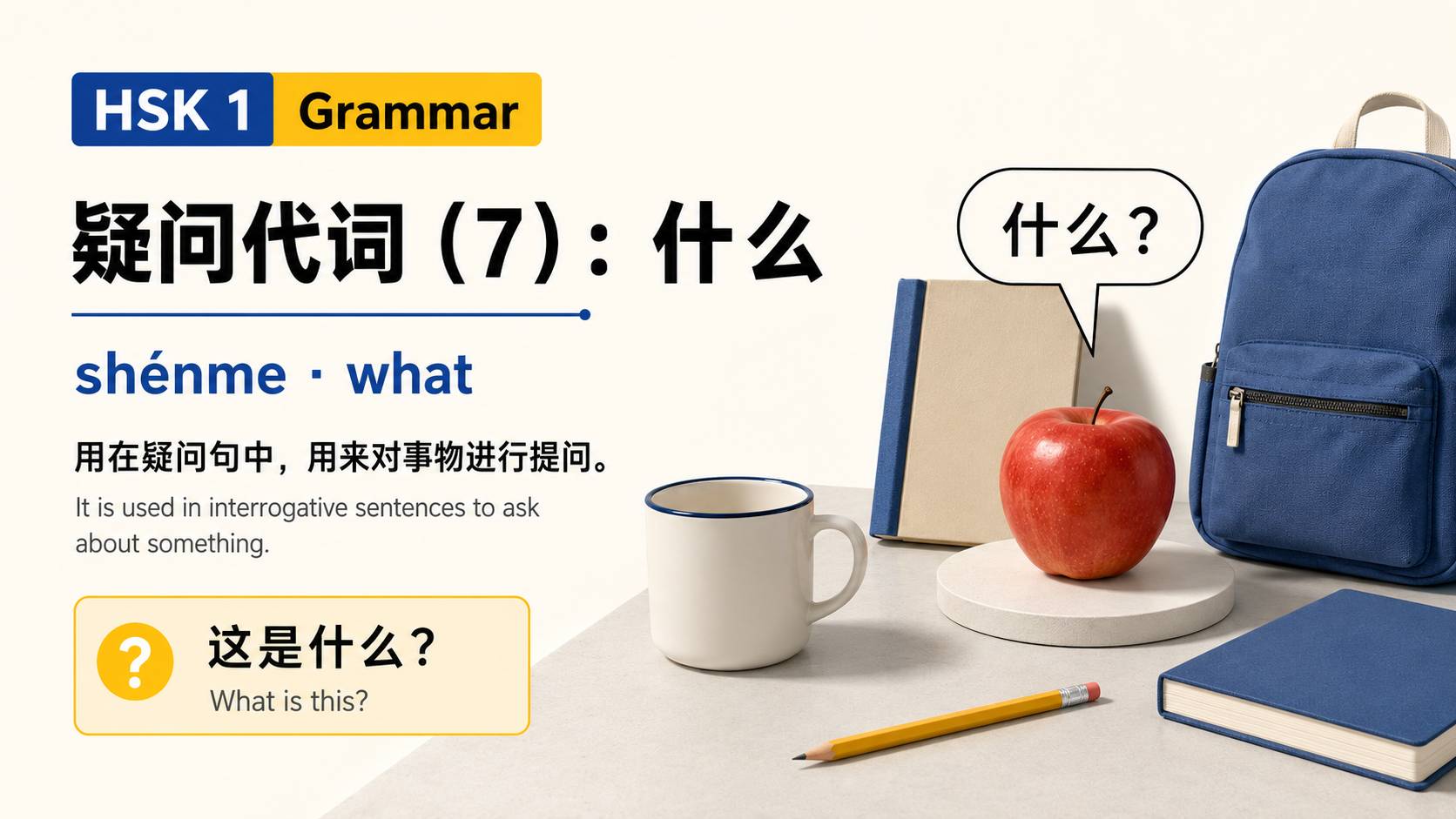
用在疑问向中,用来对事物进行提问。It is used in interrogative sentences to ask about something.

用在疑问句中,询问数量,例如人数、价格 年龄等。或者不清楚到底有多少的数量It is used in interrogative sentences to ask about the quantity, such as the number of people price, age, etc. The number is normally larger than 10 or totally unknown.
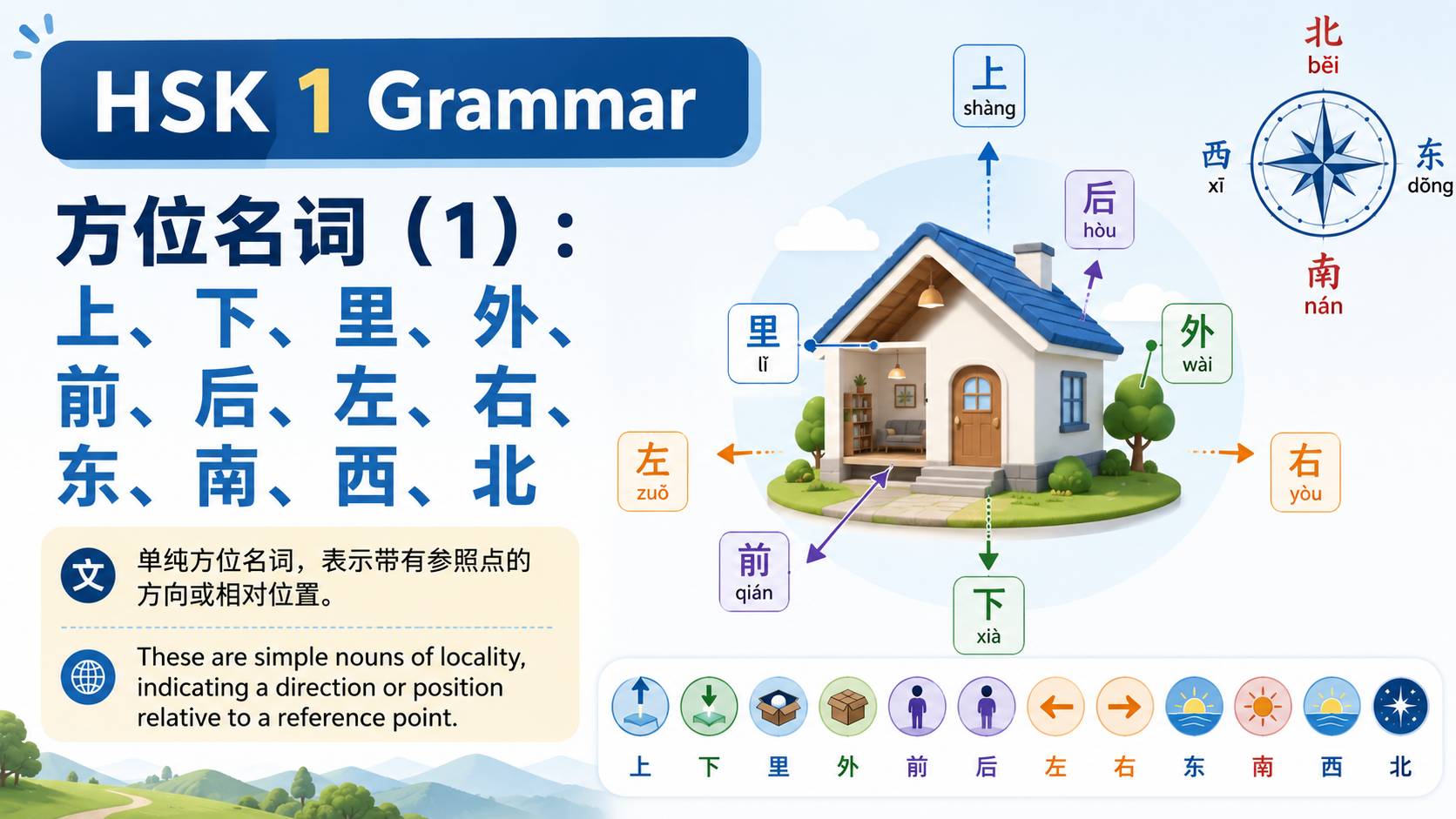
单纯方位名词,表示带有参照点的方向或相对位置。These are simple nouns of locality, indicating a direction or position relative to a reference point.
Start the conversation
Be the first to share your thoughts!