Today in History:1870 - The Franco-Prussian War breaks out

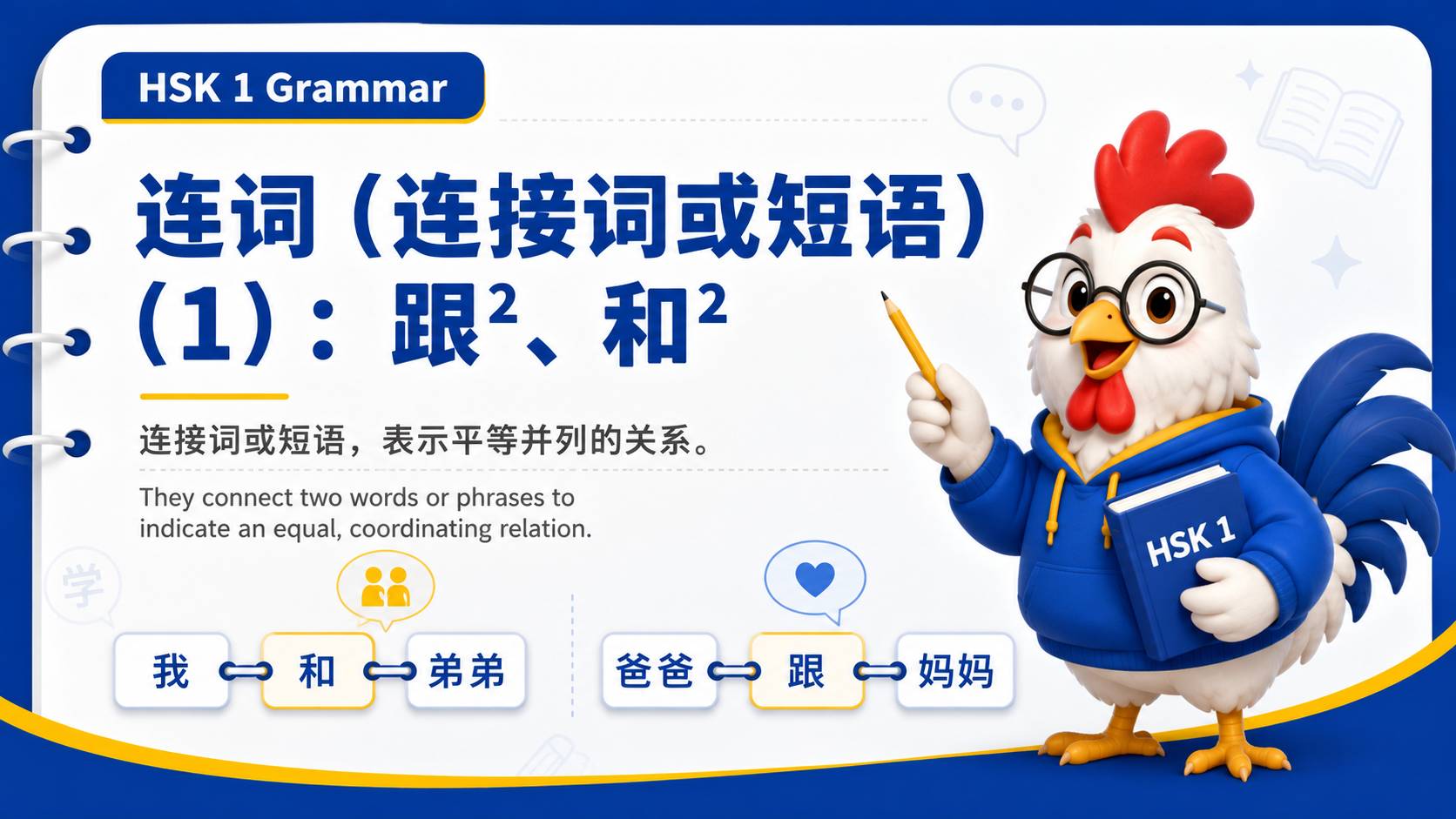
连词(连接词或短语)(1):跟²、和²

HSK 1

基本语义及用法

Basic Meaning & Usage

连接词或短语,表示平等并列的关系。
They connect two words or phrases to indicate an equal, coordinating relation.

典型例句和对话

Example Sentences & Conversations

Dǎ diànhuà.
(打电话)
(On the phone)
A: Nǐ bàmā zài jiā ma?
A:你爸妈在家吗?
A: Are your parents at home?
B: Bàba gēn māma dōu bú zài jiā.
B:爸爸跟妈妈都不在家。
B: Neither Dad nor Mom is at home.
A hé B、C dì yī cì jiànmiàn.
(A和B、C第一次见面)
(A meets B and C for the first time)
A: Nǐmen shì nǎli rén?
A:你们是哪里人?
A: Where are you from?
B: Tā gēn wǒ dōu shì Běijīng rén.
B:他跟我都是北京人。
B: He and I are both from Beijing.
Zài guówài.
(在国外)
(Abroad)
A: Nǐ yě xuéxí Zhōngwén ma?
A:你也学习中文吗?
A: Do you also study Chinese?
B: Shì de, wǒ hé dìdi dōu xuéxí Zhōngwén.
B:是的,我和弟弟都学习中文。
B: Yes. My younger brother and I both study Chinese.

补充例句

Additional Examples

Wǒ huì xiě “kě” gēn “hàn”.
我会写“渴”跟“汉”。
I can write the characters “渴” and “汉”.
Tā yào mǎi miànbāo gēn niúnǎi.
她要买面包跟牛奶。
She wants to buy bread and milk.
Bàba gēn gēge bú zài fángjiān lǐ.
爸爸跟哥哥不在房间里。
Dad and my older brother are not in the room.
Wǒ huì xiě bàba hé māma de míngzi.
我会写爸爸和妈妈的名字。
I can write Dad's and Mom's names.
Jīntiān hé zuótiān dōu hěn rè.
今天和昨天都很热。
Both today and yesterday are very hot.
Tā zhīdào kǎoshì de shíjiān hé dìdiǎn.
他知道考试的时间和地点。
He knows the time and place of the exam.

结构特点

Structural Features

“Gēn², hé²” liánjiē de cíyǔ duō wéi míngcí huò dàicí, zhěngtǐ zuò zhǔyǔ huò bīnyǔ. “Gēn², hé²” liánjiē de cíyǔ kěyǐ hùhuàn wèizhi, bù yǐngxiǎng yìyì.
“跟²、和²”连接的词语多为名词或代词,整体作主语或宾语。“跟²、和²”连接的词语可以互换位置,不影响意义。
The words connected by 跟² or 和² are usually nouns or pronouns and together function as the subject or object. The connected words can exchange positions without changing the meaning.
N / Pron + gēn² / hé² + N / Pron + VP.
N / Pron + 跟²/和² + N / Pron + VP
Structure 1: N / Pron + 跟²/和² + N / Pron + VP
Tā gēn wǒ dōu shì Běijīng rén.
他跟我都是北京人。
He and I are both from Beijing.
Lǎoshī hé tóngxué dōu bú rènshi tā.
老师和同学都不认识他。
Neither the teacher nor the students know him.
S + V + N / Pron + gēn² / hé² + N / Pron.
S + V + N / Pron + 跟²/和² + N / Pron
Structure 2: S + V + N / Pron + 跟²/和² + N / Pron
Tā zhīdào kǎoshì de shíjiān gēn dìdiǎn.
他知道考试的时间跟地点。
He knows the time and place of the exam.
Shūbāo lǐ yǒu shū hé shǒujī.
书包里有书和手机。
There are books and a mobile phone in the schoolbag.

小提示

Tips

“Gēn²” yìbān yòng yú kǒuyǔ.
“跟²”一般用于口语。
跟² is generally used in spoken language.
“Gēn²” yìbān zhǐ liánjiē liǎng ge chéngfèn, bù liánjiē sān ge huò sān ge yǐshàng chéngfèn. Lìrú:
(2)“跟²”一般只连接两个成分,不连接三个或三个以上成分。例如:
跟² generally connects only two elements, not three or more elements. For example:
* Tā yào mǎi miànbāo、jīdàn gēn niúnǎi.
* 她要买面包、鸡蛋跟牛奶。
Tā yào mǎi miànbāo gēn niúnǎi.
她要买面包跟牛奶。
She wants to buy bread and milk.
“Hé²” liánjiē de cíyǔ kěyǐ duō yú liǎng xiàng, zhè zhǒng qíngkuàng xià, “hé²” yào fàng zài zuìhòu liǎng xiàng zhījiān, qiánmiàn de chéngfèn yòng dùnhào liánjiē. Lìrú:
“和²”连接的词语可以多于两项,这种情况下,“和²”要放在最后两项之间,前面的成分用顿号连接。例如:
The words connected by 和² may include more than two items. In this case, 和² must be placed between the final two items, and the preceding elements are separated by enumeration commas. For example:
* Wǒ jiā yǒu sān kǒu rén, bàba hé māma hé wǒ.
* 我家有三口人,爸爸和妈妈和我。
Wǒ jiā yǒu sān kǒu rén, bàba、māma hé wǒ.
我家有三口人,爸爸、妈妈和我。
There are three people in my family: Dad, Mom and me.
连词(连接词或短语)(1):跟²、和²

Start the conversation

Be the first to share your thoughts!

Disclaimer