Today in History:1870 - The Franco-Prussian War breaks out

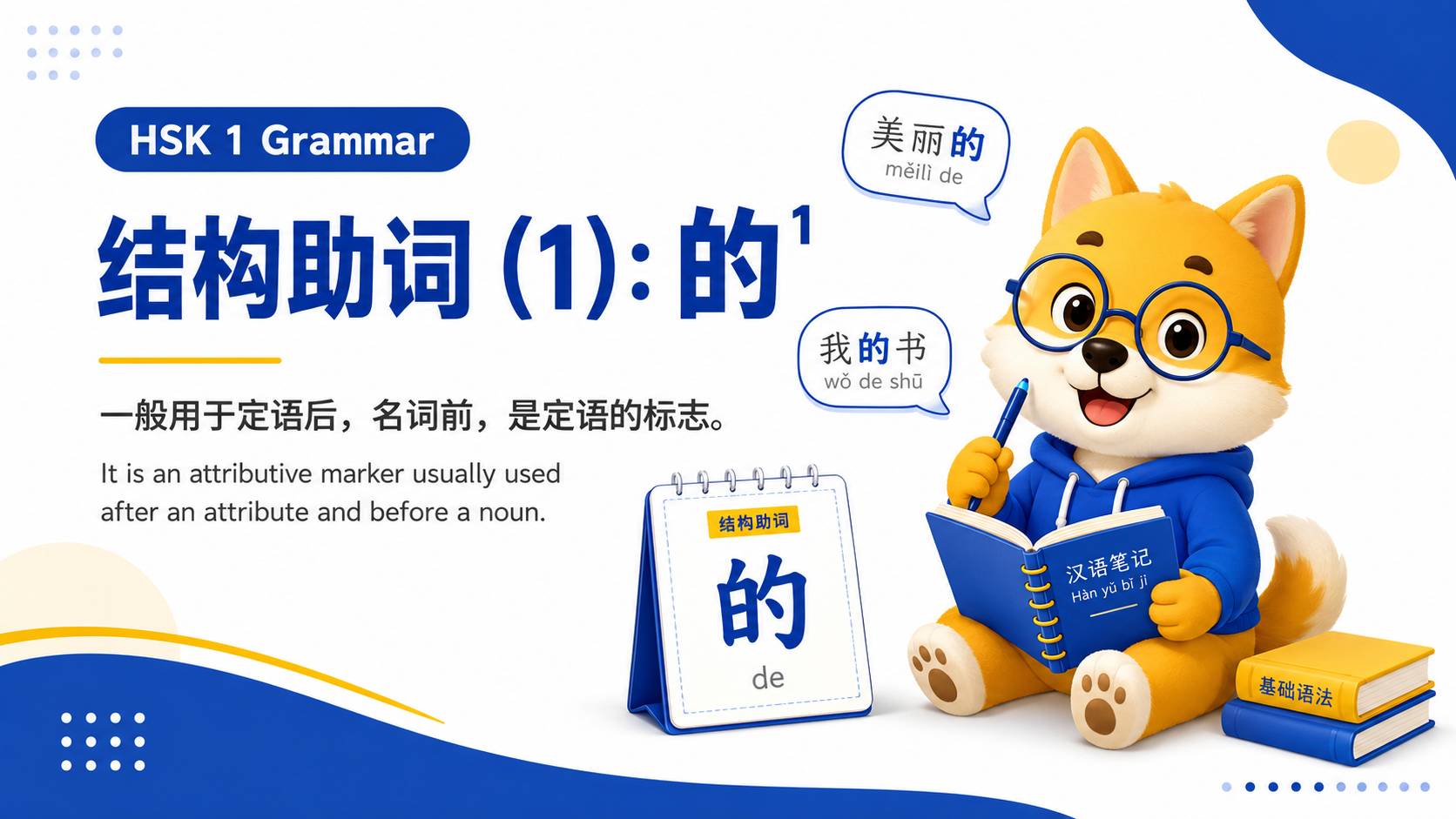
结构助词(1):的¹

HSK 1

基本语义及用法

Basic Meaning & Usage

一般用于定语后,名词前,是定语的标志。
It is an attributive marker usually used after an attribute and before a noun.

典型例句和对话

Example Sentences & Conversations

A hé B yào qù cānjiā wǎnhuì.
(A 和 B 要去参加晚会)
(A and B are going to attend a party.)
A: Wǒ jīntiān de yīfu hǎokàn ma?
A:我今天的衣服好看吗?
A: Do my clothes look good today?
Zài jiā.
(在家)
A: Zhè shì nǐ mǎi de píngguǒ ma?
A:这是你买的苹果吗?
A: Is this the apple you bought?
Zài xuéxiào.
(在学校)
(At school.)
B: Bú shì, zhè shì māma mǎi de píngguǒ.
B:不是,这是妈妈买的苹果。
B: No, this is the apple Mom bought.
A: Wáng Xiǎomíng xuéxí rènzhēn ma?
A:王小明学习认真吗?
A: Is Wang Xiaoming serious about his studies?
B: Tā shì yí ge hěn rènzhēn de xuésheng.
B:他是一个很认真的学生。
B: He is a very conscientious student.

补充例句

Additional Examples

Zhè shì Dàwèi de Zhōngwén kèběn.
这是大卫的中文课本。
This is David’s Chinese textbook.
Wǒ de māma shì lǎoshī.
我的妈妈是老师。
My mother is a teacher.
Zhè shì nǐ de yīfu ma?
这是你的衣服吗?
Are these your clothes?
Zhè shì hěn zhòngyào de shì.
这是很重要的事。
This is a very important matter.
Nǐ de shǒujī hěn hǎokàn.
你的手机很好看。
Your phone looks very nice.
Rènzhēn de xuésheng měitiān dōu xiě zuòyè.
认真的学生每天都写作业。
Conscientious students do homework every day.

结构特点

Structural Features

Cháng yòng yú “dìngyǔ + de + míngcí” jiégòu zhōng, “de” qián yìbān shì míngcí, dàicí, xíngróngcí, dòngcí huò duǎnyǔ.
常用于“定语 + 的¹ + 名词”结构中,“的¹”前一般是名词、代词、形容词、动词或短语。
It is commonly used in the “attribute + 的 + noun” structure. Before 的 there is usually a noun, pronoun, adjective, verb or phrase.
N / Pron / Adj / V / duǎnyǔ + de + N
N / Pron / Adj / V / 短语 + 的¹ + N
Noun / pronoun / adjective / verb / phrase + 的 + noun
Dìdi / wǒ de shūbāo.
弟弟/我 的 书包
Younger brother’s / my schoolbag
Māma mǎi de píngguǒ.
妈妈买 的 苹果
The apple Mom bought

小提示

Tips

Dānyīnjié xíngróngcí zuò dìngyǔ shí, hòubian yìbān bú yòng “de”. Lìrú:
单音节形容词作定语时,后边一般不用“的¹”。例如:
(1) When a monosyllabic adjective is used as an attribute, 的 is generally not used after it. For example:
* Hǎo de shū — hǎo shū
* 好的书——好书
* 好的书 — 好书, “a good book”
Dòngcí huò dòngcíxìng cíyǔ zuò dìngyǔ shí, hòubian yìbān yào yòng “de”. Lìrú:
(2)动词或动词性词语作定语时,后边一般要用“的¹”。例如:
(2) When a verb or verbal phrase is used as an attribute, 的 is generally required after it. For example:
Chī de dōngxi — chī dōngxi
吃的东西——吃东西
Things to eat — to eat things
Dāng dìngyǔ shì rénchēng dàicí, bèi xiūshì de míngcí shì “gēge” děng qīnshǔ chēngwèi huò “xuéxiào” děng zǔzhī míngchēng shí, “de” chángcháng kěyǐ shěnglüè. Lìrú:
当定语是人称代词,被修饰的名词是“哥哥”等亲属称谓或“学校”等组织名称时,“的¹”常常可以省略。例如:
(3) When the attribute is a personal pronoun and the modified noun is a kinship term such as “elder brother” or the name of an organization such as “school”, 的 can often be omitted. For example:
Nǐ de gēge.
你(的)哥哥
Your elder brother
Wǒ de yéye.
我(的)爷爷
My paternal grandfather
Wǒmen de xuéxiào.
我们(的)学校
Our school
Tāmen de guójiā.
他们(的)国家
Their country
Xūyào zhùyì de shì, “xuéxiào, bān, guójiā” děng qiánbian de rénchēng dàicí yìbān yòng fùshù xíngshì “wǒmen, nǐmen, tāmen, tāmen”.
需要注意的是,“学校、班、国家”等前边的人称代词一般用复数形式“我们、你们、他们、她们”。
It should be noted that before words such as “school”, “class” and “country”, personal pronouns are generally used in their plural forms: “we”, “you”, “they” and “they”.
结构助词(1):的¹

Start the conversation

Be the first to share your thoughts!

Disclaimer